Love this? Save it for later!
Share the inspiration with your friends
My neighbor wasn’t trying to impress me. I’d stopped by to borrow a ladder on a Saturday morning, and the smell—warm vanilla, cinnamon, something buttery and caramelizing—hit me before I even got to her front door. She opened it with flour on her cheek and said, “Oh, I’m just throwing together breakfast. Nothing fancy.” Nothing fancy? Let me tell you, that “nothing fancy” was an easy overnight baked French toast casserole that made me forget why I needed the ladder in the first place.
I stood in her kitchen, honestly a little jealous, watching her pull this golden, custardy dish out of the oven. It wasn’t a special occasion. It was just a regular Saturday. Her kids were still in pajamas, there was a cartoon playing on the TV, and she was acting like this was just something she did every weekend. Maybe you’ve been there—where you realize someone else’s “just something” is your new favorite thing.
She told me she prepped it the night before, which is the whole secret. You throw everything together, let it sit overnight so the bread soaks up all that creamy, spiced custard, and then you bake it in the morning. That’s it. No standing over a skillet flipping individual slices. No mess. I forgot to ask for the recipe before I left (classic me), but I went home and figured it out. This easy overnight baked French toast casserole has been a staple in my kitchen ever since, and honestly, it’s the kind of recipe that makes you look like a morning person even if you’re absolutely not.
Why You’ll Love This Recipe
This isn’t just another breakfast casserole. After testing this recipe at least a dozen times—through holiday mornings, lazy Sundays, and one particularly chaotic Christmas when I forgot to defrost the sausage—I can tell you this version wins every single time. It’s the one my family requests, the one I bring to brunch potlucks, and the one that makes people ask for the recipe before they’ve finished their first helping.
- Quick & Easy: The active prep time is only about 15 minutes. You mix the custard, layer the bread, pour it all in, and let the fridge do the rest of the work overnight. Morning-you will be so grateful.
- Simple Ingredients: You probably have everything in your kitchen right now. Bread, eggs, milk, butter, sugar, cinnamon, vanilla. No trips to a specialty store, no hunting down obscure ingredients.
- Perfect for Holidays & Entertaining: Christmas morning, Easter brunch, Mother’s Day, or just a weekend when you have houseguests. This dish feeds a crowd with zero stress because the hard part is done the night before.
- Crowd-Pleaser: Kids love the soft, sweet, almost bread-pudding texture. Adults love that it’s not too sweet and has that perfect custard-to-bread ratio. I’ve never seen leftovers.
- Unbelievably Delicious: The top gets slightly crisp and golden, while the inside stays tender and almost creamy. The cinnamon and vanilla soak all the way through every single piece of bread. It’s comfort food, but make it breakfast.
What makes this recipe different from the rest? It’s the ratio. I tested this until I found the perfect balance of eggs to milk—enough custard to soak every nook and cranny of the bread without turning it into a soggy mess. Plus, I use a trick of letting the casserole sit for at least 8 hours (or up to 24), which gives the flavors time to really marry together. It’s not just good. It’s the kind of breakfast that makes you close your eyes after the first bite.
What Ingredients You Will Need
This easy overnight baked French toast casserole uses simple, everyday ingredients to create something that tastes like you spent hours in the kitchen. Most of these are pantry staples, which is exactly what you want when you’re planning a stress-free morning.
- Bread (1 large loaf or about 12 cups, cubed): Use a sturdy bread like brioche, challah, French bread, or a good-quality Italian loaf. Day-old or slightly stale bread works best because it soaks up the custard without falling apart. I prefer brioche for its richness, but challah is a close second.
- Eggs (8 large): These are the backbone of the custard. Use large eggs, and make sure they’re at room temperature for the smoothest mixture. If you’re in a hurry, place them in a bowl of warm water for 5 minutes.
- Whole Milk (2 cups): Whole milk gives the custard the creamiest texture. You can use 2% in a pinch, but avoid skim milk—it will be too thin and won’t set up as nicely.
- Heavy Cream (1 cup): This is the secret to that luxurious, almost pudding-like texture. Half-and-half works as a substitute, but heavy cream really makes a difference.
- Granulated Sugar (1/2 cup): Just enough sweetness without being cloying. The casserole gets additional sweetness from the topping.
- Brown Sugar (1/2 cup, packed, plus more for topping): Light or dark brown sugar works. Dark brown sugar adds a deeper, almost molasses-like flavor that I love.
- Vanilla Extract (2 teaspoons): Use pure vanilla extract if you can. It makes a noticeable difference in the flavor.
- Ground Cinnamon (2 teaspoons): Fresh cinnamon is best. I usually buy a new jar every 6 months to keep it potent.
- Ground Nutmeg (1/4 teaspoon): Optional, but it adds a warm, aromatic note that pairs beautifully with the cinnamon. Freshly grated is even better.
- Salt (1/4 teaspoon): Don’t skip this. Salt balances the sweetness and enhances all the other flavors.
- Unsalted Butter (1/2 cup, melted, plus more for greasing the dish): Use unsalted so you can control the salt level. The melted butter gets drizzled over the top before baking, creating that gorgeous golden crust.
- Powdered Sugar (for dusting): Optional, but it makes the casserole look beautiful and adds a touch of extra sweetness.
- Maple Syrup (for serving): Pure maple syrup, not pancake syrup. The real stuff makes a difference here.
Ingredient Tip: I personally prefer King’s Hawaiian bread for a slightly sweeter, softer casserole. It’s not traditional, but it works beautifully. If you can find challah from a local bakery, even better. The quality of your bread really does matter here—it’s the star of the show.
Equipment Needed
You don’t need fancy equipment for this easy overnight baked French toast casserole. Most of these tools are probably already in your kitchen.
- 9×13-inch Baking Dish: This is the standard size for a full batch. A ceramic or glass dish works best because it distributes heat evenly. I’ve used metal pans before and they work, but the edges tend to brown faster.
- Large Mixing Bowl: For whisking together the custard. A 4-quart bowl gives you plenty of room.
- Whisk: A good whisk is essential for getting the eggs fully incorporated into the milk and cream. A fork won’t cut it here.
- Measuring Cups and Spoons: For accuracy. Baking is a science, especially when it comes to the custard ratio.
- Sharp Knife and Cutting Board: For cubing the bread. A serrated bread knife works best for cutting through crusty loaves without squishing them.
- Plastic Wrap or Aluminum Foil: For covering the casserole while it sits overnight. Make sure it’s tightly sealed so the bread doesn’t dry out.
- Small Saucepan (optional): If you want to warm the maple syrup before serving. It’s a small touch, but it makes a difference.
Budget-Friendly Tip: If you don’t have a 9×13 dish, you can use two 8×8 square pans or even a large cast-iron skillet. Just adjust the baking time slightly—smaller pans will cook a little faster. I’ve also used disposable aluminum pans for potlucks, and they work perfectly fine.
Preparation Method
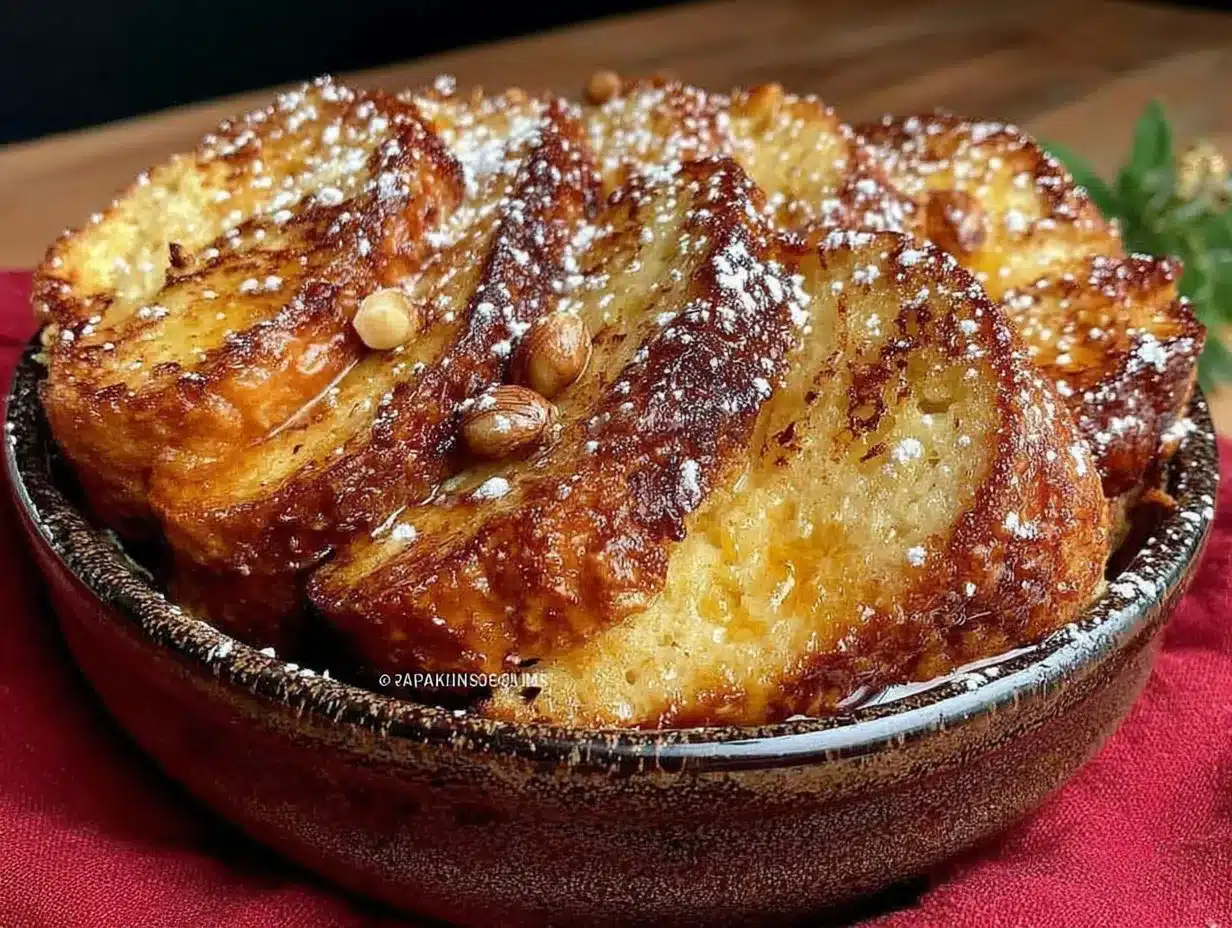
Making this easy overnight baked French toast casserole is almost embarrassingly simple. Here’s how to do it, step by step.
- Prepare the bread (5 minutes): Cut your bread into roughly 1-inch cubes. If your bread is fresh, leave the cubes out on a baking sheet for about an hour to dry out slightly, or toast them in a 300°F oven for 10 minutes. This helps them absorb the custard without turning to mush. I’ve skipped this step plenty of times, and it still works—but the texture is better if the bread is a little stale.
- Grease the baking dish (1 minute): Generously butter your 9×13-inch baking dish. Don’t be shy with the butter here. It prevents sticking and adds flavor to the edges.
- Layer the bread (5 minutes): Spread half of the bread cubes evenly in the prepared dish. If you want to get fancy, you can arrange them in a slightly overlapping pattern, but honestly, just scattering them works. You want an even layer with some texture.
- Make the custard (5 minutes): In your large mixing bowl, whisk together the eggs until they’re well beaten and slightly frothy. Add the whole milk, heavy cream, granulated sugar, brown sugar, vanilla extract, cinnamon, nutmeg, and salt. Whisk until everything is completely combined and the sugars are starting to dissolve. The mixture should look smooth and smell amazing already.
- Pour the custard (2 minutes): Slowly pour half of the custard mixture evenly over the first layer of bread cubes. Let it sit for a minute, then gently press down on the bread with a spatula to help it absorb. Add the remaining bread cubes on top, then pour the rest of the custard over everything. Press down again gently—this is the most important step for getting that perfectly soaked texture throughout.
- Add the topping (3 minutes): In a small bowl, mix together the melted butter, a few tablespoons of brown sugar, and an extra sprinkle of cinnamon. Drizzle this mixture evenly over the top of the casserole. This is what creates that gorgeous, slightly crunchy, caramelized crust.
- Cover and refrigerate (8-24 hours): Tightly cover the dish with plastic wrap or aluminum foil. Place it in the refrigerator for at least 8 hours, but preferably overnight. I’ve let it sit for up to 24 hours, and it only gets better. The bread really needs this time to soak up every drop of that custard.
- Bake (45-55 minutes): When you’re ready to bake, preheat your oven to 350°F. Remove the casserole from the fridge and let it sit on the counter for about 15-20 minutes while the oven heats up—this takes the chill off and helps it bake more evenly. Bake uncovered for 45-55 minutes, until the top is golden brown and the center is set but still slightly jiggly. A knife inserted into the center should come out clean, or with just a few moist crumbs.
- Rest before serving (10 minutes): This is crucial. Let the casserole rest for at least 10 minutes after it comes out of the oven. It will continue to set as it cools, and it makes slicing and serving so much easier. I know it’s hard to wait, but trust me on this one.
- Serve (2 minutes): Dust with powdered sugar, drizzle with warm maple syrup, and serve immediately. If you’re feeling extra, add a pat of butter on top of each serving. It melts into the warm casserole and is absolutely divine.
Sensory Cue: When the casserole is done, your kitchen will smell like a bakery. The top should be a deep golden brown, and you’ll see the custard gently bubbling around the edges. If you press lightly on the center, it should feel set but still soft—like a firm custard.
Cooking Tips & Techniques
After making this easy overnight baked French toast casserole more times than I can count, I’ve learned a few things the hard way. Here are my best tips to make sure yours turns out perfect every time.
Don’t skip the overnight rest. I know it’s tempting to rush this, but the 8-hour soak is non-negotiable. I once tried to make it with only a 2-hour soak, and the center was dry and the bread was still crunchy in places. The overnight rest allows the custard to fully penetrate every cube of bread, creating that uniform, creamy texture.
Use day-old bread. Fresh bread is too soft and will turn into a paste. If all you have is fresh bread, cube it and spread it on a baking sheet in a 300°F oven for 10-12 minutes. You want it slightly dried out but not toasted. This is a trick I learned from a pastry chef friend, and it works like a charm.
Press the bread down. After you pour each layer of custard, use a spatula to gently press the bread down into the liquid. This ensures even absorption. I used to skip this step, and I always ended up with dry spots on top. Now I press firmly, and the results are consistently perfect.
Watch the edges. The edges of the casserole will brown faster than the center. If you notice them getting too dark around the 40-minute mark, tent the dish loosely with aluminum foil for the remaining baking time. I’ve definitely burned the edges before, and it’s a bummer.
Let it rest. I cannot stress this enough. Letting the casserole rest for 10-15 minutes after baking allows the custard to set up properly. If you cut into it too soon, it will be runny and fall apart. Patience pays off here.
My biggest failure: The first time I made this, I used skim milk because it was all I had. The casserole was watery and never set properly. It was a sad, soupy mess. Whole milk and heavy cream are not negotiable for the best texture. Learn from my mistake!
Variations & Adaptations
This easy overnight baked French toast casserole is incredibly versatile. Here are some of my favorite ways to change it up.
Berry Bliss: Add 1-2 cups of fresh or frozen berries (blueberries, raspberries, or sliced strawberries) between the layers of bread. The berries burst as they bake, creating little pockets of jammy sweetness. If using frozen berries, don’t thaw them first—they’ll release too much liquid and make the custard watery.
Apple Cinnamon: Peel and dice 2 medium apples (I like Honeycrisp or Granny Smith) and toss them with a tablespoon of brown sugar and a teaspoon of cinnamon. Layer them with the bread. It tastes like apple pie for breakfast. This is my go-to variation for fall.
Chocolate Hazelnut: Spread a thin layer of Nutella between the bread cubes before adding the custard. It melts into the casserole and creates these incredible chocolatey swirls. My kids beg for this version every birthday morning.
Savory Twist: Omit the sugar, vanilla, and cinnamon. Add 1 cup of shredded cheddar cheese, 1/2 cup of cooked crumbled sausage or bacon, and a pinch of black pepper. Bake as directed. It’s a savory bread pudding that works beautifully for brunch with a side of eggs.
Dairy-Free Option: Substitute the whole milk with unsweetened almond or oat milk, and use full-fat coconut cream instead of heavy cream. Use a vegan butter alternative. The texture will be slightly less rich, but it’s still delicious. I’ve made this for friends with dairy sensitivities, and it’s always a hit.
Gluten-Free Option: Use a good-quality gluten-free bread. I recommend something sturdy like a gluten-free sourdough or a multigrain loaf. Avoid soft gluten-free sandwich bread—it will turn to mush. Let the bread cubes dry out completely before assembling.
Serving & Storage Suggestions
This easy overnight baked French toast casserole is best served warm, fresh from the oven. Here’s how to make the most of it.
Serving Temperature: Serve warm, not hot. Let it rest for 10 minutes after baking, then serve. A dusting of powdered sugar and a generous drizzle of warm maple syrup are my non-negotiable toppings. A pat of butter melting on top doesn’t hurt either.
Complementary Dishes: This casserole pairs beautifully with crispy bacon or savory breakfast sausage. The salty, savory flavors balance the sweetness of the casserole. A side of fresh fruit—like a simple berry salad or sliced oranges—adds brightness. For a brunch spread, serve it alongside a frittata or a simple green salad.
Beverage Pairings: A hot cup of coffee is the obvious choice, but it’s also wonderful with a cold glass of milk or a mimosa if you’re feeling festive. For a cozy winter brunch, try it with a chai latte.
Storage Instructions: Store leftovers in an airtight container in the refrigerator for up to 4 days. The casserole will soften slightly as it sits, but the flavor actually gets better. I often make a double batch just for leftovers during the week.
Reheating Methods: The best way to reheat is in the oven at 300°F for about 10-15 minutes. This restores some of the crispness to the top. You can also microwave individual portions for 30-45 seconds, but the top will be soft. For a quick fix, I use the toaster oven—it works great for single servings.
Freezing Instructions: You can freeze the unbaked casserole. Assemble it in the dish, cover tightly with plastic wrap and then foil, and freeze for up to 3 months. To bake, thaw it in the refrigerator overnight, then bake as directed. You can also freeze baked leftovers. Wrap individual portions in plastic wrap and then foil, and freeze for up to 2 months. Thaw in the fridge and reheat in the oven.
Flavor Development: This casserole actually tastes better on day two. The flavors continue to meld and deepen overnight. If you can resist eating it all, the leftovers are a real treat.
Nutritional Information & Benefits
This easy overnight baked French toast casserole is a treat, so it’s not exactly health food. But it does have some redeeming qualities!
Estimated Nutritional Values (per serving, based on 8 servings):
- Calories: 450-500
- Fat: 25g
- Saturated Fat: 14g
- Cholesterol: 220mg
- Sodium: 350mg
- Carbohydrates: 50g
- Fiber: 2g
- Sugar: 25g
- Protein: 12g
Health Benefits of Key Ingredients:
- Eggs: Packed with high-quality protein, vitamins B12 and D, and choline, which supports brain health. They also help keep you full and satisfied.
- Milk and Cream: Good sources of calcium and vitamin D for bone health. The protein in dairy also helps with satiety.
- Cinnamon: Contains antioxidants and has anti-inflammatory properties. Some studies suggest it may help regulate blood sugar levels.
- Vanilla: Contains small amounts of antioxidants and adds flavor without extra sugar or calories.
Dietary Considerations: This recipe is vegetarian. It contains gluten, dairy, and eggs. For gluten-free and dairy-free options, see the Variations section above. It’s not suitable for a vegan diet, though I’ve seen some creative vegan versions using tofu and plant-based milk.
My Personal Perspective: I believe in balance. This casserole is a celebration dish—something you make for holidays, weekends, and special occasions. It’s not an everyday breakfast, and that’s okay. Food is about joy as much as it is about nutrition. When you serve this, you’re serving comfort, love, and a little bit of magic. And that has its own kind of nutritional value.
Conclusion
This easy overnight baked French toast casserole is the kind of recipe that makes you look like a breakfast hero with almost no effort. It’s warm, comforting, and absolutely delicious. The best part? You do all the work the night before, so you can actually enjoy your morning coffee while it bakes.
I love this recipe because it reminds me of that Saturday at my neighbor’s house—how something so simple could feel so special. It’s become my go-to for Christmas morning, for hosting friends, and for those weekends when I just want to treat my family to something wonderful. It’s forgiving, adaptable, and always gets rave reviews.
I’d love to hear how yours turns out! Did you add berries? Try the chocolate hazelnut version? Serve it with bacon and a mimosa? Drop a comment below and let me know your favorite variation. And if you share a photo on Pinterest, tag me—I love seeing your beautiful breakfasts. Happy cooking, friends!
Frequently Asked Questions
Can I use a different type of bread?
Absolutely! Brioche, challah, French bread, Italian bread, and even King’s Hawaiian rolls all work beautifully. Just make sure it’s a sturdy bread that can hold up to the custard. Avoid very soft sandwich bread, which can turn mushy.
Can I make this without the overnight rest?
You can, but I don’t recommend it. The overnight soak is what gives the casserole its signature creamy texture. If you’re really short on time, let it sit for at least 2-3 hours, and press the bread down firmly to help it absorb the custard. The results won’t be as good, but it will still be tasty.
How do I know when the casserole is done?
The top should be golden brown, and the center should be set but still slightly jiggly. A knife inserted into the center should come out clean or with just a few moist crumbs. The internal temperature should be around 165°F if you want to use a thermometer.
Can I double this recipe?
Yes! This recipe doubles beautifully. Use a 9×13 dish for a single batch, or use a larger 11×15 dish or two 9×13 dishes for a double batch. You may need to increase the baking time by 10-15 minutes for a double batch. Just keep an eye on it.
Why is my casserole soggy or runny?
This usually happens for one of three reasons: you used too much custard, your bread was too fresh and soft, or you didn’t bake it long enough. Make sure you’re using the correct ratio of bread to custard, and always let the casserole rest for 10 minutes after baking before cutting into it. If it’s still runny, it probably needed more time in the oven.
Pin This Recipe!
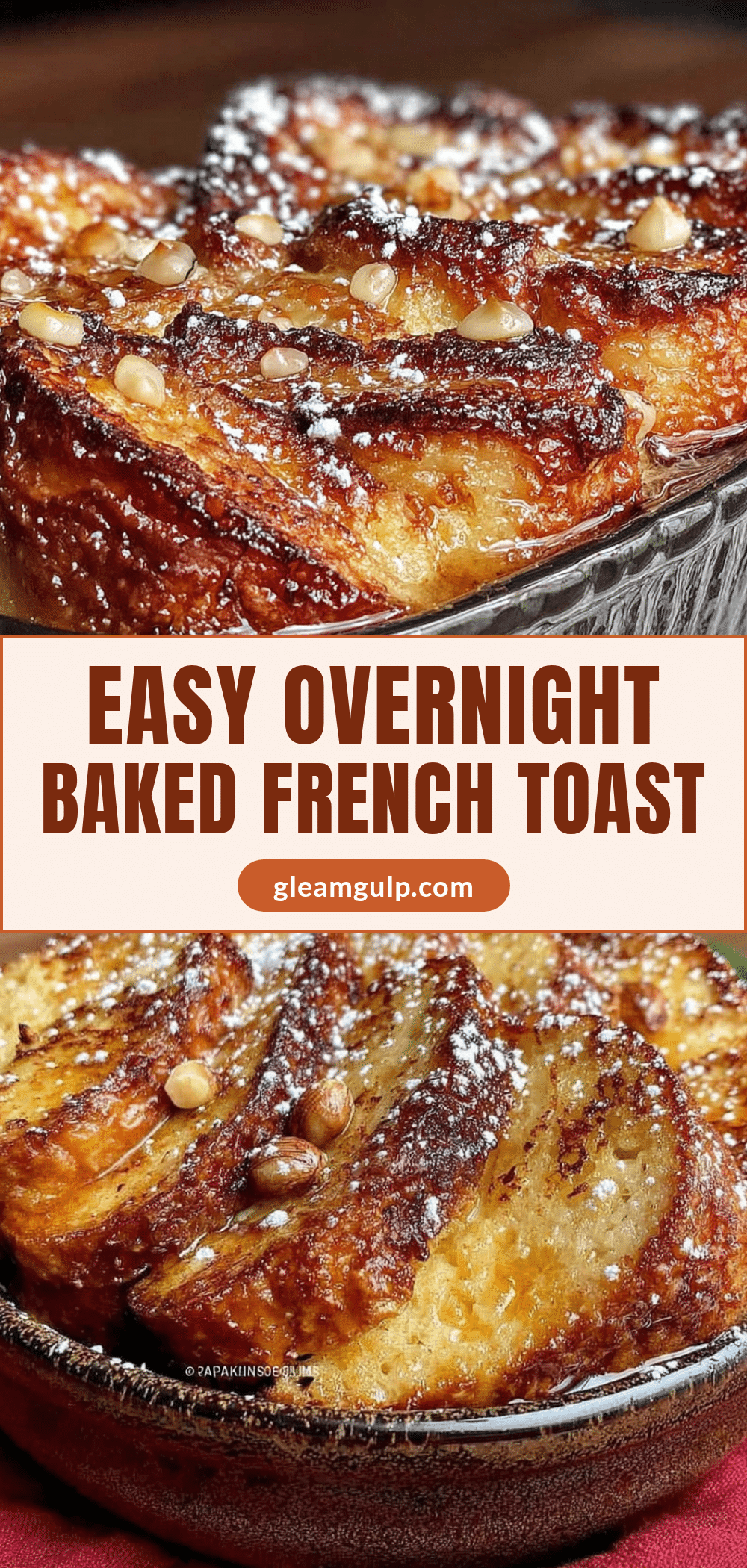
Easy Overnight Baked French Toast Casserole: Best Recipe
This easy overnight baked French toast casserole is a warm, comforting, and absolutely delicious breakfast that requires minimal morning effort. Prep it the night before, let the bread soak up the creamy custard, and bake it in the morning for a golden, crowd-pleasing dish.
- Prep Time: 15 minutes
- Cook Time: 50 minutes
- Total Time: 8 hours 15 minutes (includes overnight rest)
- Yield: 8 servings 1x
- Category: Breakfast
- Cuisine: American
Ingredients
- 1 large loaf (about 12 cups cubed) sturdy bread (brioche, challah, French bread, or Italian loaf), day-old preferred
- 8 large eggs, at room temperature
- 2 cups whole milk
- 1 cup heavy cream
- 1/2 cup granulated sugar
- 1/2 cup packed brown sugar (plus more for topping)
- 2 teaspoons vanilla extract
- 2 teaspoons ground cinnamon
- 1/4 teaspoon ground nutmeg (optional)
- 1/4 teaspoon salt
- 1/2 cup unsalted butter, melted (plus more for greasing the dish)
- Powdered sugar for dusting (optional)
- Pure maple syrup for serving
Instructions
- Prepare the bread: Cut bread into roughly 1-inch cubes. If fresh, spread on a baking sheet and dry in a 300°F oven for 10 minutes, or leave out for about an hour.
- Grease a 9×13-inch baking dish generously with butter.
- Layer half of the bread cubes evenly in the prepared dish.
- Make the custard: In a large mixing bowl, whisk eggs until well beaten and slightly frothy. Add whole milk, heavy cream, granulated sugar, brown sugar, vanilla extract, cinnamon, nutmeg, and salt. Whisk until completely combined and sugars begin to dissolve.
- Pour half of the custard mixture evenly over the first layer of bread. Let sit for a minute, then gently press down with a spatula to help absorption. Add remaining bread cubes on top, then pour the rest of the custard over everything. Press down gently again.
- Add the topping: In a small bowl, mix melted butter with a few tablespoons of brown sugar and an extra sprinkle of cinnamon. Drizzle evenly over the top of the casserole.
- Cover tightly with plastic wrap or aluminum foil and refrigerate for at least 8 hours, up to 24 hours.
- When ready to bake, preheat oven to 350°F. Remove casserole from fridge and let sit on counter for 15-20 minutes while oven heats.
- Bake uncovered for 45-55 minutes, until top is golden brown and center is set but still slightly jiggly. A knife inserted into the center should come out clean or with a few moist crumbs.
- Let casserole rest for at least 10 minutes before serving. Dust with powdered sugar, drizzle with warm maple syrup, and serve immediately.
Notes
For best results, use day-old bread and let the casserole rest overnight for at least 8 hours. Press the bread down firmly after adding custard to ensure even absorption. If edges brown too quickly, tent with foil during the last 10-15 minutes of baking. Let the casserole rest for 10 minutes after baking before serving to allow the custard to set.
Nutrition
- Serving Size: 1 serving (1/8 of ca
- Calories: 475
- Sugar: 25
- Sodium: 350
- Fat: 25
- Saturated Fat: 14
- Carbohydrates: 50
- Fiber: 2
- Protein: 12
Keywords: overnight french toast casserole, baked french toast, breakfast casserole, easy french toast, holiday breakfast, brunch recipe