Love this? Save it for later!
Share the inspiration with your friends
The PTA potluck was in six hours and I’d completely forgotten. Everyone else would be bringing those elaborate casseroles with the crispy onion topping, or homemade pies with lattice crusts that looked like they belonged on a magazine cover. I had a bag of frozen salmon fillets, a bunch of asparagus that was starting to look a little sad, and half a stick of butter. Honestly, I almost just ordered pizza and called it a day. But then I remembered this one-pan trick my neighbor Maria had mentioned while we were both waiting for our kids at the bus stop—something about foil and high heat. So, with a deep breath and a prayer that my family wouldn’t be mortified, I threw it together. Let me tell you, the panic was real.
I slid that pan into the oven, set the timer, and spent the next twenty minutes cleaning up the flour I’d somehow gotten on the ceiling (don’t ask). When I pulled it out, the garlic butter was still bubbling, the salmon was flaky, and the asparagus was perfectly tender. I didn’t even taste it before wrapping it in foil and running out the door. At the potluck, I placed my humble pan next to a three-tiered cake and a dish that looked like it took two days to prepare. I braced for the polite, “Oh, how nice” comments.
But then, people started going back for seconds. And thirds. Someone asked for the recipe before they’d even finished chewing. I stood there, holding a plastic fork, genuinely confused. This was the meal I made when I had nothing else. It turns out, that’s exactly what makes it so good. It’s simple, it’s fast, and it tastes like you actually tried. Maybe you’ve been there—staring into your fridge, willing a gourmet meal to appear. This one-pan garlic butter salmon is your answer. It’s the dish that saves you, and I’ve been making it every week since.
Why You’ll Love This Recipe
This isn’t just another salmon recipe. It’s the one that makes your weeknight dinner feel like a small victory. I’ve tested it for two years now, tweaking the butter-to-garlic ratio and the oven temperature until it was absolutely foolproof. Here’s why it works for real families on real budgets:
- Quick & Easy: From start to finish, this meal comes together in under 30 minutes. No marinating, no complicated steps. Just chop, season, and bake.
- Simple Ingredients: You likely have garlic, butter, and lemon in your kitchen right now. The salmon and asparagus are the only things you might need to grab, and they’re both affordable when in season.
- Perfect for Busy Weeknights: This is the definition of a “set it and forget it” dinner. While it bakes, you can help with homework, unload the dishwasher, or just sit down for five minutes.
- Crowd-Pleaser: My kids, who usually pick around vegetables, actually eat the asparagus. My husband, who claims he doesn’t like fish, always asks for seconds. It’s magic, I tell you.
- Unbelievably Delicious: The garlic butter sauce is the star here. It coats the salmon in a rich, savory glaze and soaks into the asparagus, making it anything but boring.
What makes this recipe different from the rest is the technique. By arranging the asparagus in a single layer and placing the salmon directly on top, the juices from the fish drip down and season the vegetables as they cook. It’s not just a time-saver—it’s a flavor-saver. Plus, using foil to create a little packet traps the steam, keeping the salmon incredibly moist without any extra oil. This is comfort food reimagined—healthier, faster, but with the same soul-soothing satisfaction you crave after a long day. Perfect for impressing guests without stress, or turning a simple Tuesday into something memorable.
What Ingredients You Will Need
This recipe uses simple, wholesome ingredients to deliver bold flavor and satisfying texture without the fuss. Most of these are pantry staples, making it easy to throw together on a whim.
- Salmon Fillets (4 fillets, about 6 oz each): Look for fillets that are roughly the same thickness so they cook evenly. I prefer wild-caught when it’s on sale, but farm-raised works beautifully here too. (Pro tip: If the skin is on, you can either cook it skin-side down for crispy skin, or ask the fishmonger to remove it.)
- Asparagus (1 bunch, about 1 lb): Fresh asparagus is best, but frozen works in a pinch (just thaw and pat dry first). Look for spears that are bright green with tightly closed tips. I like to snap off the woody ends—they naturally break right where the tough part starts.
- Unsalted Butter (4 tablespoons): This is the base of the sauce. I use unsalted so I can control the salt level myself. If you only have salted butter, just cut back on the added salt later.
- Garlic (4-5 cloves, minced): Fresh garlic is non-negotiable here. The pre-minced stuff in a jar just doesn’t have the same punch. Trust me on this one.
- Lemon (1 large): You’ll use both the juice and the zest. The acidity cuts through the richness of the butter and salmon perfectly. Plus, those thin slices on top look gorgeous.
- Olive Oil (2 tablespoons): A light drizzle on the asparagus helps it roast instead of steam. A good quality extra virgin is nice, but regular is fine.
- Salt and Black Pepper (to taste): I use kosher salt for its clean flavor and easy pinchability. Freshly ground black pepper makes a difference here.
- Red Pepper Flakes (optional, 1/4 teaspoon): This is for a tiny kick of heat. My kids don’t even notice it, but it adds a lovely warmth to the butter sauce.
- Fresh Parsley (for garnish, optional): A sprinkle of fresh herbs makes it look restaurant-worthy, but it’s totally optional. I often skip it when I’m in a hurry.
Ingredient Selection Tips: For the best texture, I recommend getting salmon from a trusted fish counter rather than pre-packaged if possible. The color should be vibrant orange-pink, not dull or brownish. For the asparagus, look for spears that are firm and snap when bent—if they’re bendy and limp, they’re past their prime.
Substitution Guidance: If asparagus isn’t your thing, green beans or broccoli florets work wonderfully. Just cut them to a similar size so they cook evenly. You can also swap the salmon for trout or even thick white fish like cod, though cooking times may vary slightly. For a dairy-free version, use a good quality vegan butter or ghee.
Equipment Needed
You don’t need a fancy kitchen to pull this off. Here’s what you’ll actually use:
- Baking Sheet (13×18 inch or similar): A rimmed baking sheet is best to catch any juices. I’ve used my grandmother’s old, slightly warped one for years and it works perfectly.
- Parchment Paper or Aluminum Foil: This makes cleanup a breeze. I prefer foil because it creates a better seal for steaming, but parchment is non-stick and works great too.
- Small Bowl: For mixing the garlic butter sauce.
- Chef’s Knife and Cutting Board: For mincing garlic and trimming asparagus.
- Microplane or Zester: For getting that lemon zest without the bitter white pith. If you don’t have one, a fine grater works.
- Measuring Spoons: For the butter and oil. Honestly, I eyeball it now, but it’s good to be precise the first time.
Budget-Friendly Options: Don’t have a microplane? Just slice the lemon very thin and lay the slices on top of the salmon—the flavor will still infuse. No baking sheet? A cast-iron skillet or even a 9×13 baking dish works, though you might need to cook in batches.
Preparation Method
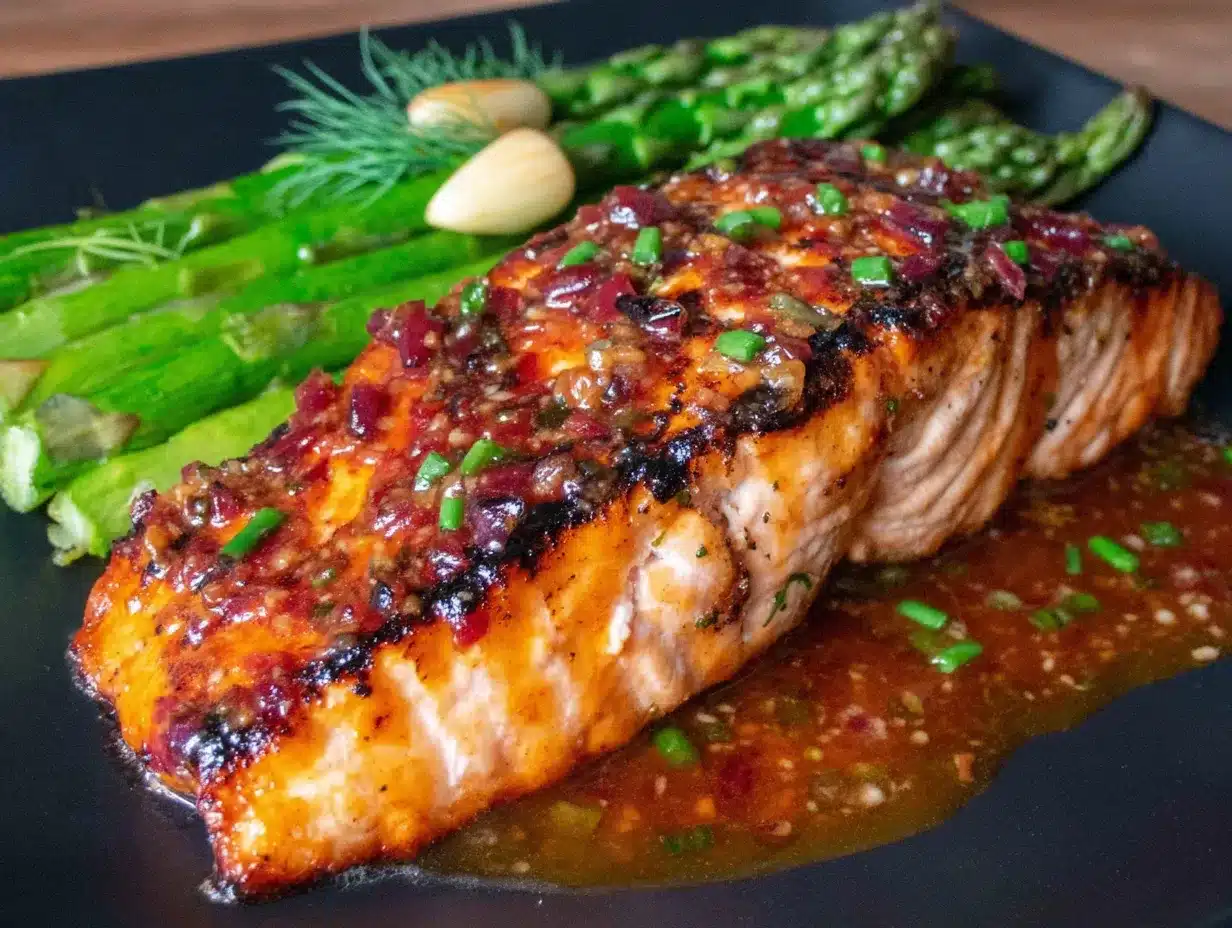
Let’s get cooking. This is straightforward, but I’ll walk you through every step so you feel confident.
- Preheat your oven to 400°F (200°C). Getting the oven hot is key. While it’s heating, line your baking sheet with a large piece of aluminum foil or parchment paper. Leave enough overhang on the sides to fold over and create a packet later.
- Prepare the asparagus. Rinse the asparagus and snap off the woody ends—they’ll naturally break about an inch from the bottom. Don’t just cut them all at the same spot; each spear has its own breaking point. Arrange them in a single layer on one half of the prepared baking sheet. Drizzle with 1 tablespoon of olive oil and a pinch of salt and pepper. Toss gently with your hands to coat.
- Pat the salmon dry. Use paper towels to gently pat the salmon fillets dry on both sides. This is important—dry fish gets a better sear and doesn’t turn the sauce watery. Place the fillets on the other half of the baking sheet, skin-side down if they have skin. Leave a little space between each fillet so they cook evenly.
- Make the garlic butter. In a small bowl, melt 4 tablespoons of unsalted butter in the microwave (about 20-30 seconds). Add the minced garlic, the zest of one lemon, 2 tablespoons of fresh lemon juice, 1/4 teaspoon of salt, a pinch of black pepper, and the red pepper flakes if using. Stir until everything is combined. The smell at this point is incredible.
- Spoon the butter over the salmon. Use a spoon to drizzle the garlic butter mixture evenly over each salmon fillet. Don’t forget to get some on the asparagus too—it’s the best part. Reserve about a tablespoon of the butter for drizzling after baking.
- Create the foil packet. Fold the overhanging foil up and over the salmon and asparagus, crimping the edges to seal it tightly. You want a closed packet so the steam can’t escape. This is what keeps the salmon incredibly moist and the asparagus perfectly tender.
- Bake for 12-15 minutes. Place the baking sheet in the preheated oven. Bake for 12 minutes for medium-rare salmon (still slightly translucent in the center) or 15 minutes for fully cooked, flaky salmon. The asparagus should be tender but still bright green. If you prefer your asparagus with more char, open the foil packet for the last 2-3 minutes of baking.
- Rest and serve. Carefully open the foil packet (watch out for the hot steam!). Let the salmon rest for 2 minutes. Drizzle the reserved garlic butter over the top. Garnish with fresh parsley and extra lemon slices if desired. Serve immediately.
Sensory cues: When it’s done, the salmon should flake easily with a fork. The asparagus should be bright green and tender, not mushy. The garlic butter should be bubbling and fragrant. If you open the foil and the butter has pooled, just spoon it back over everything.
Personal tip: I always set a timer for 12 minutes and then check. Every oven runs a little differently, and thick fillets need a minute or two more. It’s better to check early than to overcook it—dry salmon is a tragedy.
Cooking Tips & Techniques
I’ve made this recipe dozens of times, and I’ve learned a few things the hard way. Here’s what I wish someone had told me:
Don’t skip patting the salmon dry. I know it seems like a small step, but moisture is the enemy of a good sear. If the salmon is wet, it will steam instead of roast, and you’ll lose that beautiful flaky texture. I learned this after making a sad, watery batch that tasted more like boiled fish than roasted.
Watch the garlic. Fresh garlic burns easily in a hot oven. That’s why we mix it with butter—the fat protects the garlic and allows it to infuse the dish without scorching. If you’re using larger cloves, mince them finely so they distribute evenly. I once used giant chunks and ended up with bitter, burnt spots.
Timing is everything. The asparagus and salmon cook at different rates if they’re separate, but in this packet, they finish together perfectly. If you’re using thicker asparagus (like jumbo spears), give them a 2-minute head start in the oven before adding the salmon. For thin, pencil-thin asparagus, check them at 10 minutes.
Multitasking strategy: While the salmon bakes, I usually make a quick side of rice or quinoa to soak up the extra garlic butter. It takes about the same amount of time, so everything is ready at once. If I’m feeling fancy, I’ll also toss a simple salad.
Consistency tip: To ensure even cooking, make sure your salmon fillets are similar in thickness. If one is much thicker than the others, cut it in half or butterfly it so it cooks at the same rate. I once had a fillet that was twice as thick as the others, and it was raw in the middle while the rest were perfect.
Mistake to avoid: Don’t overcrowd the pan. If you’re cooking for a crowd, use two baking sheets or cook in batches. Overcrowding traps steam and prevents the asparagus from getting that lovely roasted texture. Trust me, I tried to fit eight fillets on one sheet once—it was a soggy mess.
Variations & Adaptations
This recipe is incredibly versatile. Here are some ways to change it up based on what you have or who you’re feeding:
- Dietary Adaptations: For a dairy-free version, swap the butter for a high-quality vegan butter or ghee. For a low-carb or keto option, this recipe is already perfect—just skip any starchy sides. For gluten-free, it’s naturally gluten-free as written.
- Seasonal Swaps: In the summer, use fresh green beans or zucchini instead of asparagus. In the fall, try roasted butternut squash cubes (just cut them small and give them a 5-minute head start). In the winter, broccoli florets work beautifully—just cut them into bite-sized pieces.
- Flavor Variations: Add 1 teaspoon of Dijon mustard to the garlic butter for a tangy twist. Sprinkle with fresh dill or thyme before baking for an herby version. For a spicy kick, add a pinch of cayenne pepper or a drizzle of sriracha on top before serving.
- Different Cooking Methods: If you prefer, you can cook this on the grill. Just place the foil packet directly on the grates over medium heat and cook for the same amount of time. For an air fryer, cook at 375°F for 10-12 minutes, but you’ll need to work in batches.
- Personal Variation I’ve Tried: My family loves when I add a handful of cherry tomatoes to the packet. They burst in the oven and create a little tomato-garlic sauce that’s incredible over rice. Just toss them in with the asparagus before adding the salmon.
Serving & Storage Suggestions
This dish is best served hot, straight from the oven. Here’s how to make it a full meal and how to handle leftovers.
Serving Temperature: Serve the salmon and asparagus immediately while the butter is still bubbling. I like to plate the salmon on a bed of rice or quinoa to soak up all that garlic butter. A simple side of crusty bread is also amazing for dipping.
Complementary Dishes: This pairs beautifully with a light green salad with lemon vinaigrette, or roasted baby potatoes. For a low-carb option, serve with cauliflower rice or steamed broccoli. A glass of chilled Sauvignon Blanc or a crisp sparkling water with lemon rounds out the meal perfectly.
Storage Instructions: Leftovers keep well in an airtight container in the refrigerator for up to 3 days. The asparagus will soften a bit, but the flavor stays delicious. I don’t recommend freezing this dish, as the texture of the salmon and asparagus will suffer.
Reheating Methods: The best way to reheat is in a 350°F oven for about 10 minutes, covered with foil to prevent drying out. You can also reheat in a skillet over medium heat with a splash of water or extra butter. The microwave works in a pinch, but it will make the asparagus mushy, so use it only if you’re really in a hurry.
Flavor Development: Honestly, this dish is at its best fresh. The garlic butter loses some of its punch after a day in the fridge. However, if you have leftover salmon, it’s amazing flaked over a salad the next day for lunch. The cold salmon and leftover asparagus make a surprisingly good salad topping.
Nutritional Information & Benefits
This meal is not just delicious—it’s packed with nutrients that are great for your family. Here’s a rough estimate per serving (one fillet plus asparagus):
- Calories: Approximately 380-420
- Protein: 35-40 grams
- Healthy Fats: 22-25 grams (from salmon and olive oil)
- Carbohydrates: 8-10 grams (mostly from asparagus)
- Fiber: 3-4 grams
Health Benefits: Salmon is rich in omega-3 fatty acids, which support heart and brain health. Asparagus is loaded with fiber, folate, and vitamins A, C, and K. Garlic is known for its immune-boosting properties. This is a meal that nourishes your body while satisfying your taste buds.
Dietary Considerations: This recipe is naturally gluten-free, low-carb, and keto-friendly. It’s also high in protein, making it a great option for active families. If you’re watching your sodium, just reduce the added salt.
Potential Allergens: Contains fish (salmon) and dairy (butter). For dairy-free, use vegan butter. For a fish-free option, try this method with chicken breast (cook for 20-25 minutes instead).
Personal Wellness Perspective: I love that this meal feels indulgent but is actually incredibly healthy. It’s one of those rare recipes that makes you feel good about what you’re feeding your family, without any sacrifice in flavor.
Conclusion
This one-pan garlic butter salmon with asparagus has become a staple in my kitchen, and I think it deserves a spot in yours too. It’s the recipe I turn to when I’m tired, when I’m busy, and when I want to feel like a good cook without any of the stress. It’s proof that you don’t need fancy ingredients or hours in the kitchen to create something truly special.
I love this recipe because it’s forgiving. You can swap the vegetables, adjust the seasoning, or change the cooking method, and it still comes out delicious. It’s the kind of meal that makes you look forward to dinner, even on the days when cooking feels like a chore. And honestly, isn’t that what we all want?
I’d love to hear how it goes for you! Did your family love it? Did you try a fun variation? Drop a comment below and share your experience. And if you enjoyed this recipe, please share it with a friend who needs a quick dinner win. Happy cooking, friend—you’ve got this.
Frequently Asked Questions
Can I use frozen salmon for this recipe?
Yes, you can! Just make sure to thaw the salmon completely in the refrigerator overnight and pat it very dry before cooking. Frozen salmon releases a lot of water as it thaws, which can make the sauce watery if you don’t dry it well.
How do I know when the salmon is fully cooked?
The salmon is done when it flakes easily with a fork and the internal temperature reaches 145°F (63°C). The center should be opaque, not translucent. If you don’t have a thermometer, look for the white protein (albumin) that starts to seep out of the sides—that’s a good indicator it’s almost ready.
Can I make this ahead of time for meal prep?
This dish is best fresh, but you can prep the ingredients ahead. Trim the asparagus, mince the garlic, and mix the garlic butter up to 2 days in advance. Store everything separately in the fridge. When you’re ready to cook, just assemble and bake.
What can I use instead of asparagus?
Green beans, broccoli florets, zucchini slices, or bell pepper strips all work beautifully. Just cut them to a similar size so they cook evenly. If using a denser vegetable like broccoli, give it a 2-minute head start in the oven.
How do I prevent the garlic from burning?
Mixing the garlic with butter is the key—the fat protects it from the direct heat. Also, make sure your garlic is minced finely, not chopped into chunks. If you’re worried, you can add the garlic halfway through the baking time instead of at the beginning.
Pin This Recipe!
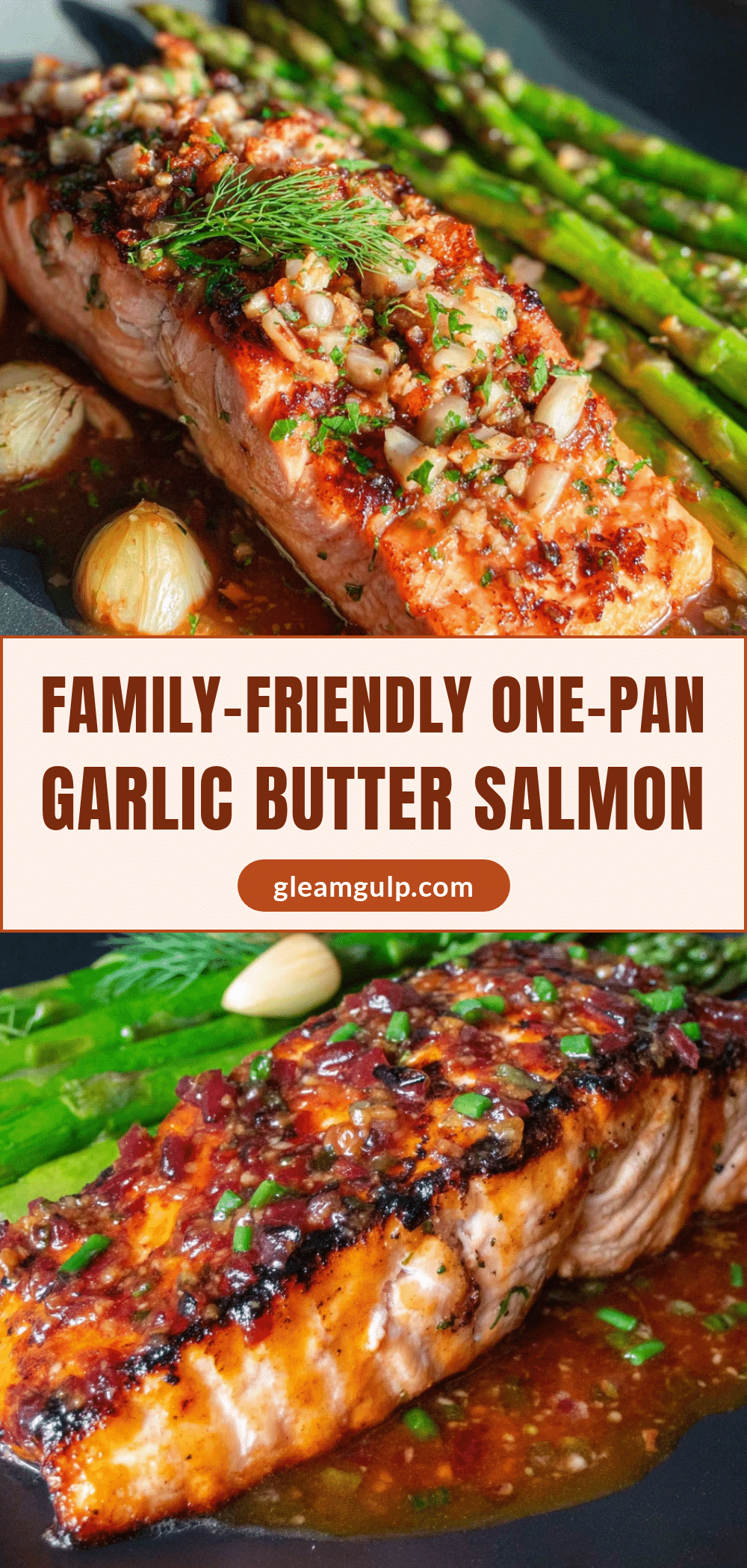
Easy One-Pan Garlic Butter Salmon with Asparagus
This one-pan garlic butter salmon with asparagus is a quick, foolproof weeknight dinner that comes together in under 30 minutes. With simple ingredients and a foil packet technique, it delivers moist, flaky salmon and perfectly tender asparagus in a rich garlic butter sauce.
- Prep Time: 10 minutes
- Cook Time: 15 minutes
- Total Time: 25 minutes
- Yield: 4 servings 1x
- Category: Main Course
- Cuisine: American
Ingredients
- 4 salmon fillets (about 6 oz each)
- 1 bunch asparagus (about 1 lb)
- 4 tablespoons unsalted butter
- 4–5 cloves garlic, minced
- 1 large lemon (juice and zest)
- 2 tablespoons olive oil
- Salt and black pepper to taste
- 1/4 teaspoon red pepper flakes (optional)
- Fresh parsley for garnish (optional)
Instructions
- Preheat your oven to 400°F (200°C). Line a baking sheet with a large piece of aluminum foil or parchment paper, leaving enough overhang to fold over and create a packet later.
- Rinse the asparagus and snap off the woody ends. Arrange them in a single layer on one half of the prepared baking sheet. Drizzle with 1 tablespoon of olive oil and a pinch of salt and pepper. Toss gently to coat.
- Pat the salmon fillets dry with paper towels. Place them on the other half of the baking sheet, skin-side down if they have skin, leaving space between each fillet.
- In a small bowl, melt 4 tablespoons of unsalted butter in the microwave (about 20-30 seconds). Add the minced garlic, zest of one lemon, 2 tablespoons of fresh lemon juice, 1/4 teaspoon of salt, a pinch of black pepper, and the red pepper flakes if using. Stir until combined.
- Spoon the garlic butter mixture evenly over each salmon fillet and some over the asparagus. Reserve about a tablespoon of the butter for drizzling after baking.
- Fold the overhanging foil up and over the salmon and asparagus, crimping the edges to seal it tightly into a packet.
- Bake for 12-15 minutes. For medium-rare salmon, bake for 12 minutes; for fully cooked, flaky salmon, bake for 15 minutes. The asparagus should be tender but still bright green.
- Carefully open the foil packet (watch out for hot steam). Let the salmon rest for 2 minutes. Drizzle the reserved garlic butter over the top. Garnish with fresh parsley and extra lemon slices if desired. Serve immediately.
Notes
Pat the salmon dry for a better texture. Fresh garlic is non-negotiable for best flavor. For thicker asparagus, give them a 2-minute head start in the oven. For a dairy-free version, use vegan butter or ghee. Leftovers keep in the refrigerator for up to 3 days; reheat in a 350°F oven for 10 minutes.
Nutrition
- Serving Size: 1 salmon fillet with
- Calories: 400
- Sugar: 3
- Sodium: 350
- Fat: 24
- Saturated Fat: 9
- Carbohydrates: 9
- Fiber: 3
- Protein: 37
Keywords: one-pan salmon, garlic butter salmon, asparagus, quick dinner, weeknight meal, healthy salmon recipe, easy salmon recipe