Love this? Save it for later!
Share the inspiration with your friends
Last Tuesday, I had exactly twenty minutes. Twenty minutes to get dinner on the table, and my fridge was looking sad. A single salmon filet, some garlic that was starting to sprout, and a bottle of honey that had crystallized at the back of the cabinet. I was supposed to be at my neighbor Sarah’s house for a quick dinner swap—she’d make the sides, I’d bring the protein. And there I was, staring at this sad little salmon, wondering how on earth I was going to turn it into something worth sharing. I mean, she was probably making something gorgeous with fresh herbs and fancy butter. I had… honey and garlic. Let me tell you, the panic was real.
So I did what any reasonable person would do when the clock is ticking and the expectations are low: I just started throwing things together. A glug of soy sauce, a squeeze of sriracha, a generous drizzle of honey, and a whole lot of minced garlic. I figured the heat would caramelize the honey and save me from total embarrassment. I popped it in the oven, crossed my fingers, and ran to grab a clean dish towel. When I pulled that salmon out, the smell alone made me stop. It was sweet, savory, sticky, and honestly, it looked like something you’d pay twenty bucks for at a nice restaurant. I brought it over to Sarah’s, feeling like a total fraud, and you know what happened next? She asked for the recipe before she even finished her first bite.
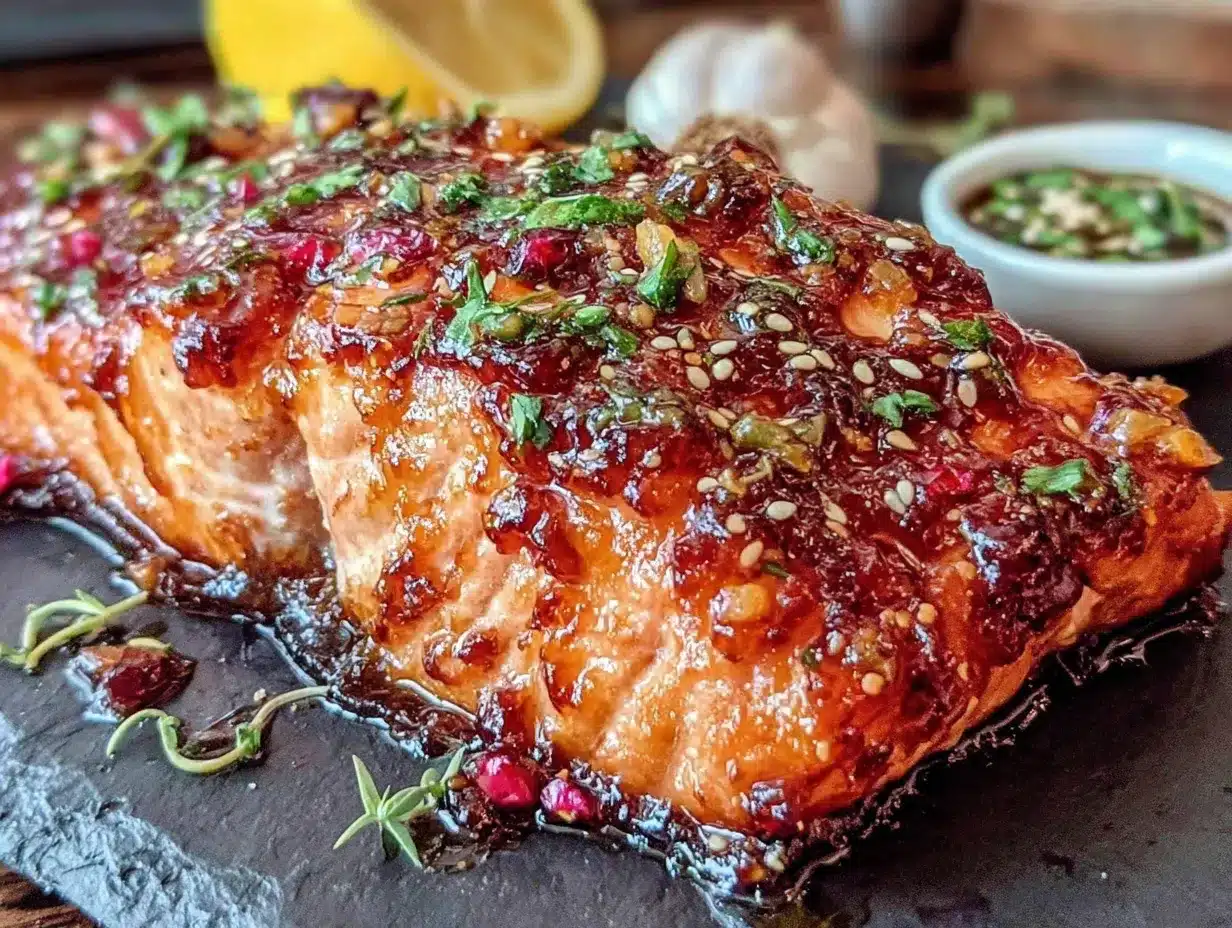
That’s the thing about this sticky honey garlic baked salmon. It’s not fancy. It’s not complicated. But it has this way of making you look like you actually know what you’re doing in the kitchen. The glaze caramelizes into this gorgeous, glossy coating that clings to every flake of salmon. It’s sweet, it’s savory, it’s got a little kick of heat, and it all comes together in the time it takes to preheat your oven. Maybe you’ve been there—staring at a bare fridge, wondering how you’re going to pull dinner out of thin air. This is the recipe that saves you every single time. I’ve been making it for years now, and it never gets old. It’s the kind of dish that makes you close your eyes after the first bite, not because it’s fancy, but because it’s just that good.
Why You’ll Love This Recipe
Let’s be real for a second. There are a million salmon recipes out there, and most of them are either too dry, too bland, or too complicated for a Tuesday night. This one is different. I’ve tested it more times than I care to admit, tweaking the honey-to-soy ratio, adjusting the bake time, and even trying it with different types of salmon. What I landed on is a recipe that works every single time, no matter what. Here’s why you’re going to love it:
- Quick & Easy: From start to finish, this comes together in under 20 minutes. Seriously. By the time your rice is done, the salmon is ready to go.
- Simple Ingredients: You probably have everything in your kitchen right now. Honey, soy sauce, garlic, and a little sriracha. No fancy grocery trips required.
- Perfect for Weeknights: This is the kind of meal that makes a busy Tuesday feel a little bit special. It’s fast, but it doesn’t taste like it.
- Crowd-Pleaser: I’ve served this to picky kids, skeptical in-laws, and friends who claim they “don’t like fish.” Every single one of them went back for seconds.
- Unbelievably Delicious: The glaze caramelizes into this sticky, finger-licking coating that’s sweet, savory, and just a little bit spicy. It’s next-level comfort food, and it’s healthy to boot.
What really sets this recipe apart is the technique. Instead of baking the salmon with the glaze from the start (which can burn or turn watery), I brush it on in layers. The result is a thick, glossy coating that clings to every bite. It’s not just another salmon recipe—it’s the one you’ll come back to again and again. Honestly, it’s the kind of dish that makes you feel like you’ve got it all together, even when you’re just barely holding on.
What Ingredients You Will Need
This recipe uses simple, everyday ingredients to create something that tastes anything but ordinary. The magic is in the balance—sweet honey, salty soy, pungent garlic, and a hint of heat. Here’s what you’ll need:
For the Salmon
- Salmon fillets – 4 (6-ounce) fillets, skin on or off (I prefer skin on for extra moisture, but either works)
- Salt and black pepper – to taste
- Olive oil – 1 tablespoon, for brushing the baking dish
For the Sticky Honey Garlic Glaze
- Honey – 1/3 cup (use a good quality honey for the best flavor; I like local raw honey)
- Soy sauce – 1/4 cup (low-sodium is best so the glaze doesn’t get too salty)
- Garlic – 4 cloves, minced (fresh is non-negotiable here; don’t use the jarred stuff)
- Sriracha – 1 tablespoon (adjust to your heat preference; you can also use red pepper flakes)
- Rice vinegar – 1 tablespoon (adds a little acidity to balance the sweetness)
- Sesame oil – 1 teaspoon (optional, but it adds a lovely nutty depth)
- Cornstarch – 1 teaspoon, mixed with 2 teaspoons water (for thickening, if needed)
For Garnish (Optional but Recommended)
- Sesame seeds – 1 tablespoon, toasted
- Green onions – 2, thinly sliced
I’ve learned a few things about these ingredients over the years. For the salmon, I always look for fillets that are bright orange-pink and smell like the ocean, not fishy. If you’re using frozen salmon, thaw it overnight in the fridge—don’t rush it in the microwave, or you’ll end up with a mushy texture. For the honey, go with something that’s not too thick or crystallized; it should drizzle easily. And the garlic? Fresh garlic is key. Pre-minced garlic from a jar has a weird metallic taste that throws off the whole glaze. Trust me on this one.
If you’re out of sriracha, you can use a pinch of red pepper flakes or a squirt of chili garlic sauce. No rice vinegar? A squeeze of fresh lime juice works beautifully. And if you’re gluten-free, swap the soy sauce for tamari or coconut aminos—the recipe works perfectly with either.
Equipment Needed
You don’t need a fully stocked kitchen to make this recipe, which is part of the beauty of it. Here’s what you’ll need:
- Baking dish – A 9×13-inch dish works perfectly. Glass or ceramic is ideal because it heats evenly.
- Small bowl – For whisking together the glaze.
- Whisk or fork – To combine the glaze ingredients.
- Basting brush – A silicone brush is great for applying the glaze, but you can also use a spoon.
- Aluminum foil – For tenting the salmon while it rests (keeps it moist).
- Instant-read thermometer – Not required, but it takes the guesswork out of doneness. Salmon is perfect at 125°F (52°C) for medium.
- Cutting board and knife – For mincing garlic and slicing green onions.
Honestly, I’ve made this recipe with just a baking dish and a fork, and it turned out great. The basting brush is nice to have, but you can absolutely drizzle the glaze over the salmon with a spoon and spread it around with the back of it. If you don’t have an instant-read thermometer, don’t stress—just look for the salmon to flake easily with a fork and be opaque all the way through. That’s your visual cue.
Preparation Method
Alright, let’s get cooking. This recipe moves fast, so I like to have everything prepped and ready before I turn on the oven. Here’s how it goes:
- Preheat your oven to 400°F (200°C). While it’s heating up, take your salmon fillets out of the fridge and let them sit at room temperature for about 10 minutes. This helps them cook more evenly.
- Make the glaze. In a small bowl, whisk together the honey, soy sauce, minced garlic, sriracha, rice vinegar, and sesame oil. Set aside about 2 tablespoons of the glaze for brushing later. The rest will be used for basting during baking.
- Prepare the baking dish. Brush the bottom of your 9×13-inch baking dish with the olive oil. Place the salmon fillets in the dish, skin-side down if they have skin. Season the tops with a pinch of salt and pepper.
- Brush on the first layer of glaze. Using your basting brush or a spoon, coat the tops of the salmon fillets with a generous layer of the glaze. Don’t drown them—just a nice, even coating.
- Bake for 8 minutes. Pop the dish in the oven and set a timer. After 8 minutes, pull it out and brush on another layer of glaze. This is where the magic starts to happen—the glaze will begin to caramelize and get sticky.
- Bake for another 4-6 minutes. Return the salmon to the oven and bake until it’s cooked through. For medium-cooked salmon (my preference), it should reach an internal temperature of 125°F (52°C) when checked with an instant-read thermometer. If you like it more well-done, go to 130°F (54°C). The edges should be slightly browned and the glaze should be bubbly and thick.
- Brush on the final layer. As soon as the salmon comes out of the oven, brush it with the reserved 2 tablespoons of glaze. This gives it that extra glossy, sticky finish that makes it look so gorgeous.
- Let it rest. Tent the dish loosely with aluminum foil and let the salmon rest for 3-5 minutes. This allows the juices to redistribute and the glaze to set. Don’t skip this step—it makes a huge difference in texture.
- Garnish and serve. Sprinkle with toasted sesame seeds and sliced green onions. Serve immediately over rice, quinoa, or with a side of roasted vegetables.
A few things I’ve learned the hard way: Don’t overbake the salmon. It goes from perfectly flaky to dry and sad in about 60 seconds. Keep an eye on it during the last few minutes of baking. Also, if your glaze seems too thin after baking, you can simmer the leftover glaze in a small saucepan for 2-3 minutes until it thickens, then drizzle it over the finished salmon. That trick has saved me more than once.
Cooking Tips & Techniques
Over the years, I’ve made this sticky honey garlic baked salmon more times than I can count. And let me tell you, I’ve had my share of failures. The first time I made it, I didn’t bother with the layering technique—I just poured all the glaze on at once. The result was a watery, sad mess that didn’t caramelize at all. The second time, I got distracted and left it in the oven too long. Dry salmon, anyone? But I learned from every mistake, and now I’ve got a few tricks up my sleeve.
The layering technique is everything. This is the single most important tip I can give you. By brushing the glaze on in stages, you build up a thick, sticky coating that caramelizes beautifully. If you dump it all on at once, the salmon releases moisture and the glaze gets diluted. Trust me on this one.
Don’t skip the rest time. I know it’s tempting to dive right in, but letting the salmon rest under foil for 3-5 minutes makes a world of difference. The carryover cooking finishes the job gently, and the glaze sets into that perfect sticky coating.
Watch the sugar content. Honey has a lot of natural sugar, which means it can burn easily. If your oven runs hot, check the salmon at the 10-minute mark. You want the glaze to be bubbly and browned, not blackened. If it’s browning too fast, tent the dish with foil for the last few minutes.
Use a thermometer. Honestly, this is the best investment you can make for cooking salmon. It takes the guesswork out completely. Salmon is perfectly cooked at 125°F (52°C) for medium, which is how I like it. If you prefer it more well-done, pull it at 130°F (54°C). Anything above that and you’re entering dry territory.
Multitask like a pro. While the salmon is baking, cook your rice or steam your vegetables. The salmon only takes about 12-14 minutes total, so you want everything else to be ready at the same time. I like to start my rice first, then pop the salmon in when the rice is about halfway done. Perfect timing every time.
Variations & Adaptations
One of the things I love most about this recipe is how adaptable it is. Over the years, I’ve tried all kinds of variations, and they’ve all been delicious. Here are a few of my favorites:
Spicy Mango Version: Swap the honey for mango puree (about 1/3 cup) and add an extra teaspoon of sriracha. The result is a sweet, tropical glaze with a serious kick. I made this for a summer barbecue, and it was gone in minutes.
Low-Carb/Keto Adaptation: Replace the honey with a sugar-free honey substitute or use 2 tablespoons of monk fruit sweetener mixed with 2 tablespoons of water. The texture won’t be quite as sticky, but the flavor is still fantastic. Serve it with cauliflower rice to keep it keto-friendly.
Air Fryer Method: This works beautifully in an air fryer. Preheat the air fryer to 375°F (190°C). Brush the salmon with the glaze and cook for 8-10 minutes, brushing with more glaze halfway through. The result is even crispier edges and a super-concentrated glaze.
Garlic Lovers Version: Double the garlic. I mean it. Use 8 cloves instead of 4. The garlic mellows as it bakes, so you get this sweet, roasty flavor that’s absolutely addictive. Just be careful—fresh garlic can burn if your oven runs hot, so keep an eye on it.
Herb-Infused Twist: Add a teaspoon of dried thyme or rosemary to the glaze. The earthy herbs balance the sweetness of the honey beautifully. I tried this on a whim one night when I had leftover herbs, and it’s been a favorite ever since.
If you’re cooking for someone with allergies, this recipe is easy to adapt. For a nut-free version, skip the sesame oil and seeds. For a gluten-free version, use tamari instead of soy sauce. And if you’re avoiding honey, maple syrup or agave nectar work as substitutes, though the flavor will be slightly different.
Serving & Storage Suggestions
This sticky honey garlic baked salmon is incredibly versatile when it comes to serving. Here’s how I like to enjoy it:
Serving Temperature: Serve it warm, straight from the oven. The glaze is at its stickiest and most luscious when it’s fresh. If you let it sit too long, the glaze can harden slightly, so I recommend serving it within 15 minutes of pulling it out of the oven.
What to Serve With It: This salmon is amazing over a bed of fluffy jasmine rice or coconut rice. The rice soaks up all that extra glaze, and honestly, that’s my favorite part. For a low-carb option, serve it with steamed broccoli or a crisp green salad with a light vinaigrette. Roasted asparagus or green beans are also fantastic. And if you’re feeling indulgent, a side of garlic mashed potatoes is pure comfort.
Beverage Pairings: A crisp white wine like Sauvignon Blanc or Pinot Grigio pairs beautifully with the sweet and savory flavors. For a non-alcoholic option, try iced green tea with a splash of lemon—it cuts through the richness perfectly.
Storage: Leftover salmon can be stored in an airtight container in the refrigerator for up to 3 days. The glaze will soften slightly, but the flavor is still amazing. I like to flake the cold salmon over a salad for lunch the next day.
Reheating: The best way to reheat this salmon is in a low oven. Place it on a baking sheet and warm it at 275°F (135°C) for about 10 minutes. You can also reheat it in a skillet over medium-low heat with a splash of water to loosen the glaze. Avoid the microwave—it will make the salmon rubbery and the glaze will turn into a sad, watery mess.
Freezing: You can freeze the baked salmon for up to 2 months. Wrap each fillet tightly in plastic wrap, then place them in a freezer-safe bag. To thaw, move it to the refrigerator overnight. Reheat gently in the oven as described above. The texture won’t be quite as perfect as fresh, but it’s still delicious.
Nutritional Information & Benefits
This sticky honey garlic baked salmon isn’t just delicious—it’s packed with nutrients that are good for you. Here’s a rough breakdown per serving (based on 4 servings, using the full amount of glaze):
| Nutrient | Amount per Serving |
|---|---|
| Calories | 385 |
| Protein | 35g |
| Fat | 16g |
| Saturated Fat | 3g |
| Carbohydrates | 24g |
| Fiber | 0g |
| Sugar | 22g |
| Sodium | 720mg |
Salmon is one of the best sources of omega-3 fatty acids, which are essential for heart and brain health. It’s also packed with high-quality protein, B vitamins, and selenium. The honey provides natural energy, and the garlic offers immune-boosting properties. This is a meal that nourishes your body while satisfying your taste buds.
Dietary Considerations: This recipe is naturally dairy-free and nut-free (if you skip the sesame). For a gluten-free version, use tamari instead of soy sauce. For a lower-sugar option, reduce the honey to 1/4 cup—the glaze will be less sticky, but still delicious. The only potential allergen is fish, so it’s not suitable for those with seafood allergies.
Conclusion
So there you have it—my go-to sticky honey garlic baked salmon that has saved me from takeout temptation more times than I can count. It’s quick, it’s easy, and it tastes like you spent way more effort than you actually did. The glaze caramelizes into this gorgeous, glossy coating that’s sweet, savory, and just a little bit spicy. Every bite is tender, flaky, and packed with flavor.
What I love most about this recipe is how forgiving it is. You can tweak the sweetness, adjust the heat, or swap in different herbs, and it still works. It’s the kind of recipe that becomes a staple—the one you turn to when you need dinner on the table fast, but you still want it to feel special.
I’d love to hear how it turns out for you. Did you add extra garlic? Try it with the mango version? Serve it with something unexpected? Drop a comment below and let me know. And if you loved it, share it with a friend who needs a quick weeknight win. Happy cooking!
Frequently Asked Questions
Can I use frozen salmon for this recipe?
Yes, absolutely. Just make sure to thaw the salmon completely in the refrigerator overnight before cooking. Pat it dry with paper towels to remove excess moisture, which helps the glaze stick better. Do not try to cook it from frozen—the texture will be uneven, and the glaze won’t caramelize properly.
How do I know when the salmon is done?
The best way is to use an instant-read thermometer. Insert it into the thickest part of the fillet; it should read 125°F (52°C) for medium, or 130°F (54°C) for medium-well. If you don’t have a thermometer, look for the salmon to flake easily with a fork and be opaque all the way through. The glaze should be bubbly and browned at the edges.
Can I make the glaze ahead of time?
Yes! The glaze can be made up to 3 days in advance and stored in an airtight container in the refrigerator. Just give it a good whisk before using, as the honey can settle. If it thickens too much in the fridge, microwave it for 10-15 seconds to loosen it up.
Why is my glaze not getting sticky?
This usually happens if the glaze is too thin or if the salmon releases too much moisture during baking. Make sure you’re brushing the glaze on in layers rather than pouring it all on at once. Also, pat the salmon dry with paper towels before seasoning to remove any surface moisture. If your glaze is still runny, you can simmer it in a small saucepan for 2-3 minutes to thicken it before brushing it on the cooked salmon.
Can I use this glaze on other proteins?
Absolutely. This glaze is fantastic on chicken thighs, pork chops, or even tofu. The cooking times will vary, but the layering technique works the same way. For chicken, bake at 400°F (200°C) for 20-25 minutes, brushing with glaze every 8 minutes. For tofu, press it dry, then bake at 375°F (190°C) for 15-20 minutes.
Pin This Recipe!
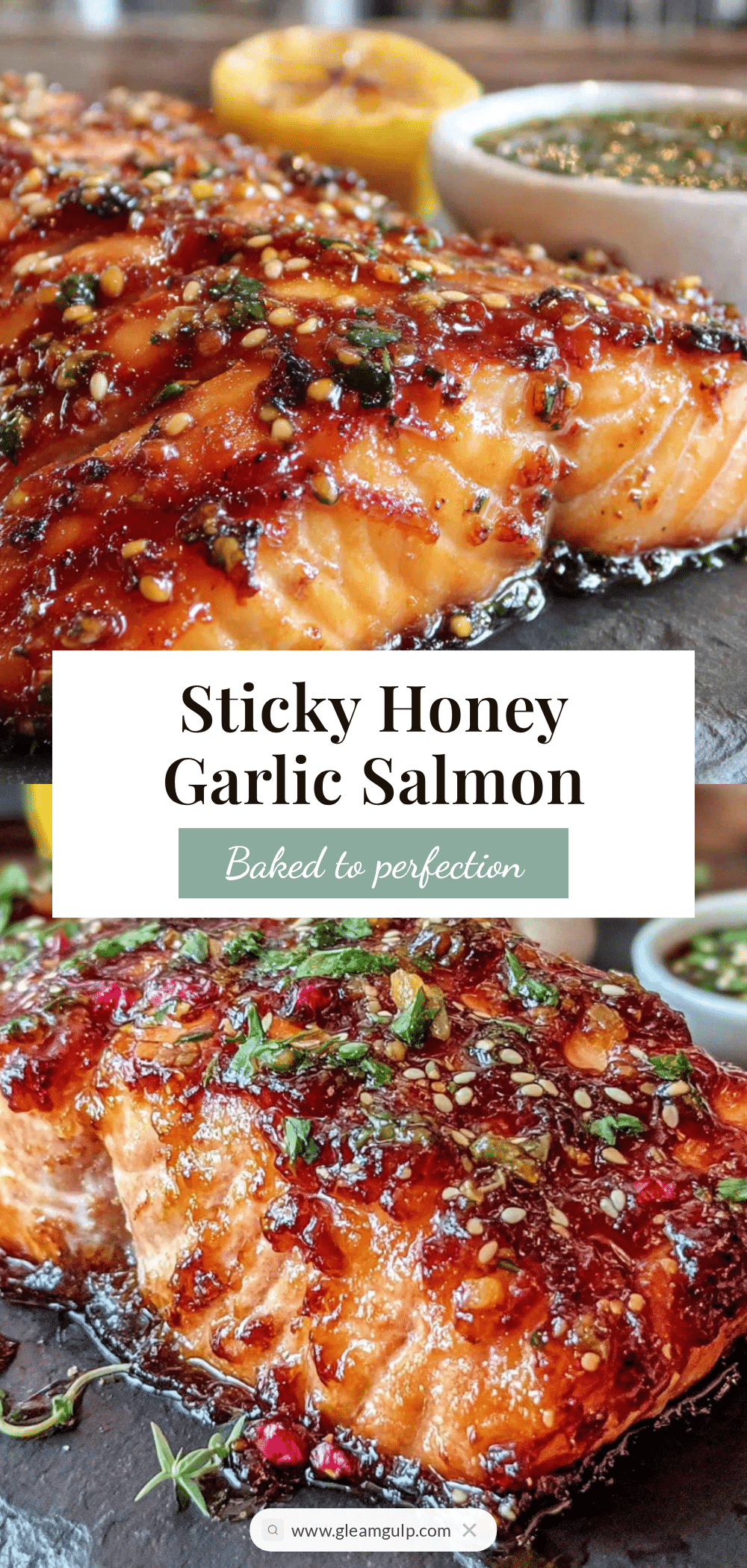
Best Sticky Honey Garlic Baked Salmon (Easy 20-Min Recipe)
A quick and easy salmon recipe with a sweet, savory, and slightly spicy honey garlic glaze that caramelizes into a sticky, glossy coating. Perfect for busy weeknights, this dish comes together in under 20 minutes with simple ingredients.
- Prep Time: 5 minutes
- Cook Time: 12-14 minutes
- Total Time: 20 minutes
- Yield: 4 servings 1x
- Category: Main Course
- Cuisine: American
Ingredients
- 4 (6-ounce) salmon fillets, skin on or off
- Salt and black pepper to taste
- 1 tablespoon olive oil
- 1/3 cup honey
- 1/4 cup low-sodium soy sauce
- 4 cloves garlic, minced
- 1 tablespoon sriracha
- 1 tablespoon rice vinegar
- 1 teaspoon sesame oil (optional)
- 1 teaspoon cornstarch mixed with 2 teaspoons water (for thickening, if needed)
- 1 tablespoon toasted sesame seeds (for garnish)
- 2 green onions, thinly sliced (for garnish)
Instructions
- Preheat your oven to 400°F (200°C). Let salmon fillets sit at room temperature for about 10 minutes.
- In a small bowl, whisk together honey, soy sauce, minced garlic, sriracha, rice vinegar, and sesame oil. Set aside about 2 tablespoons of the glaze for brushing later.
- Brush the bottom of a 9×13-inch baking dish with olive oil. Place salmon fillets in the dish, skin-side down. Season tops with salt and pepper.
- Brush a generous layer of the glaze onto the salmon fillets.
- Bake for 8 minutes. Remove from oven and brush on another layer of glaze.
- Return to oven and bake for another 4-6 minutes, until salmon is cooked through (internal temperature of 125°F/52°C for medium).
- As soon as salmon comes out of the oven, brush with the reserved 2 tablespoons of glaze.
- Tent the dish loosely with aluminum foil and let rest for 3-5 minutes.
- Sprinkle with toasted sesame seeds and sliced green onions. Serve immediately.
Notes
Brush glaze in layers for best caramelization. Don’t overbake; salmon goes from flaky to dry quickly. Let rest under foil for 3-5 minutes. For a thicker glaze, simmer leftover glaze in a small saucepan for 2-3 minutes.
Nutrition
- Serving Size: 1 fillet
- Calories: 385
- Sugar: 22
- Sodium: 720
- Fat: 16
- Saturated Fat: 3
- Carbohydrates: 24
- Protein: 35
Keywords: sticky honey garlic salmon, baked salmon, easy salmon recipe, quick weeknight dinner, honey garlic glaze