Love this? Save it for later!
Share the inspiration with your friends
This was supposed to be a crusty sourdough boule. You know the kind—the one you score with a lame and watch puff up in the oven like a proud balloon. I had my starter bubbling, my kitchen scale ready, and my whole day planned around a slow, patient bulk fermentation. But somewhere between the second stretch and fold and a phone call from my sister about her broken washing machine, I lost track of time. The dough had over-proofed. It was slack, jiggly, and way too sticky to shape into anything resembling a proper loaf.
I stood there staring at this sticky mess in my favorite ceramic bowl, honestly ready to dump it and start over. But I’d already fed my starter twice that week—I wasn’t about to waste it. So I did something desperate. I grabbed a half-sheet pan, drizzled it with a generous pool of olive oil—the good stuff I usually save for salads—and dumped the whole wobbly dough right in. I stretched it out best I could, dimpled it with my fingertips, and sprinkled on some dried rosemary I found hiding in the back of my spice drawer. It felt wrong. It felt like surrender.
Forty minutes later, I pulled out the most beautiful, golden, crackling focaccia I had ever made. The bottom was crispy from the oil, the inside was soft and airy with those big, irregular holes you dream about. My neighbor, who had come over to borrow eggs, walked in right as I was slicing it and asked if I’d taken a class. I just laughed and handed her a piece. That was three years ago, and I haven’t made a traditional boule since. This same-day sourdough focaccia with rosemary is now my go-to bread—it’s forgiving, fast, and honestly, it tastes better than anything I ever planned to make. Maybe you’ve been there, staring at a dough that didn’t cooperate? Let me tell you, this recipe is your backup plan that became the star.
Why You’ll Love This Recipe
Let me be real with you—I’ve tested this recipe more times than I can count. I’ve made it with active starter straight from the fridge, with discard that was three days old, and even with a weak starter that was still building strength. Every single time, it worked. That’s the beauty of focaccia. It doesn’t demand perfection; it rewards patience and a little olive oil.
- Quick & Easy: Unlike traditional sourdough that takes 12 to 24 hours, this same-day version goes from mixing bowl to your dinner table in about 5 to 6 hours. Perfect for when you wake up craving fresh bread but don’t want to plan two days ahead.
- Simple Ingredients: You probably have everything already. Flour, water, salt, olive oil, and your sourdough starter. The rosemary is a lovely touch, but even that is optional if you’re in a pinch.
- Perfect for Beginners: If you’re new to sourdough and scared of shaping, this is your bread. No scoring, no slashing, no worrying about oven spring. You just stretch, dimple, and bake.
- Crowd-Pleaser: I’ve brought this to potlucks, dinner parties, and casual backyard hangs. It disappears faster than anything else on the table. Kids love the dimples, adults love the olive oil crunch.
- Unbelievably Delicious: The combination of tangy sourdough, fruity olive oil, and fragrant rosemary is pure comfort. The texture is soft and chewy with a crackly bottom that makes that perfect sound when you cut into it.
What makes this recipe different from the rest? It’s the technique. Most focaccia recipes use commercial yeast and call for a short rise, but sourdough gives you that complex, slightly tangy flavor that you just can’t fake. And by using a same-day method—thanks to a warm proofing spot and a high-hydration dough—you get that sourdough depth without waiting overnight. It’s not just another version; it’s your best version. I mean that.
What Ingredients You Will Need
This recipe uses simple, pantry-friendly ingredients to deliver big flavor and that signature airy texture. Nothing fancy here—just good staples and a little patience.
- Bread Flour (500g / about 4 cups): I prefer bread flour for its higher protein content, which gives the focaccia a chewier, more structured crumb. King Arthur Flour is my go-to brand for consistent results. If you only have all-purpose flour, it will still work, but the texture will be slightly softer and less chewy.
- Water (400g / about 1 ¾ cups, lukewarm): Lukewarm water (around 85°F or 30°C) helps kickstart fermentation without shocking your starter. Tap water is fine, but if yours is heavily chlorinated, let it sit out for an hour first.
- Sourdough Starter (150g / about ¾ cup, bubbly and active): This is the heart of the recipe. Use your starter when it’s at its peak—doubled in size, full of bubbles, and smells fruity or tangy. If your starter is sluggish, give it a few feedings before baking. I’ve used both 100% hydration starters and stiffer ones; both work, but a runnier starter will make the dough stickier.
- Salt (10g / about 1 ½ teaspoons, fine sea salt): Salt is crucial for flavor and for strengthening the gluten network. I use fine sea salt because it dissolves evenly. Avoid coarse salt unless you dissolve it in the water first.
- Olive Oil (60ml / about ¼ cup, plus more for the pan and topping): Don’t skimp here. The oil is what gives focaccia its crispy bottom and rich flavor. I use a good-quality extra virgin olive oil for the pan and a lighter one for the dough itself. For the final drizzle, use the good stuff—it makes a difference.
- Fresh Rosemary (2 tablespoons, chopped): Fresh rosemary is ideal for its bright, piney aroma. If you only have dried, use about 1 tablespoon and rub it between your palms to release the oils before sprinkling. I’ve also used thyme and oregano in a pinch—both work beautifully.
- Flaky Sea Salt (for topping, optional but recommended): A sprinkle of flaky salt like Maldon right before baking adds a lovely crunch and enhances the rosemary flavor. Skip if you’re watching sodium, but honestly, it’s worth it.
Substitution Guidance: For a gluten-free version, use a good 1-to-1 gluten-free flour blend with xanthan gum, but note that the texture will be denser. If you don’t have a sourdough starter, you can use 1 teaspoon of active dry yeast mixed with 150g of warm water and 150g of flour, but you’ll lose that signature tang.
Equipment Needed
You don’t need a fancy kitchen to make this focaccia. Here’s what I use every time:
- Half-Sheet Pan (13×18 inches): This is the perfect size for focaccia. It gives you a thin, crispy base with plenty of surface area for those golden dimples. No sheet pan? A 9×13-inch baking dish works too—your focaccia will just be thicker and need a few extra minutes in the oven.
- Digital Kitchen Scale: I cannot stress this enough—weigh your ingredients. Flour volume measurements are wildly inconsistent. A scale costs about $15 and will save you from flat, dense bread. Trust me.
- Large Mixing Bowl: Go for a bowl that’s at least 4 quarts. The dough will double in size, and you need room for stretching and folding without making a mess.
- Dough Scraper (optional but helpful): A plastic bench scraper makes handling sticky dough so much easier. If you don’t have one, a silicone spatula works.
- Plastic Wrap or a Shower Cap: To cover the dough during bulk fermentation. A reusable shower cap is my secret weapon—it fits perfectly over the bowl and doesn’t waste plastic.
- Oven Thermometer: Ovens lie. Mine runs 25°F too hot. An oven thermometer ensures you’re baking at the right temperature. Cheap and essential.
If you’re just starting out, don’t overthink the equipment. I made my first focaccia with a cheap sheet pan and a wooden spoon. It still came out great. The real tool is patience.
Preparation Method
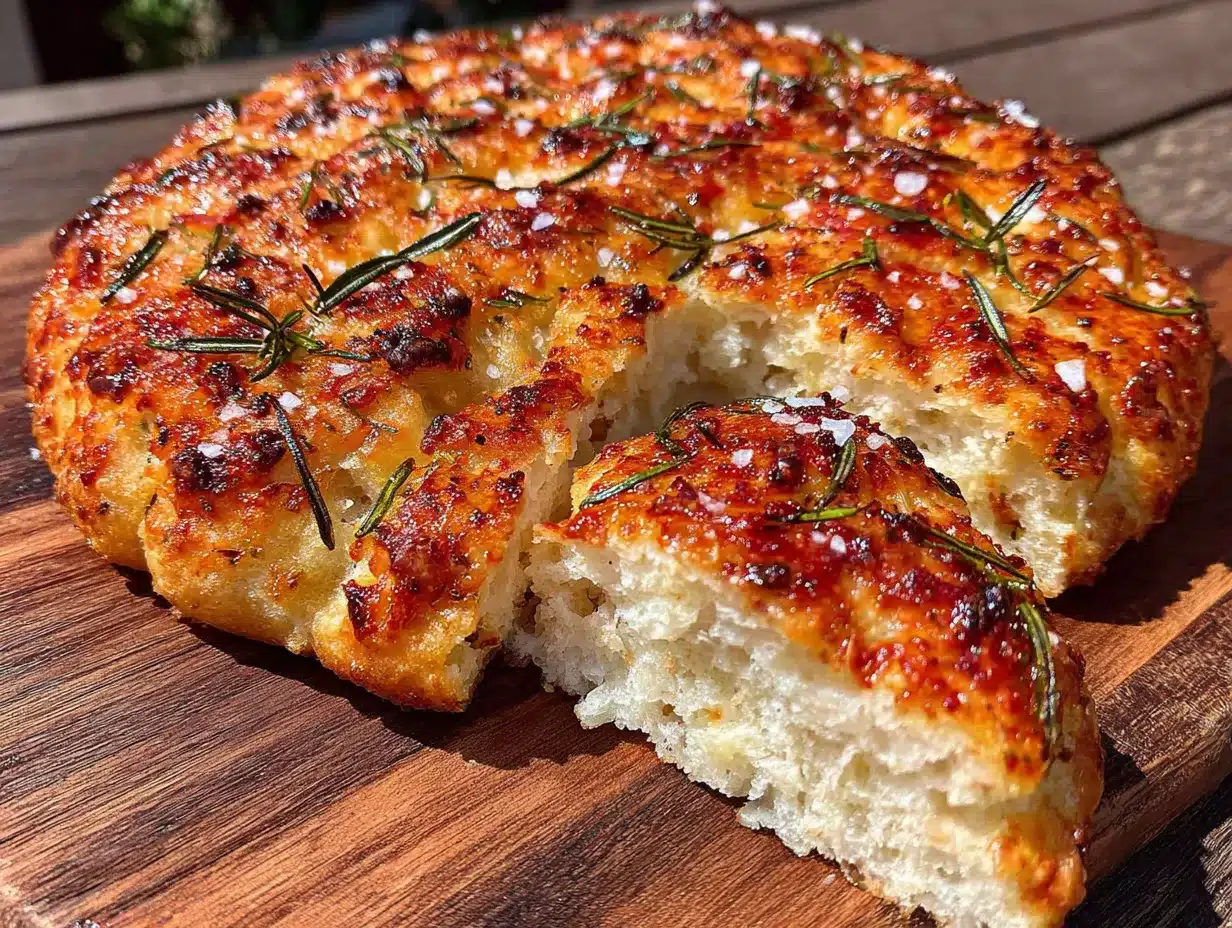
This is where the magic happens. Follow these steps closely, and you’ll have a focaccia that rivals any bakery.
- Mix the Dough (8:00 AM): In your large mixing bowl, combine 500g bread flour and 10g fine sea salt. Whisk them together to distribute the salt evenly. In a separate bowl or measuring cup, mix 400g lukewarm water with 150g active sourdough starter. Stir until the starter is mostly dissolved—it doesn’t need to be perfect. Pour the wet ingredients into the dry and mix with a dough scraper or your hand until no dry flour remains. The dough will be shaggy and sticky. That’s exactly what you want. Cover the bowl with plastic wrap and let it rest for 30 minutes. This is called the autolyse, and it helps the flour absorb water and start developing gluten.
- Stretch and Fold (8:30 AM to 10:00 AM): Over the next 1.5 hours, you’ll perform a series of stretch and folds. Every 30 minutes, wet your hand slightly (to prevent sticking), grab one corner of the dough, stretch it up as high as it will go without tearing, and fold it over the center. Rotate the bowl a quarter turn and repeat for all four sides. Do this a total of 3 to 4 times. You’ll notice the dough becoming smoother and less sticky with each fold. This builds strength without kneading. After the final fold, cover the bowl and let it rest for the remainder of the bulk fermentation.
- Bulk Fermentation (10:00 AM to 1:00 PM): Let the dough rise at a warm spot in your kitchen—around 75°F to 80°F (24°C to 27°C) is ideal. If your kitchen is cooler, place the bowl in your oven with the light on (but not the heat). The dough should double in size and be bubbly and jiggly. This usually takes about 3 to 4 hours. Don’t rush it. A slow rise develops better flavor. If the dough smells overly alcoholic or vinegary, it’s over-proofed—but don’t panic, you can still make focaccia with it (that’s how this recipe was born!).
- Prepare the Pan (1:00 PM): Pour about 2 to 3 tablespoons of olive oil into your half-sheet pan. Use your hands to spread it evenly across the bottom and up the sides. The oil should pool slightly—this is what gives you that crispy, fried bottom. Gently scrape the dough out of the bowl and into the oiled pan. Don’t deflate it too much. Let it rest for 20 minutes, uncovered, to relax the gluten.
- Stretch and Dimple (1:20 PM): With oiled fingers, gently stretch the dough to fill the pan. It will resist at first, so work slowly. If it springs back too much, let it rest another 10 minutes and try again. Once the dough fills the pan evenly, dimple it. Press your fingertips straight down to the bottom of the pan, creating deep wells. Don’t be shy—the dimples hold the oil and rosemary. Drizzle another tablespoon of olive oil over the top, letting it pool in the dimples. Sprinkle the chopped fresh rosemary and a pinch of flaky sea salt evenly over the surface.
- Final Proof (1:30 PM to 2:15 PM): Cover the pan loosely with plastic wrap or a clean kitchen towel. Let the dough rise for another 45 minutes to 1 hour. It should puff up noticeably and look airy. Meanwhile, preheat your oven to 450°F (230°C) with a rack in the middle position. Place an empty baking sheet on the bottom rack to catch any drips (optional, but it helps with even heat).
- Bake (2:15 PM to 2:45 PM): Uncover the focaccia and place it in the preheated oven. Bake for 25 to 30 minutes, rotating the pan halfway through for even browning. The top should be deep golden brown, and the bottom should be crispy and sound hollow when tapped. If you have an instant-read thermometer, the internal temperature should be around 200°F (93°C).
- Cool and Serve (2:45 PM onward): Remove the focaccia from the oven and let it cool in the pan for 5 minutes. Then transfer it to a wire rack to cool completely—if you can wait that long. The texture improves as it cools, but honestly, I always steal a corner piece while it’s still warm. Drizzle with a final touch of olive oil before serving.
Cooking Tips & Techniques
I’ve made this recipe dozens of times, and I’ve learned a few things the hard way. Here’s what I wish someone had told me:
- Use a warm proofing spot: If your kitchen is cold (below 70°F), your bulk fermentation will take forever. I’ve had it take 6 hours in winter. Use your oven with the light on, or place the bowl on top of your fridge where it’s warmer. A consistent temperature is key.
- Don’t skip the stretch and folds: I know it’s tempting to just mix and walk away, but those folds build the gluten structure that gives focaccia its airy crumb. If you skip them, your bread will be flat and dense. Set a timer—it’s only 30 seconds of work every 30 minutes.
- Oil is your friend: Be generous with the olive oil in the pan. I’ve seen recipes that use just a tablespoon, and the bottom comes out pale and sad. You want a thin layer that pools slightly. It’s what creates that crackly, almost fried bottom that everyone fights over.
- Dimple with confidence: Press your fingers all the way down to the pan. If you’re timid, the dimples will disappear during baking. Deep dimples hold the oil and salt, creating little pockets of flavor. Go ahead—be aggressive.
- Let it cool: I know it’s hard, but cutting into hot focaccia will make the inside gummy. The starches need time to set. Give it at least 20 minutes on a wire rack. The crust will stay crispy, and the crumb will be perfectly tender.
One time, I forgot to add the salt. The focaccia rose beautifully but tasted flat and lifeless. Salt isn’t just for flavor—it strengthens the gluten and controls fermentation. Don’t skip it.
Variations & Adaptations
This recipe is incredibly flexible. Here are a few ways I’ve adapted it over the years:
- Herb & Garlic Focaccia: Swap the rosemary for 2 tablespoons of fresh thyme and 3 minced garlic cloves. Add the garlic to the oil in the pan before adding the dough—it infuses the bottom with amazing flavor. I made this for a garlic lover’s birthday, and it was gone in 10 minutes.
- Tomato & Olive Focaccia: After dimpling, press ½ cup of halved cherry tomatoes and ¼ cup of pitted Kalamata olives into the dough. The tomatoes burst in the oven and create little pockets of sweetness. This is my go-to summer version when tomatoes are in season.
- Cheesy Focaccia: Sprinkle ½ cup of grated Parmesan or crumbled feta over the top before baking. The cheese gets crispy and golden in the dimples. For an extra decadent version, add ½ cup of shredded mozzarella halfway through baking—it melts into gooey pockets.
- Everything Bagel Focaccia: Skip the rosemary and sprinkle everything bagel seasoning (sesame seeds, poppy seeds, dried garlic, dried onion, salt) over the top before baking. This is my husband’s favorite—it’s perfect for breakfast with cream cheese.
- Gluten-Free Adaptation: Use a high-quality 1-to-1 gluten-free flour blend that contains xanthan gum. Reduce the water to 350g, as gluten-free flours absorb differently. The texture will be more cake-like, but it’s still delicious. I’ve made this for a celiac friend, and she nearly cried.
Serving & Storage Suggestions
This focaccia is best served warm, within an hour of baking. The crust is at its crispiest, and the interior is pillowy soft. Here’s how I like to serve it:
- As a Side: Cut into squares and serve alongside soups, stews, or salads. It’s incredible with a bowl of tomato basil soup or a hearty minestrone. The olive oil and rosemary complement the acidity of tomatoes perfectly.
- As a Sandwich Base: Slice the focaccia horizontally and use it for sandwiches. It holds up beautifully to moist fillings like roasted vegetables, fresh mozzarella, and pesto. I made a turkey and provolone sandwich on it last week, and it was the best lunch I’d had in months.
- For Dipping: Serve with a small dish of high-quality balsamic vinegar and olive oil for dipping. Add a sprinkle of black pepper and flaky salt. It’s an appetizer that feels fancy but takes zero effort.
Storage: Store leftover focaccia in an airtight container at room temperature for up to 2 days. Do not refrigerate—it will dry out the bread. To reheat, place it in a 350°F (175°C) oven for 5 to 7 minutes. The crust will crisp back up. You can also freeze it for up to 3 months. Wrap it tightly in plastic wrap and then foil. Thaw at room temperature and reheat in the oven. The flavor actually improves after freezing—the tanginess becomes more pronounced.
One note: focaccia is best eaten the day it’s made. After 24 hours, the bottom loses some of its crunch. But honestly, I’ve never had leftovers last that long.
Nutritional Information & Benefits
This is a rustic bread, so it’s not exactly health food, but it does have some redeeming qualities. Per serving (1/8 of the recipe):
- Calories: Approximately 280
- Carbohydrates: 45g
- Protein: 8g
- Fat: 8g (mostly from heart-healthy olive oil)
- Fiber: 2g
- Sodium: 400mg (varies with added salt)
The sourdough fermentation process breaks down phytic acid in the flour, making the minerals more bioavailable. This means your body can absorb more of the iron, zinc, and magnesium naturally present in the wheat. Plus, the lactic acid bacteria in sourdough can support gut health by promoting a healthy microbiome. Olive oil is rich in monounsaturated fats and antioxidants, which are great for heart health. Rosemary contains compounds like rosmarinic acid that have anti-inflammatory properties.
Is this a daily bread? Maybe not if you’re watching carbs. But as an occasional treat, it’s far better for you than most store-bought breads that are loaded with preservatives and additives. I feel good serving this to my family because I know exactly what’s in it—flour, water, salt, oil, and love.
Conclusion
This same-day sourdough focaccia with rosemary has become my signature bread, and I think it will become yours too. It started as a happy accident—a failed boule that turned into something better—and now I make it on purpose every single week. The process is forgiving, the ingredients are simple, and the result is always, always worth it. Whether you’re a seasoned sourdough baker or a nervous beginner, this recipe will make you feel like a pro.
I’d love to hear how yours turns out. Did you try a variation? Did you burn the bottom like I did the first time? (Don’t worry—it’s still edible, I promise.) Leave a comment below and share your experience. And if you loved it, please share this recipe with a friend who needs a little bread in their life. Happy baking, friend—you’ve got this.
Frequently Asked Questions
Can I use all-purpose flour instead of bread flour?
Yes, you can. The focaccia will be slightly softer and less chewy, but it will still be delicious. If using all-purpose flour, you may need to reduce the water slightly (try 380g) since it absorbs less liquid than bread flour.
My starter isn’t very active. Can I still make this recipe?
You can, but the rise will be slower and the flavor less tangy. Make sure your starter is at least doubling in size within 6 to 8 hours of feeding. If it’s sluggish, give it a few warm feedings (using lukewarm water) before baking. Alternatively, you can add ¼ teaspoon of active dry yeast to boost the rise.
Why did my focaccia come out flat?
Flat focaccia usually means one of three things: your starter wasn’t active enough, the dough didn’t proof long enough, or you deflated it too much when transferring to the pan. Next time, be gentle with the dough and make sure it’s doubled in size before baking.
Can I make this gluten-free?
Yes! Use a high-quality gluten-free flour blend that contains xanthan gum. Reduce the water to 350g and expect a denser, more cake-like texture. The flavor will still be lovely, and it’s a great option for those with celiac disease or gluten sensitivity.
How do I store leftover focaccia?
Store it in an airtight container at room temperature for up to 2 days. Do not refrigerate—it will dry out. To reheat, place it in a 350°F (175°C) oven for 5 to 7 minutes. You can also freeze it for up to 3 months. Wrap it tightly in plastic wrap and foil before freezing.
Pin This Recipe!
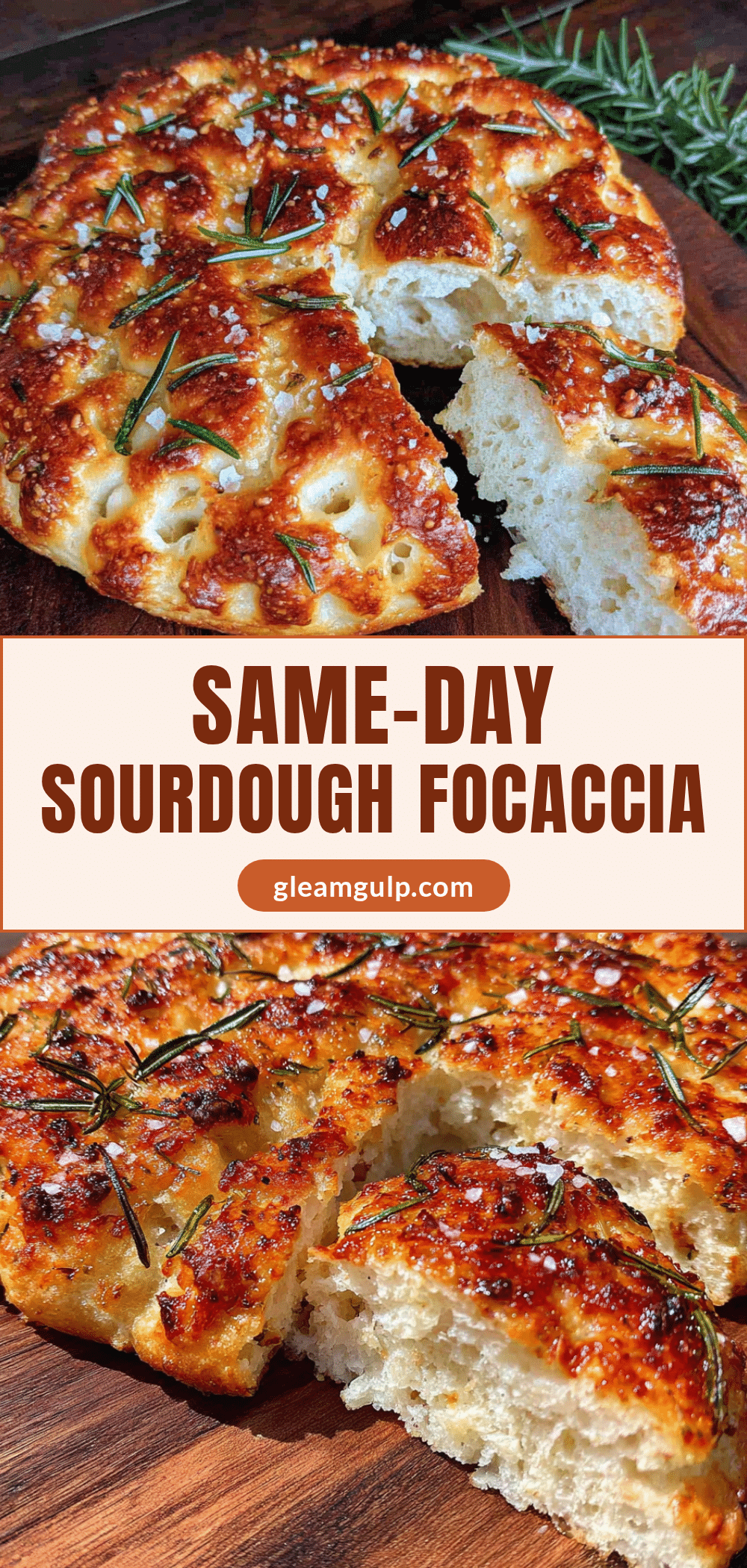
Best Same-Day Sourdough Focaccia | Easy Rosemary Recipe

This same-day sourdough focaccia with rosemary is forgiving, fast, and delivers a tangy, airy crumb with a crispy olive oil bottom. Perfect for beginners and seasoned bakers alike, it goes from mixing bowl to table in about 5 to 6 hours.
- Prep Time: 15 minutes
- Cook Time: 30 minutes
- Total Time: 5 hours 30 minutes
- Yield: 8 servings 1x
- Category: Bread
- Cuisine: Italian
Ingredients
- 500g bread flour (about 4 cups)
- 400g lukewarm water (about 1 ¾ cups)
- 150g active sourdough starter (about ¾ cup)
- 10g fine sea salt (about 1 ½ teaspoons)
- 60ml olive oil (about ¼ cup), plus more for pan and topping
- 2 tablespoons fresh rosemary, chopped
- Flaky sea salt for topping (optional)
Instructions
- Mix the Dough (8:00 AM): In a large mixing bowl, combine 500g bread flour and 10g fine sea salt. Whisk together. In a separate bowl, mix 400g lukewarm water with 150g active sourdough starter until mostly dissolved. Pour wet into dry and mix until no dry flour remains. Cover and rest for 30 minutes (autolyse).
- Stretch and Fold (8:30 AM to 10:00 AM): Every 30 minutes, wet your hand, grab one corner of the dough, stretch it up, and fold over the center. Rotate bowl and repeat for all four sides. Do this 3 to 4 times total. Cover and rest.
- Bulk Fermentation (10:00 AM to 1:00 PM): Let dough rise at 75-80°F (24-27°C) until doubled in size and bubbly, about 3 to 4 hours.
- Prepare the Pan (1:00 PM): Pour 2-3 tablespoons olive oil into a half-sheet pan (13×18 inches) and spread evenly. Gently scrape dough into pan. Let rest 20 minutes.
- Stretch and Dimple (1:20 PM): With oiled fingers, gently stretch dough to fill pan. Press fingertips straight down to create deep dimples. Drizzle with 1 tablespoon olive oil, sprinkle rosemary and flaky salt.
- Final Proof (1:30 PM to 2:15 PM): Cover pan loosely and let rise 45 minutes to 1 hour until puffy. Preheat oven to 450°F (230°C) with rack in middle.
- Bake (2:15 PM to 2:45 PM): Uncover and bake 25-30 minutes, rotating halfway, until deep golden brown and bottom sounds hollow when tapped. Internal temperature should be about 200°F (93°C).
- Cool and Serve (2:45 PM onward): Cool in pan 5 minutes, then transfer to wire rack. Drizzle with olive oil before serving.
Notes
Use a warm proofing spot if kitchen is cold. Don’t skip stretch and folds. Be generous with olive oil in the pan. Dimple with confidence. Let focaccia cool before cutting to avoid gummy texture.
Nutrition
- Serving Size: 1/8 of recipe
- Calories: 280
- Sodium: 400
- Fat: 8
- Saturated Fat: 1
- Carbohydrates: 45
- Fiber: 2
- Protein: 8
Keywords: sourdough focaccia, same-day focaccia, rosemary focaccia, easy sourdough bread, no-knead focaccia