Love this? Save it for later!
Share the inspiration with your friends
“You have to try this,” my neighbor Carlos said one chilly evening as the scent of orange and caramel floated down the hallway. I wasn’t expecting much beyond a sweet treat, but that first bite of his Catalan crema with orange zest and caramelized sugar crust took me somewhere warm and comforting, like a cozy fireside chat on a rainy day. Honestly, I didn’t even know what Catalan crema was back then—just that it was silky, fragrant, and had this beautiful burnt sugar top that cracked perfectly under my spoon.
That cracked bowl of crema came with a little story. Carlos learned the recipe from his grandmother, who insisted that the orange zest was the secret to making the dessert “sing.” I remember watching him carefully sprinkle sugar on top, then torch it until it bubbled and darkened just right—though he almost set off the smoke alarm in the process! Maybe you’ve been there, fumbling with the kitchen torch for the first time.
Since that evening, I’ve made this cozy Catalan crema recipe countless times, tweaking the balance of orange zest and caramelized sugar to suit my taste. It’s the kind of dessert that makes you close your eyes after that first bite and think, “Yep, this is exactly what I needed.” Whether you’re new to Spanish desserts or a longtime fan, this easy-to-make recipe will bring a bit of warmth and sunshine to your table—plus, a little bit of that delightful crackle from the crust.
Why You’ll Love This Recipe
This cozy Catalan crema recipe isn’t just another custard dessert; it’s a celebration of simple flavors done right, tested over and over in my kitchen (and Carlos’s too!). Here’s why it has found a permanent spot on my dessert list:
- Quick & Easy: From start to finish, it takes about 40 minutes, perfect for those evenings when you want something sweet without fuss.
- Simple Ingredients: No fancy imports needed—just eggs, milk, sugar, and that magic touch of fresh orange zest.
- Perfect for Cozy Gatherings: Great for intimate dinners, holiday meals, or just a sweet solo treat.
- Crowd-Pleaser: Kids and grown-ups alike love the creamy texture paired with the crisp, caramelized sugar crust.
- Unbelievably Delicious: The warmth from the orange zest combined with that caramelized sugar top makes this so much more than a basic custard.
What sets this Catalan crema apart is the way the orange zest infuses the custard with fresh, citrusy brightness, cutting through the richness. Plus, the caramelized sugar crust is torched right before serving, giving you that dramatic crack that’s as fun to eat as it is to make. Honestly, it’s comfort food—not just any dessert but a little moment of joy that’s both familiar and special.
What Ingredients You Will Need
This recipe uses simple, wholesome ingredients to deliver bold flavor and that silky, smooth texture you want in a custard. Most of these are pantry staples, and you probably have many on hand already.
- Whole milk – 2 cups (480 ml) (I recommend organic for creamier texture)
- Heavy cream – 1 cup (240 ml) (adds richness and smoothness)
- Large egg yolks – 6 (room temperature for best results)
- Granulated sugar – 1 cup (200 g) (divided: 1/2 cup for custard, 1/2 cup for caramelizing)
- Fresh orange zest – zest of 1 medium orange (be sure to avoid the white pith for bitterness)
- Cinnamon stick – 1 (optional, but adds a subtle warm note)
- Vanilla bean – 1 pod, split and scraped (or 1 tsp pure vanilla extract if you’re in a pinch)
Substitutions: For a lighter version, swap heavy cream with more whole milk. For dairy-free, use full-fat coconut milk, though the flavor will shift a bit. If you don’t have a vanilla bean, pure vanilla extract works fine, but the bean offers that authentic aroma.
Pro tip: Fresh orange zest is key here. I buy unwaxed oranges from the farmers market for the best flavor. If fresh oranges aren’t available, frozen zest works in a pinch, but fresh is always better.
Equipment Needed
- A medium saucepan for heating milk and cream
- A mixing bowl for whisking egg yolks and sugar
- A fine mesh sieve to strain the custard (this keeps it silky smooth)
- Ramekins or shallow oven-safe dishes (6 to 8 ounces each)
- Baking dish or roasting pan to create a water bath (bain-marie)
- A kitchen torch for caramelizing the sugar crust (if you don’t have one, a broiler can work, but be careful)
- A zester or fine grater for the orange zest
If you’re new to kitchen torches, I recommend a budget-friendly butane torch like the Bernzomatic TS8000; it’s easy to control and lasts a long time. Also, after using it, keep the nozzle clean to avoid clogging. For the water bath, a deep oven tray works well—just be sure to pour hot water halfway up your ramekins to ensure even cooking.
Preparation Method
- Preheat your oven to 325°F (160°C). Place your ramekins in a large baking dish or roasting pan.
- Heat the milk and cream: Pour 2 cups (480 ml) whole milk and 1 cup (240 ml) heavy cream into a saucepan. Add the cinnamon stick, vanilla bean pod (split and scraped), and the zest of 1 orange. Warm over medium heat until just below boiling—small bubbles will form around the edges, and you’ll smell the orange and vanilla coming alive. Then remove from heat and let steep for 15 minutes. (Don’t skip this step; it infuses the custard beautifully.)
- Mix egg yolks and sugar: In a mixing bowl, whisk together 6 large egg yolks and 1/2 cup (100 g) granulated sugar until pale and slightly thickened—this usually takes 2-3 minutes. It should coat the back of a spoon.
- Temper the eggs: Slowly pour the warm milk mixture through a fine mesh sieve into the egg yolk mixture, whisking constantly to avoid scrambling. Strain again to remove any bits of cooked egg or zest. (Yes, double straining feels extra, but it’s worth it for that ultra-smooth texture!)
- Pour into ramekins: Divide the custard evenly among your ramekins. Place the baking dish in the oven and carefully pour hot water (about 1 inch/2.5 cm deep) around the ramekins to create a water bath.
- Bake: Bake for 35-40 minutes or until the custards are just set but still slightly wobbly in the center. A toothpick inserted near the edge should come out clean.
- Cool: Remove ramekins from the water bath and let cool to room temperature. Then refrigerate for at least 4 hours, preferably overnight. (This waiting part is hard, but trust me, it’s worth it.)
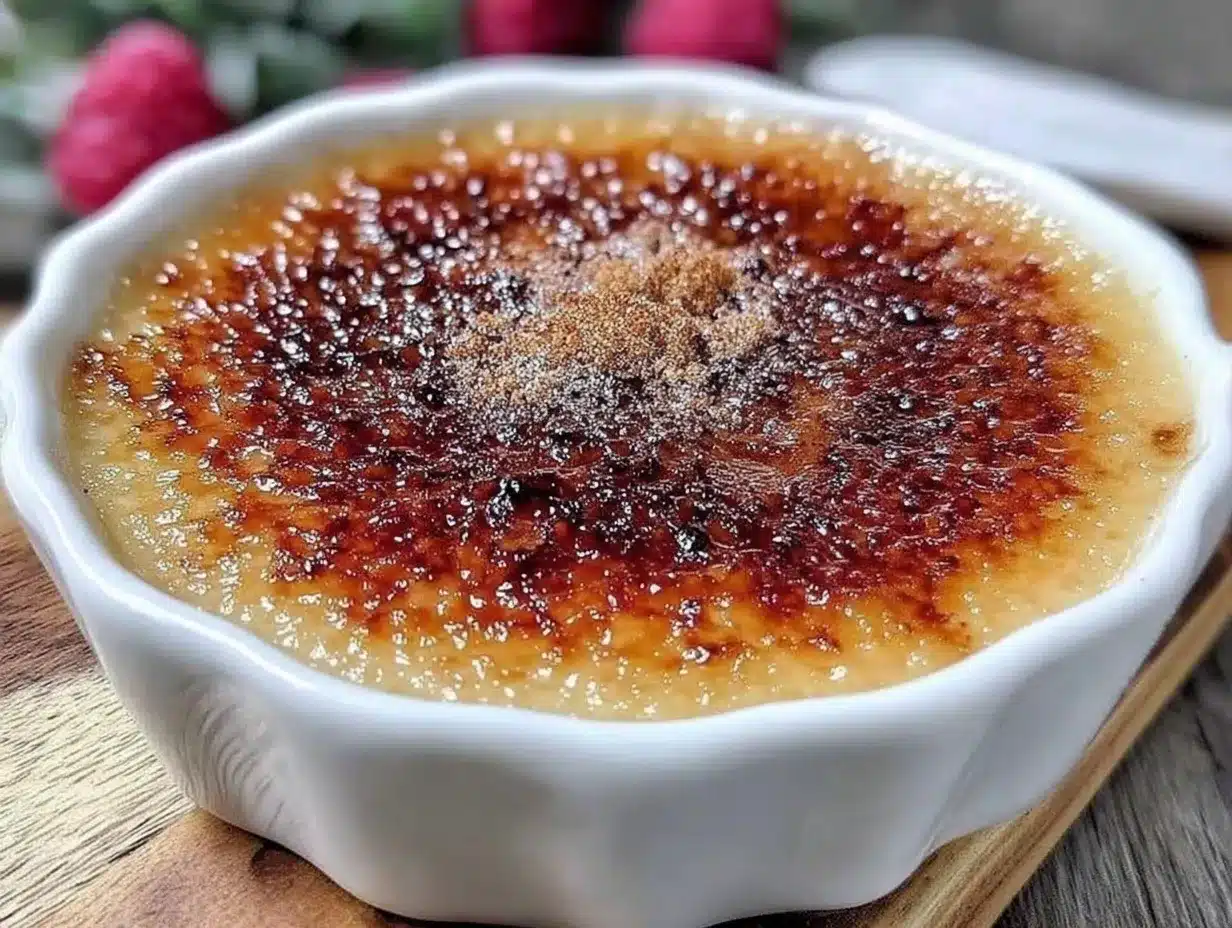
- Caramelize the sugar crust: Just before serving, sprinkle about 1 tablespoon of granulated sugar evenly over each custard. Use a kitchen torch to melt and caramelize the sugar until it forms a golden, crisp crust. If you don’t have a torch, place ramekins under a broiler for 1-2 minutes, watching carefully to avoid burning.
- Serve: Let the caramelized sugar cool and harden for a minute or two before cracking into the creamy custard beneath with your spoon. Enjoy!
Cooking Tips & Techniques
When making Catalan crema, temperature control is everything—you want a custard that’s silky and smooth, not curdled or rubbery. I’ve learned the hard way (hello, scrambled eggs in custard) that slowly tempering the eggs with warm milk is key. Whisk constantly when adding the milk to keep things smooth.
Also, the water bath is non-negotiable. It gently cooks the custard evenly and prevents the edges from overcooking. Make sure the water is hot when you pour it in, and avoid splashing it into the ramekins.
The caramelized sugar crust is the showstopper. If you don’t have a kitchen torch, you can use your oven’s broiler, but keep a close eye—it can go from perfect to burnt in seconds. I once left mine under the broiler too long and ended up with a smoky kitchen and a sad dessert. Lesson learned!
Finally, don’t rush the chilling part. The custard needs time to set fully and for flavors to meld. I usually make the crema the day before serving and let it rest overnight in the fridge. It’s absolutely worth the wait.
Variations & Adaptations
- Spiced Catalan Crema: Add a pinch of ground cloves or star anise to the milk when heating for a warm, spiced flavor perfect for fall and winter.
- Chocolate Orange Crema: Stir in 2 tablespoons of unsweetened cocoa powder into the milk mixture for a subtle chocolate twist that pairs beautifully with the orange zest.
- Gluten-Free & Vegan: Use coconut milk instead of dairy and substitute egg yolks with a vegan custard thickener like agar-agar or cornstarch. The texture will differ but remains deliciously comforting.
- Fruit-Infused: Replace orange zest with lemon or lime zest for a different citrus note, or steep fresh lavender buds alongside the milk for a floral hint.
- Personal Twist: One time, I accidentally added extra orange zest and ended up with a zestier, more aromatic custard—my guests loved it! Don’t be afraid to play around with the quantity to suit your taste.
Serving & Storage Suggestions
Serve your cozy Catalan crema chilled, right after caramelizing the sugar crust for that delightful contrast between cold custard and warm, crisp topping. A small spoon works best to crack through the sugar crust gently.
This dessert pairs wonderfully with a light Spanish red wine or a cup of strong coffee to balance the sweetness. If you’re hosting a dinner, try serving it alongside crispy garlic chicken or a simple fruit salad for a refreshing finish.
Store leftovers covered in the fridge for up to 3 days. The sugar crust will soften over time, so if you want to maintain that crackly texture, sprinkle fresh sugar and torch again before serving. Catalan crema flavors deepen with chilling; sometimes it tastes even better the next day.
Nutritional Information & Benefits
Each serving of Catalan crema contains approximately 280 calories, with 18 grams of fat and 22 grams of carbohydrates. While it’s a rich dessert, the use of whole milk and fresh orange zest adds some nutritional value—including vitamin C and antioxidants. Plus, the egg yolks provide protein and essential nutrients like vitamin D.
This recipe is naturally gluten-free, making it accessible for many dietary needs. For those watching calories or dairy intake, adaptations using plant-based milks and thickeners can work well. Personally, I like to enjoy this dessert as a special treat balanced with wholesome meals.
Conclusion
Cozy Catalan crema with orange zest and caramelized sugar crust is one of those desserts that feels like a warm hug on a plate. It’s simple enough to make on a weeknight yet impressive enough for special occasions. I love how the bright orange zest and crisp caramel topping make each bite a little celebration.
Feel free to customize the amount of zest or try the variations I’ve shared. Honestly, once you’ve made it a couple of times, it becomes easy to tweak for your own perfect version. If you give this recipe a try, drop a comment below sharing your experience—I’d love to hear how your crema turned out or what twists you tried!
Remember, cooking is all about joy and discovery, so have fun cracking that sugar crust and savoring every spoonful.
FAQs
What is the difference between Catalan crema and crème brûlée?
Catalan crema is a Spanish custard flavored with citrus zest and often cinnamon, traditionally made with milk rather than heavy cream. Crème brûlée is a French dessert that uses more cream and vanilla. Both have a caramelized sugar crust but differ in texture and flavor.
Can I make Catalan crema ahead of time?
Absolutely! It’s best to prepare the custard a day ahead and chill it overnight. Caramelize the sugar crust just before serving for the freshest crack.
How do I know when the custard is done baking?
The custard should be set around the edges but slightly wobbly in the center when gently shaken. A toothpick near the edge should come out clean.
What if I don’t have a kitchen torch? Can I use the oven broiler?
You can use the broiler, but watch carefully as the sugar can burn quickly. Place the ramekins close to the heat source for 1-2 minutes and remove as soon as the sugar melts and caramelizes.
Can I use lemon zest instead of orange zest?
Yes! Lemon zest offers a brighter, more tart flavor, while orange zest adds sweetness and warmth. Either works well depending on your preference.
Pin This Recipe!
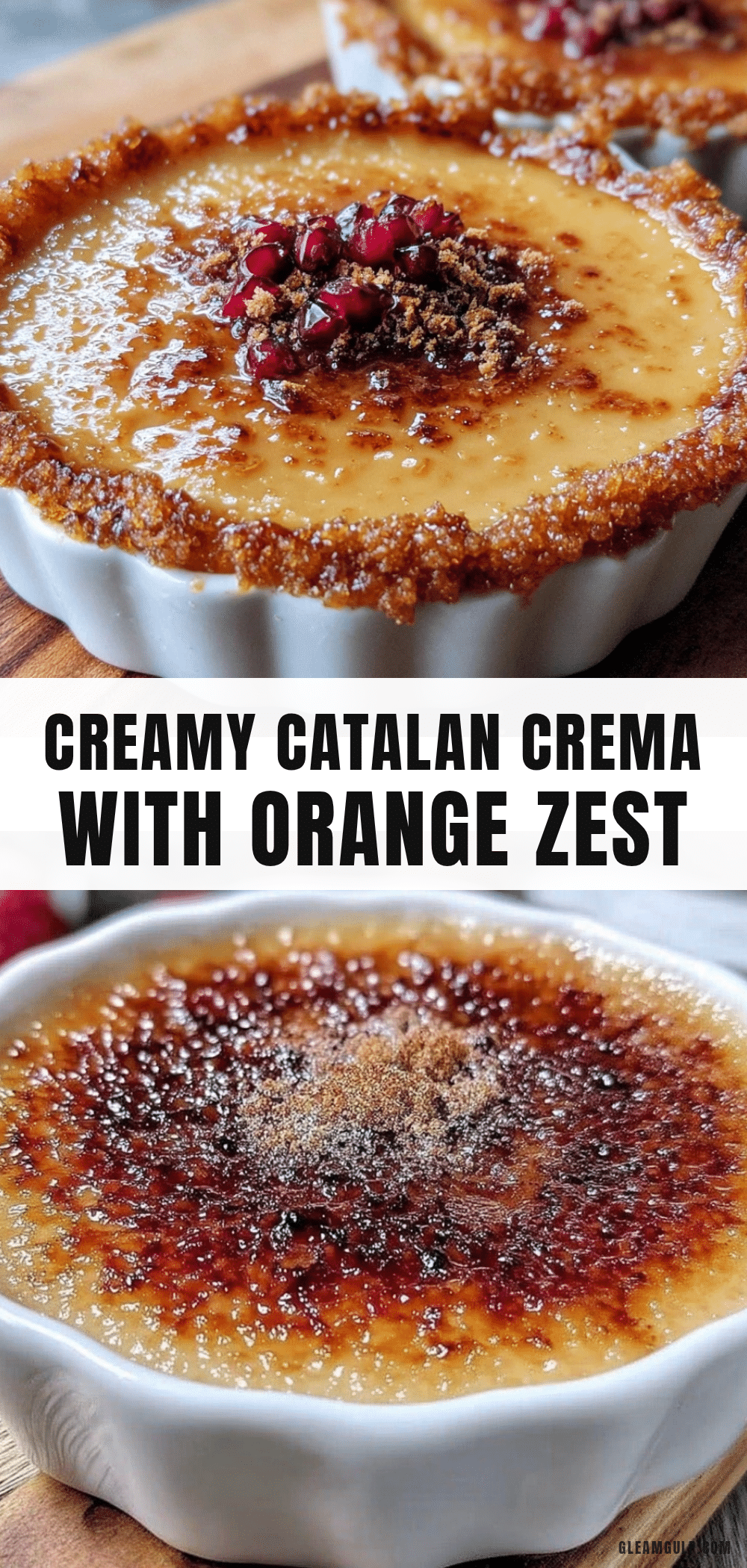
Cozy Catalan Crema Recipe with Orange Zest and Caramelized Sugar Crust Made Easy

A silky, fragrant Spanish custard dessert infused with fresh orange zest and topped with a crisp caramelized sugar crust, perfect for cozy gatherings and simple indulgence.
- Prep Time: 15 minutes
- Cook Time: 40 minutes
- Total Time: 4 hours 55 minutes
- Yield: 6 servings 1x
- Category: Dessert
- Cuisine: Spanish
Ingredients
- 2 cups (480 ml) whole milk (organic recommended)
- 1 cup (240 ml) heavy cream
- 6 large egg yolks (room temperature)
- 1 cup (200 g) granulated sugar (divided: 1/2 cup for custard, 1/2 cup for caramelizing)
- Zest of 1 medium orange (avoid white pith)
- 1 cinnamon stick (optional)
- 1 vanilla bean pod, split and scraped (or 1 tsp pure vanilla extract)
Instructions
- Preheat your oven to 325°F (160°C). Place your ramekins in a large baking dish or roasting pan.
- Pour 2 cups whole milk and 1 cup heavy cream into a saucepan. Add the cinnamon stick, vanilla bean pod (split and scraped), and the zest of 1 orange. Warm over medium heat until just below boiling, then remove from heat and let steep for 15 minutes.
- In a mixing bowl, whisk together 6 large egg yolks and 1/2 cup granulated sugar until pale and slightly thickened, about 2-3 minutes.
- Slowly pour the warm milk mixture through a fine mesh sieve into the egg yolk mixture, whisking constantly to avoid scrambling. Strain again to remove any bits of cooked egg or zest.
- Divide the custard evenly among your ramekins. Place the baking dish in the oven and carefully pour hot water about 1 inch deep around the ramekins to create a water bath.
- Bake for 35-40 minutes or until the custards are just set but still slightly wobbly in the center. A toothpick inserted near the edge should come out clean.
- Remove ramekins from the water bath and let cool to room temperature. Then refrigerate for at least 4 hours, preferably overnight.
- Just before serving, sprinkle about 1 tablespoon of granulated sugar evenly over each custard. Use a kitchen torch to melt and caramelize the sugar until it forms a golden, crisp crust. Alternatively, place ramekins under a broiler for 1-2 minutes, watching carefully to avoid burning.
- Let the caramelized sugar cool and harden for a minute or two before serving.
Notes
Temperature control is crucial to avoid curdling. Slowly temper eggs with warm milk while whisking constantly. Use a water bath to cook custard evenly. Chill custard overnight for best flavor and texture. If no kitchen torch is available, use the broiler carefully to caramelize sugar. Fresh orange zest is key for flavor; frozen zest can be used in a pinch.
Nutrition
- Serving Size: 1 ramekin (about 6 t
- Calories: 280
- Fat: 18
- Carbohydrates: 22
Keywords: Catalan crema, Spanish custard, orange zest dessert, caramelized sugar crust, easy custard recipe, cozy dessert, traditional Spanish dessert