Love this? Save it for later!
Share the inspiration with your friends
“You know, I wasn’t expecting my Saturday morning grocery run to turn into a full-on Italian cooking lesson,” I said to myself as I stood in the tiny Roman deli tucked away on a side street. The owner, a cheerful man named Marco, caught me eyeing the cured meats and insisted I try something special: guanciale. “Not bacon,” he declared with a wink, “this is the soul of real carbonara.”
That moment sparked a culinary adventure that’s become my go-to for an authentic classic Roman carbonara with crispy guanciale and aged pecorino. I’ve got to admit, the first time I prepared it, I was juggling a cracked mixing bowl (don’t ask) and a phone call from a friend who wanted the recipe right away. But the magic happened when the crispy guanciale met the silky sauce made from eggs and sharp pecorino — that perfect balance of creamy, salty, and smoky flavors.
Maybe you’ve been there: craving that rich, comforting pasta but wanting to skip the heavy cream or complicated steps. This recipe nails the traditional Roman style, honoring every ingredient’s role without fuss. Honestly, it’s the kind of dish that makes you want to close your eyes after the first bite, savoring the warmth spreading through your kitchen and your belly.
Let me tell you, once you nail the technique for this flavorful classic Roman carbonara, you’ll find it hard to go back to anything less. The crispy guanciale brings that irresistible crunch and depth, while the aged pecorino adds a sharp tang that ties it all together. So, pull up a chair, and let’s get started on making this timeless Italian favorite that’s as satisfying as a warm hug.
Why You’ll Love This Recipe
This classic Roman carbonara recipe isn’t just another pasta dish; it’s a tried-and-true favorite that I’ve perfected with plenty of kitchen trials and happy taste tests. Whether you’re a seasoned cook or just dipping your toes into Italian cuisine, this recipe is approachable and rewarding.
- Quick & Easy: Ready in about 25 minutes, making it perfect for busy weeknights or last-minute dinner plans.
- Simple Ingredients: You only need pantry staples like eggs and dried pasta, plus guanciale and aged pecorino, which are easy to find or substitute.
- Perfect for Dinner Parties: Impress guests with an authentic dish that feels fancy but is totally fuss-free.
- Crowd-Pleaser: Kids and adults alike adore the crispy texture combined with the creamy sauce — it’s comfort food with a classy twist.
- Unbelievably Delicious: The flavor combo of smoky guanciale and sharp pecorino is next-level, giving you that authentic Roman experience at home.
What sets this recipe apart is the attention to keeping the sauce silky without scrambling the eggs, and the use of guanciale instead of bacon — trust me, it makes all the difference. I recommend using Rigatoni or Spaghetti for the best sauce cling, and aged pecorino romano from a trusted brand for that perfect sharp bite.
Honestly, it’s not just a recipe; it’s a little ritual that turns simple ingredients into something memorable. The crispy guanciale reminds me of that deli encounter with Marco, a slice of Rome right in my kitchen.
What Ingredients You Will Need
This recipe relies on a handful of ingredients that work together to create bold, satisfying flavors. Most are pantry staples, with a few specific items that make it authentically Roman.
- Guanciale (150g / 5 oz): Cured pork cheek, diced. This is the star ingredient providing smoky, crispy goodness. Available at specialty stores or Italian markets.
- Spaghetti or Rigatoni (400g / 14 oz): Choose quality dried pasta. I prefer De Cecco for its firm texture.
- Egg Yolks (4 large): Use fresh, room temperature yolks for a silky sauce.
- Aged Pecorino Romano (100g / 3.5 oz): Finely grated. Look for a sharp, salty cheese — Locatelli is a brand I trust.
- Freshly Ground Black Pepper (to taste): Essential for that classic peppery kick.
- Salt: For pasta water. Keep it generous but balanced.
Optional substitutions: If you can’t find guanciale, pancetta is a decent stand-in but won’t have quite the same depth. For a vegetarian twist, try crispy fried mushrooms instead of meat. Pecorino can be swapped with Parmesan, though the flavor will mellow.
These ingredients come together to build the perfect texture and taste — creamy sauce, rich pork, and sharp cheese. Each one has its role, so quality matters, especially for the guanciale and pecorino.
Equipment Needed
- Large pot: For boiling pasta. A deep pot helps prevent sticking.
- Large skillet or frying pan: For crisping guanciale. Non-stick or stainless steel works well.
- Mixing bowl: To whisk egg yolks and cheese. A medium bowl with a wide rim is handy.
- Tongs or pasta fork: For transferring pasta from pot to pan.
- Fine grater: For shredding pecorino. A microplane works best.
- Kitchen thermometer (optional): Helps with temperature control to avoid scrambling eggs.
If you don’t have a microplane, a fine box grater will do, just be careful to grate evenly. I’ve found using a wide skillet helps the guanciale crisp evenly without overcrowding. For budget-friendly options, any well-seasoned non-stick pan will suffice.
Preparation Method
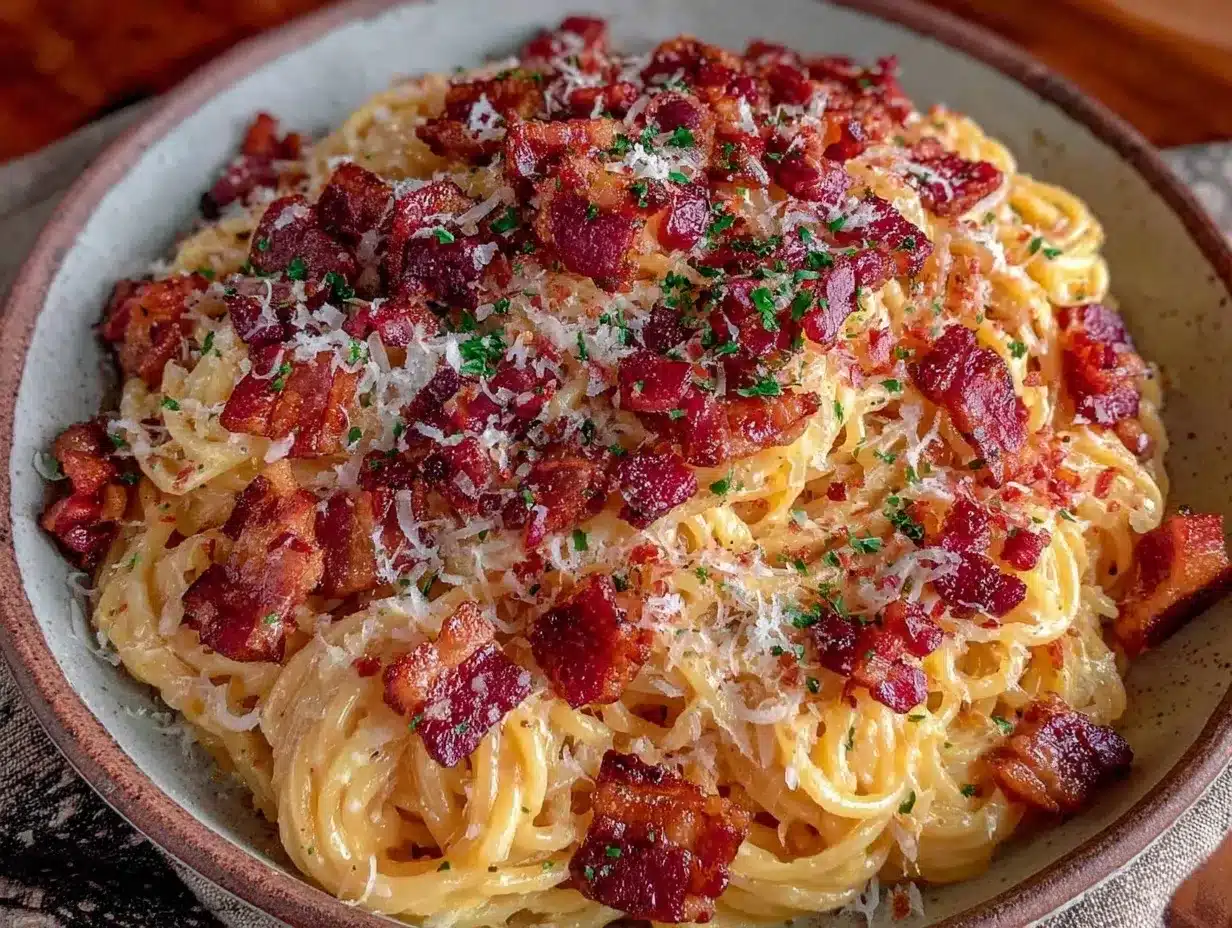
- Prepare the guanciale: Dice 150g (5 oz) of guanciale into small cubes. Heat a large skillet over medium heat and add the guanciale. Cook for about 5–7 minutes until it’s golden and crispy, rendering out the fat. Remove from heat and set aside, leaving the fat in the pan.
- Cook the pasta: Bring a large pot of salted water to a boil. Add 400g (14 oz) of spaghetti or rigatoni and cook until al dente, usually 8–10 minutes. Reserve 1 cup (240ml) of pasta water before draining.
- Mix the sauce: In a medium bowl, whisk together 4 large egg yolks and 100g (3.5 oz) finely grated aged pecorino romano. Add a generous amount of freshly ground black pepper—don’t be shy! The mixture should be creamy but thick.
- Combine pasta and guanciale: Return the skillet with guanciale fat to low heat. Add the drained pasta, tossing to coat in the fat. Slowly add a splash of reserved pasta water to loosen the mixture, stirring gently.
- Add the egg and cheese mixture: Remove the pan from heat to avoid scrambling. Quickly pour in the egg and pecorino mixture, tossing vigorously to create a creamy sauce that clings to each strand or tube of pasta. Add more pasta water as needed to reach a silky consistency.
- Finish and serve: Taste and adjust seasoning with extra black pepper or pecorino if desired. Serve immediately on warm plates to enjoy the creamy texture at its best.
Pro tip: Timing is everything here. Make sure the pasta is hot but not piping hot when mixing with eggs to avoid curdling. I once rushed and ended up with scrambled eggs on pasta — lesson learned the hard way! Also, reserve pasta water generously; it’s the secret to that smooth sauce.
Cooking Tips & Techniques
Successfully making classic Roman carbonara hinges on a few kitchen tricks I’ve picked up over the years.
- Patience with guanciale: Cook it low and slow to render fat and crisp without burning. The fat is liquid gold and essential for flavor.
- Temperature control: Never add the egg mixture over direct heat. The residual warmth of the pasta and pan will cook it gently, giving you a creamy, not scrambled, sauce.
- Use fresh, room-temperature eggs: Cold eggs can shock the pasta and create lumps. Taking them out ahead of time makes a difference.
- Reserve pasta water: The starch in the water helps emulsify the sauce. Add slowly, a tablespoon at a time, to get the perfect sauce texture.
- Don’t skip the black pepper: It’s not just seasoning; it’s a signature flavor that gives carbonara its character.
Once, I tried adding cream like some recipes suggest — honestly, it ruined the dish for me. Carbonara is pure simplicity, and messing with that balance only waters it down. Keep it classic, and you’ll be rewarded with a dish that sings.
Variations & Adaptations
This recipe is wonderfully flexible if you want to tailor it to your needs or try something new.
- Vegetarian option: Swap guanciale for sautéed mushrooms or smoked tofu for a smoky bite.
- Gluten-free: Use gluten-free pasta varieties made from rice, corn, or legumes without changing the sauce.
- Seasonal twist: Add fresh peas or asparagus tips for a springtime touch that brings color and crunch.
- Lower sodium: Reduce salt in pasta water and use a milder pecorino or a blend with Parmesan to tame the saltiness.
- Personal favorite variation: I sometimes add a touch of garlic-infused olive oil to the guanciale fat for an extra layer of flavor without overpowering the classic taste.
Feel free to experiment, but remember, the heart of carbonara is that simple combo of eggs, cheese, pork, and pepper. Keep that intact for the best experience.
Serving & Storage Suggestions
Serve your Roman carbonara hot off the stove for the creamiest texture and best flavor. I like to plate it simply with a sprinkle of extra pecorino and a fresh grind of black pepper on top.
This dish pairs beautifully with a crisp green salad or roasted vegetables, and a glass of dry white wine like Frascati or Pinot Grigio complements the salty richness perfectly.
If you have leftovers (and sometimes I do), store them in an airtight container in the refrigerator for up to 2 days. Reheat gently in a skillet over low heat, adding a splash of water to loosen the sauce. Microwave reheating tends to dry it out, so stovetop is preferable.
Keep in mind, carbonara is best enjoyed fresh, but if you must save it, reheating slowly helps preserve the creamy texture. The flavors deepen over time, especially the pecorino and pepper notes, so leftovers still taste great.
Nutritional Information & Benefits
This classic dish provides a balanced mix of protein, fats, and carbohydrates. Here’s an approximate breakdown per serving (serves 4):
| Nutrient | Amount |
|---|---|
| Calories | 480 kcal |
| Protein | 22 g |
| Carbohydrates | 55 g |
| Fat | 18 g |
| Sodium | 700 mg |
Key benefits come from the protein-rich eggs and guanciale, which provide energy and satiety. The aged pecorino offers calcium and a dose of beneficial fats. For those watching carbs, pairing the dish with a side of veggies can help keep meals balanced.
Note: This recipe contains gluten and dairy, and is not suitable for those with allergies to pork or eggs.
Conclusion
There you have it — a flavorful classic Roman carbonara with crispy guanciale and aged pecorino that’s both authentic and approachable. It’s one of those recipes that feels fancy but comes together with surprisingly little effort.
Feel free to tweak the pepper amount or swap pasta shapes to fit your mood. What matters most is the joy of making and sharing this soulful dish, whether for a quiet meal or a lively dinner with friends.
This recipe holds a special place in my kitchen because it reminds me of that unexpected chat with Marco and the delicious discovery that followed. I hope it finds a spot in your repertoire too.
Try it out, leave a comment about your experience, or share your own variations—I love hearing how this classic dish comes to life in different homes. Happy cooking!
FAQs
What’s the difference between guanciale and pancetta?
Guanciale is cured pork cheek, fattier and more flavorful than pancetta, which comes from pork belly. Guanciale crisps up beautifully and is traditional for Roman carbonara.
Can I use Parmesan instead of Pecorino Romano?
Yes, Parmesan can work, but pecorino has a sharper, saltier profile that’s characteristic of authentic carbonara.
Why doesn’t this recipe use cream?
Traditional Roman carbonara relies on eggs and cheese for creaminess. Adding cream changes the texture and flavor and isn’t authentic.
How do I prevent the eggs from scrambling?
Remove the pan from heat before adding the egg mixture and toss quickly. Adding reserved pasta water helps regulate temperature and creates a smooth sauce.
Can I make carbonara ahead of time?
It’s best fresh, but you can prepare components in advance. Reheat leftovers gently on the stove with a splash of water to restore sauce texture.
Pin This Recipe!
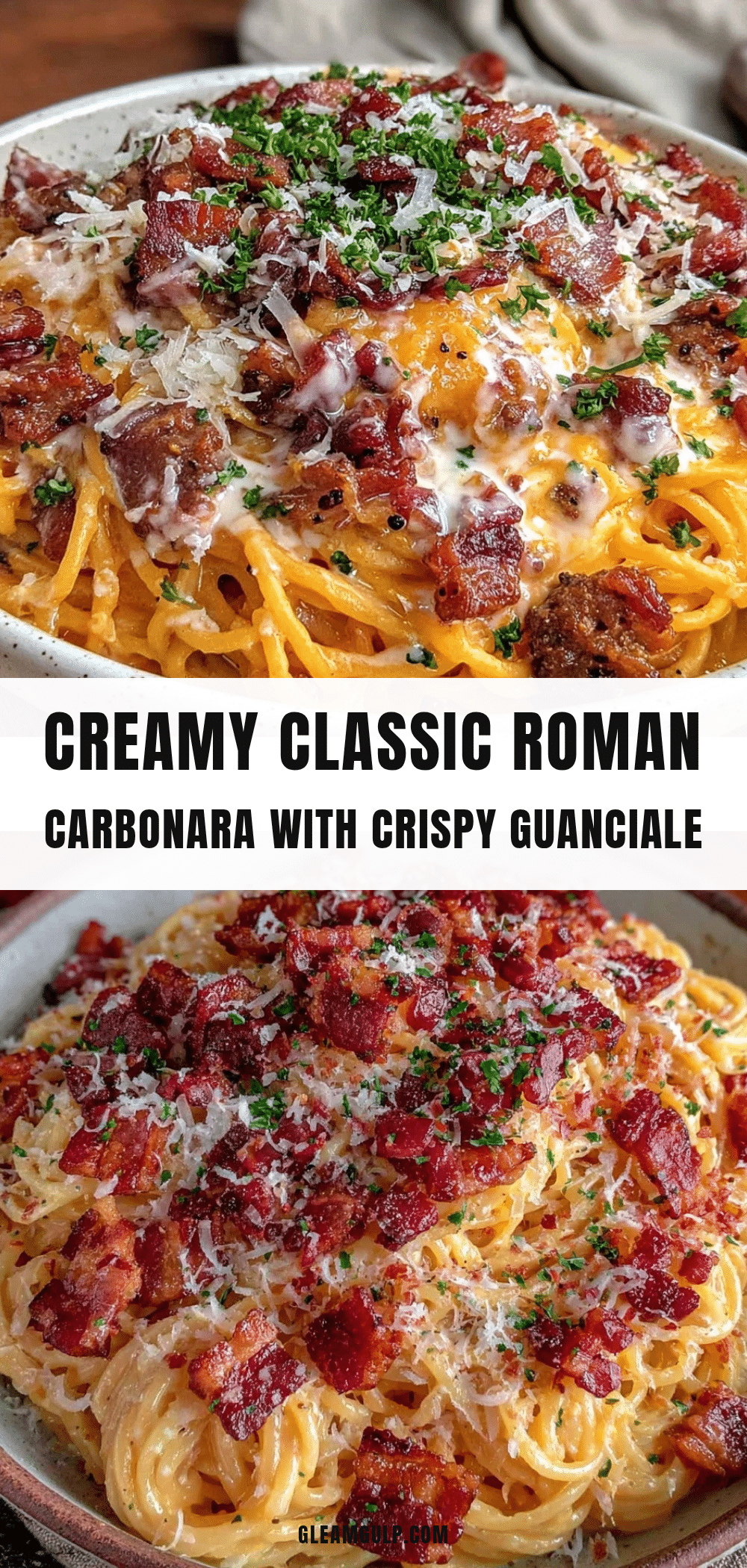
Classic Roman Carbonara Recipe Easy Homemade with Crispy Guanciale and Pecorino

An authentic classic Roman carbonara featuring crispy guanciale and aged pecorino, delivering a creamy, salty, and smoky pasta dish without heavy cream.
- Prep Time: 10 minutes
- Cook Time: 15 minutes
- Total Time: 25 minutes
- Yield: 4 servings 1x
- Category: Main Course
- Cuisine: Italian
Ingredients
- 150g (5 oz) guanciale, diced
- 400g (14 oz) spaghetti or rigatoni
- 4 large egg yolks, room temperature
- 100g (3.5 oz) aged pecorino romano, finely grated
- Freshly ground black pepper, to taste
- Salt, for pasta water
Instructions
- Dice 150g (5 oz) of guanciale into small cubes. Heat a large skillet over medium heat and add the guanciale. Cook for about 5–7 minutes until golden and crispy, rendering out the fat. Remove from heat and set aside, leaving the fat in the pan.
- Bring a large pot of salted water to a boil. Add 400g (14 oz) of spaghetti or rigatoni and cook until al dente, usually 8–10 minutes. Reserve 1 cup (240 ml) of pasta water before draining.
- In a medium bowl, whisk together 4 large egg yolks and 100g (3.5 oz) finely grated aged pecorino romano. Add a generous amount of freshly ground black pepper. The mixture should be creamy but thick.
- Return the skillet with guanciale fat to low heat. Add the drained pasta, tossing to coat in the fat. Slowly add a splash of reserved pasta water to loosen the mixture, stirring gently.
- Remove the pan from heat to avoid scrambling. Quickly pour in the egg and pecorino mixture, tossing vigorously to create a creamy sauce that clings to each strand or tube of pasta. Add more pasta water as needed to reach a silky consistency.
- Taste and adjust seasoning with extra black pepper or pecorino if desired. Serve immediately on warm plates.
Notes
Use room temperature eggs to avoid lumps. Do not add egg mixture over direct heat to prevent scrambling. Reserve pasta water generously to adjust sauce consistency. Guanciale is preferred over pancetta for authentic flavor. Serve immediately for best texture. Leftovers can be stored up to 2 days and reheated gently on stovetop with a splash of water.
Nutrition
- Serving Size: 1 serving (approx. 1
- Calories: 480
- Sodium: 700
- Fat: 18
- Carbohydrates: 55
- Protein: 22
Keywords: Roman carbonara, classic carbonara, guanciale, pecorino romano, spaghetti carbonara, easy Italian pasta, authentic carbonara