Love this? Save it for later!
Share the inspiration with your friends
There used to be a tiny French bistro tucked on a side street in Portland called Le Petit Coin that made the most ridiculous roasted chicken I’ve ever had. When they closed suddenly in 2019 — the owner just vanished one day, leaving a note about moving to Provence — I honestly felt a little unmoored. That herb butter, that impossibly juicy meat, the crispy skin that shattered when you bit into it. After twelve tries — including one where I accidentally used mint instead of tarragon and my kitchen smelled like toothpaste — I finally cracked the code. And here’s the thing: it works even better with a turkey breast for two.
I mean, who decided Thanksgiving leftovers are only for big families? Let me tell you, that first Sunday when I made this Perfect Herb Butter Roasted Turkey Breast for Two, I sat there with a glass of wine, a single portion of mashed potatoes, and absolutely zero regrets. The smell alone — garlic, thyme, rosemary mingling with melting butter — brought me right back to that cramped little bistro with its mismatched chairs and handwritten menu.
Maybe you’ve been there, you know? That moment when a restaurant dish becomes a benchmark you can’t stop chasing. This recipe is that chase, finally finished. It’s small enough for a Tuesday dinner but fancy enough to make you feel like you’re celebrating something. And honestly? The way the herb butter seeps into every crevice, keeping the meat tender while the skin turns golden and crisp — it’s the kind of cooking that reminds you why you bother with the good butter in the first place.
Why You’ll Love This Recipe
After testing this recipe more times than I care to admit (my neighbors have become very familiar with the smell of roasting turkey), I can tell you exactly why this one’s different. It’s not just another turkey breast recipe — it’s the one that makes you wonder why you ever bothered with a whole bird.
- Perfectly Portioned: No more mountains of leftovers or wrestling with a massive turkey. This breast feeds two generously with maybe a sandwich’s worth left over — just enough for the best lunch the next day.
- Quick & Easy: From prep to table in under 90 minutes, with only 15 minutes of active work. That’s faster than ordering takeout in some neighborhoods.
- Simple Ingredients: Butter, herbs, garlic, salt, pepper — you probably have most of this already. No fancy shopping trips required.
- Foolproof Technique: The herb butter does double duty — it flavors the meat AND keeps it moist. Even if you’re a little distracted (hello, Tuesday night), this recipe forgives small mistakes.
- Impressive Enough for Company: When it comes out of the oven, all bronzed and fragrant, people will think you spent hours. Let them think that.
- Versatile Leftovers: Cold slices on sandwiches, warm shreds in salads, or just standing at the fridge at midnight — no judgment here.
What makes this version different from all the others? It’s the technique of manually separating the skin from the meat to create pockets for the herb butter. That extra step — the one that feels a little fussy — is actually what guarantees every single bite is infused with flavor. I learned this trick from watching a chef at that bistro, and it’s the difference between “good” and “close your eyes and sigh” good.
This recipe is comfort food reimagined for real life. It’s smaller, yes, but also smarter. The kind of meal that makes a random Wednesday feel like a special occasion without the stress of a full production. And when you take that first bite — the butter running down your chin, the herbs singing in harmony — you’ll understand why I spent twelve attempts getting it right.
What Ingredients You Will Need
This recipe uses simple, honest ingredients to create something genuinely special. Each component has a job, and together they make magic. Here’s what you’ll need and why each one matters.
- 1 bone-in, skin-on turkey breast (2-3 pounds): The bone adds flavor and helps regulate cooking temperature. Look for one that’s evenly shaped for consistent cooking. I prefer getting mine from a local butcher when possible — the quality difference is noticeable.
- 4 tablespoons unsalted butter, softened: This is non-negotiable. Salted butter can make the final dish too salty since we’re adding salt separately. Let it sit out for 30 minutes before starting.
- 2 tablespoons fresh rosemary, finely chopped: Dried won’t give you the same bright, piney flavor. Fresh rosemary softens as it roasts, releasing oils that perfume the meat beautifully.
- 1 tablespoon fresh thyme leaves: Earthy and slightly floral, thyme is the quiet workhorse here. Run your fingers down the stems to strip the leaves — it’s oddly satisfying.
- 1 tablespoon fresh sage, finely chopped: Sage has this almost peppery quality that cuts through the richness of the butter. Don’t skip it — it’s what makes this taste like Thanksgiving.
- 3 cloves garlic, minced: Fresh garlic only, please. The pre-minced stuff in jars has a sharp, almost metallic taste that doesn’t mellow properly during roasting.
- 1 teaspoon salt: I use kosher salt for its clean flavor and easy pinchability. Diamond Crystal is my go-to brand.
- ½ teaspoon black pepper, freshly ground: Pre-ground pepper is fine in a pinch, but fresh cracked pepper has more aromatic complexity.
- 1 tablespoon olive oil: Just a drizzle over the skin helps it brown evenly. Use a good quality one — you’ll taste the difference.
- ½ cup chicken broth or dry white wine: This goes in the bottom of the pan to create steam and prevent the drippings from burning. Use a wine you’d actually drink — the flavor concentrates as it reduces.
- Optional: 1 small onion, quartered, and 2 carrots, roughly chopped: These aren’t for eating — they’re for the pan. They add subtle sweetness to the drippings and make the kitchen smell incredible.
Substitution Guidance: If you can’t find fresh herbs, use half the amount of dried — but honestly, this is one recipe where fresh really matters. For a dairy-free version, use a high-quality vegan butter stick (not margarine). Turkey breast can be swapped with a large bone-in chicken breast, though cooking time will decrease by about 15-20 minutes.
I’ve tried this with different herb combinations over the years. One time I added a pinch of smoked paprika to the butter — that was a happy accident that I now repeat regularly. Feel free to experiment, but keep the butter-to-herb ratio roughly the same to maintain that perfect spreadable consistency.
Equipment Needed
You don’t need a professional kitchen for this recipe, but a few key tools make the process smoother. Here’s what I use and what you can substitute if needed.
- Small roasting pan or 9×13 baking dish: The pan should be just big enough to hold the turkey breast with some room around it. Too large and the juices will spread thin and burn. Too small and the turkey won’t cook evenly.
- Instant-read thermometer: This is essential. Guessing doneness with turkey is risky — undercooked is unsafe, overcooked is dry. A $15 thermometer will save you from both fates.
- Chef’s knife and cutting board: For chopping herbs and vegetables. A sharp knife makes herb prep feel meditative instead of frustrating.
- Small bowl for mixing herb butter: Any bowl will do. I use a ceramic one because it feels nice, but a glass measuring cup works perfectly.
- Kitchen twine (optional): Tying the breast into a neat shape helps it cook more evenly. Not strictly necessary, but it makes for a prettier presentation.
- Basting brush or spoon: For brushing the herb butter under the skin and over the top. A silicone brush is easiest to clean.
- Aluminum foil: For tenting the turkey if the skin browns too quickly, and for resting after cooking.
I’ve made this in a cast iron skillet when my roasting pan was in use — it worked beautifully. The key is that the pan has sides to hold the liquid. If you’re using a disposable aluminum pan, double it up so it doesn’t buckle under the weight.
Preparation Method
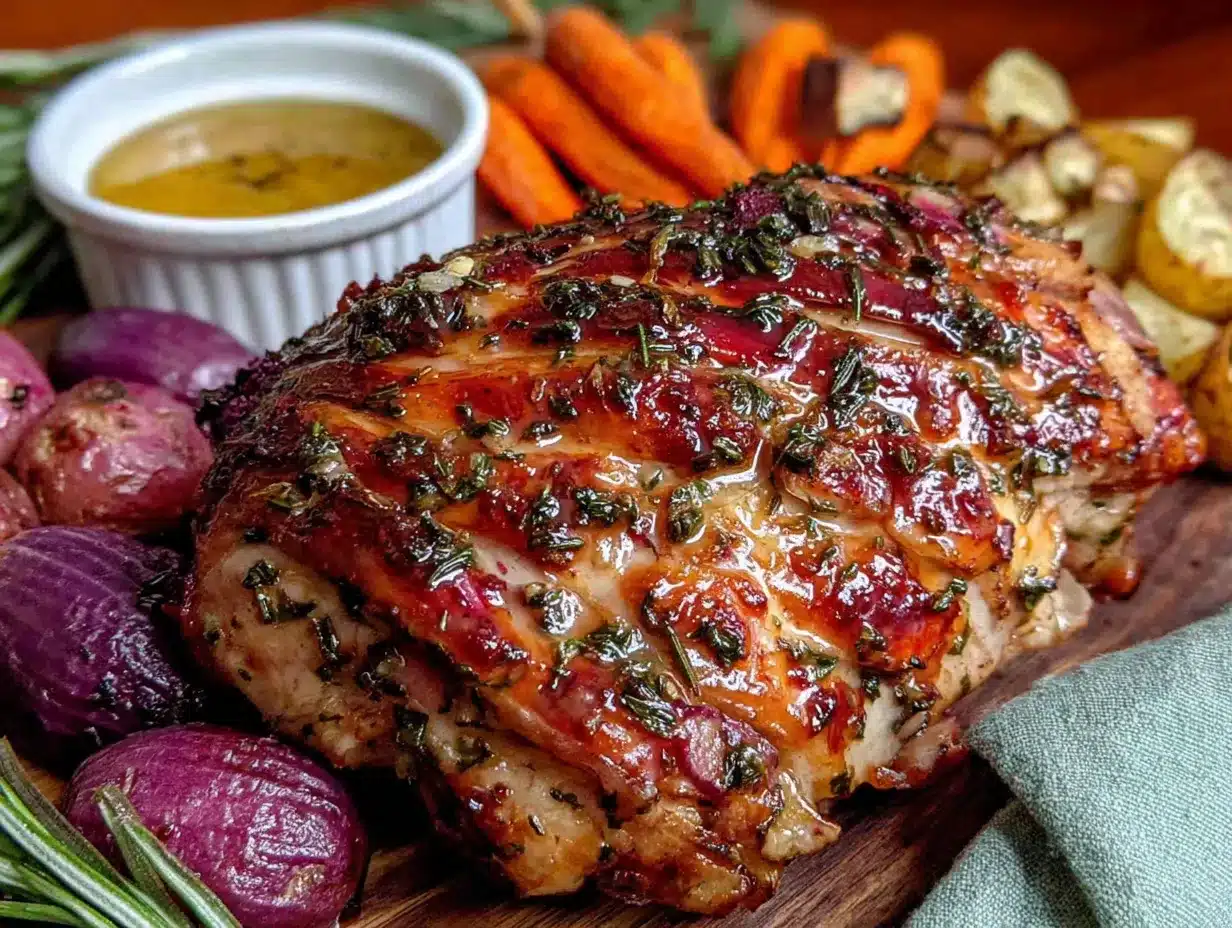
Let me walk you through this step by step. I’ve included all the little details I wish someone had told me the first time I made this.
- Preheat your oven to 375°F (190°C). Position the rack in the middle of the oven. While it’s heating, take your turkey breast out of the fridge and let it sit at room temperature for 20 minutes. This helps it cook more evenly.
- Make the herb butter. In a small bowl, combine the softened butter, chopped rosemary, thyme leaves, sage, minced garlic, salt, and pepper. Mash everything together with a fork until it’s well mixed and fragrant. Taste a tiny bit — it should be savory and herby, with the garlic just whispering in the background.
- Pat the turkey breast completely dry. Use paper towels and really get in there. Moisture is the enemy of crispy skin. I learned this the hard way after several soggy-skinned attempts. Dry skin = golden, crackling skin.
- Loosen the skin. This is the crucial step. Gently slide your fingers under the skin of the turkey breast, starting from the edge and working your way across. You want to create pockets between the skin and the meat without tearing the skin. Go slowly — if you feel resistance, back up and try a different angle. It’s like carefully unpeeling a sticker.
- Apply the herb butter. Take about two-thirds of the herb butter and push it under the loosened skin. Spread it evenly across the breast meat using your fingers. The butter should form a thin, even layer. Don’t clump it all in one spot. Use the remaining butter to spread all over the outside of the turkey breast, covering every visible surface.
- Drizzle with olive oil and season. A light drizzle of olive oil over the buttered skin, then a final sprinkle of salt and pepper. This extra layer helps achieve that deep golden color we’re after.
- Add aromatics to the pan. If using, scatter the quartered onion and chopped carrots in the bottom of your roasting pan. Pour in the chicken broth or wine. These won’t be served — they’re creating a fragrant steam bath that keeps the meat moist and builds flavor for potential gravy.
- Place the turkey in the pan. Set the turkey breast on top of the vegetables, breast side up. If you have kitchen twine, tie the legs together and tuck the wing tips under the breast for even cooking.
- Roast for 50-65 minutes. The exact time depends on the size of your breast. Start checking at 50 minutes. The internal temperature should reach 160°F (71°C) when measured at the thickest part of the breast, away from the bone. Don’t rely on cooking times alone — trust your thermometer.
- Check for doneness. When the thermometer reads 160°F, remove the turkey from the oven. The temperature will continue rising to about 165°F during resting — this is called carryover cooking, and it’s your friend.
- Rest, covered loosely with foil, for 15-20 minutes. This is not optional. Resting allows the juices to redistribute throughout the meat. If you cut into it immediately, those beautiful juices will run out onto the cutting board instead of staying in the meat. I speak from experience — the impatience is real, but the wait is worth it.
- Carve and serve. Slice against the grain into even pieces. The meat should be juicy, tender, and fragrant with herbs. Spoon some of the pan juices over the slices for extra moisture and flavor.
Sensory cues to watch for: The skin should be deep golden brown and tight across the meat. When you insert the thermometer, it should slide in with minimal resistance. The juices that run from the meat when you carve should be clear, not pink. And the smell — oh, the smell — should fill your kitchen with warm, savory notes of butter and herbs.
Cooking Tips & Techniques
After making this recipe more times than I can count, I’ve collected some hard-won wisdom. Here are the things I wish I’d known from the beginning.
Don’t skip the drying step. I know it seems fussy, but patting the turkey skin completely dry before applying the butter is what gives you that shatteringly crisp skin. One time I was in a hurry and skipped this step — the skin came out chewy and pale. Never again.
Let your butter soften naturally. Microwaving butter to soften it quickly often results in partially melted butter, which won’t spread evenly under the skin. Plan ahead and let it sit out for 30-40 minutes. If you forget, grate cold butter into a bowl and let it sit for 10 minutes — it softens much faster when grated.
Invest in a good thermometer. This is the single most important tool for this recipe. I ruined my first three attempts by overcooking, convinced the turkey needed more time. The difference between 160°F and 170°F is the difference between juicy and sawdust. A digital instant-read thermometer costs about the same as a fancy coffee drink and will save you from dry turkey forever.
Baste if you want, but don’t obsess. Some recipes insist on basting every 15 minutes. I’ve tested this with and without basting, and honestly? The herb butter under the skin does the heavy lifting. If you want to baste once or twice during cooking, go ahead — it adds a little extra moisture to the surface. But don’t stress about it. Opening the oven repeatedly lets heat escape and can actually dry out the meat.
Watch the skin color. If the skin is browning too quickly (around the 40-minute mark), tent a piece of foil loosely over the turkey. This stops the skin from burning while the interior continues cooking. I’ve had to do this with smaller turkey breasts that cook faster than expected.
Use the pan drippings. After the turkey rests, pour those pan juices into a small saucepan. Skim off excess fat, then simmer with a splash of cream or a pat of butter for an instant, incredibly flavorful sauce. The vegetables in the pan have been slowly sweetening in the oven — they add a depth you can’t get any other way.
Variations & Adaptations
One of the best things about this recipe is how adaptable it is. Here are some variations I’ve tried and loved.
Citrus Herb Butter: Add the zest of one lemon and one orange to the herb butter mixture. The citrus cuts through the richness beautifully and adds a bright note that’s perfect for spring or summer dinners. I discovered this when I had leftover citrus on the counter and decided to experiment — now it’s my warm-weather go-to.
Spicy Maple Glaze: Skip the olive oil drizzle and instead brush the turkey with a mixture of 2 tablespoons maple syrup, 1 teaspoon smoked paprika, and a pinch of cayenne during the last 20 minutes of cooking. The sweetness caramelizes on the skin, and the heat builds slowly. My friend who “doesn’t like sweet with meat” ate two servings of this version.
Garlic and Herb Cream Sauce: After removing the turkey, add ½ cup heavy cream and 1 tablespoon Dijon mustard to the pan juices. Whisk over medium heat until thickened, then spoon over the sliced turkey. This turns an already comforting dish into something truly decadent — perfect for when you need a little extra warmth on a cold night.
Dietary Adaptations: For a dairy-free version, use a high-quality vegan butter stick. For lower sodium, reduce the salt in the herb butter to ½ teaspoon and use unsalted broth in the pan. If you’re watching calories, you can reduce the butter to 3 tablespoons — the result is slightly less rich but still delicious.
Different Herb Combinations: Don’t have sage? Use tarragon or marjoram instead. Love dill? Swap it in for the thyme. The ratios stay the same, but the flavor profile changes completely. I once made a version with basil and oregano that tasted like a summer garden — unexpected but wonderful.
Serving & Storage Suggestions
This turkey breast is versatile enough for both casual weeknight dinners and more formal occasions. Here’s how I like to serve and store it.
Serving: Let the turkey rest, then slice and arrange on a warm platter. Spoon a little of the pan juices over the top for extra moisture. Serve with classic sides like mashed potatoes, roasted vegetables, or a simple green salad. The leftovers make incredible sandwiches the next day — layer cold turkey slices on good bread with a smear of cranberry sauce and a handful of arugula.
Temperature: Serve warm, not hot. The meat should be just above room temperature for the best texture and flavor. If it’s been sitting for a while, you can reheat slices gently in a warm oven (300°F for about 10 minutes) covered with foil to prevent drying.
Storage: Store leftover turkey in an airtight container in the refrigerator for up to 4 days. Keep the meat whole if possible — sliced turkey dries out faster. If you’ve made gravy, store it separately. The flavors actually deepen overnight, making the leftovers somehow even better than the first serving.
Freezing: Cooked turkey freezes beautifully for up to 3 months. Wrap individual portions tightly in plastic wrap, then place in a freezer bag. Thaw overnight in the refrigerator before reheating. I often make two turkey breasts at once and freeze one for later — future me is always grateful.
Reheating: The best way to reheat is in a low oven (300°F) with a splash of broth or water in the pan, covered with foil. This steams the meat gently without drying it out. Microwave reheating works in a pinch but can make the meat tough — if you must use the microwave, cover the plate with a damp paper towel and use 50% power.
Nutritional Information & Benefits
Turkey breast is one of the leanest proteins available, making this a relatively healthy choice for a comforting meal. Here’s the approximate nutritional breakdown per serving (based on a 6-ounce portion with herb butter):
| Nutrient | Amount per Serving |
|---|---|
| Calories | 385 |
| Protein | 42g |
| Fat | 22g |
| Saturated Fat | 12g |
| Carbohydrates | 2g |
| Fiber | 0g |
| Sugar | 0g |
| Sodium | 520mg |
Health Benefits: Turkey is packed with high-quality protein, which supports muscle health and keeps you feeling full longer. It’s also a good source of B vitamins, particularly B6 and B12, which help with energy metabolism. The herbs in this recipe — rosemary, thyme, and sage — contain antioxidants that support overall health. And let’s be honest, there’s something nourishing about a meal that makes you slow down and savor every bite.
Dietary Considerations: This recipe is naturally gluten-free and low-carb. For a lower-fat version, reduce the butter to 2 tablespoons and use cooking spray on the skin instead of olive oil. If you’re watching sodium, use low-sodium broth and reduce the added salt to ½ teaspoon.
Conclusion
This Perfect Herb Butter Roasted Turkey Breast for Two is the recipe I keep coming back to — the one that makes me feel like I’ve mastered something, even on days when nothing else goes right. It’s small enough to not feel overwhelming, but impressive enough to make a Tuesday feel like a celebration. The herb butter technique ensures every bite is flavorful and moist, and the whole process takes less than 90 minutes from start to table.
I hope you’ll try it and make it your own. Maybe you’ll add a little extra garlic (I won’t tell), or swap in your favorite herbs, or serve it with a side that means something special to you. That’s the beauty of cooking — the recipe is just a starting point, and the real magic happens when you bring your own story to the table.
If you make this, I’d love to hear about it. Leave a comment below and let me know how it turned out, what variations you tried, or just share your favorite way to enjoy the leftovers. And if you’re looking for more small-batch comfort food, check out our roasted herb chicken thighs or our garlic mashed potatoes for two — they pair beautifully with this turkey and make for a complete, cozy meal. Happy cooking, friends!
Frequently Asked Questions
Can I use a boneless turkey breast for this recipe?
Yes, you can! Boneless turkey breasts cook faster — start checking the temperature at 35-40 minutes. The bone adds flavor and helps regulate temperature, so if you go boneless, be extra careful not to overcook. The herb butter technique works exactly the same way.
How do I know when the turkey is done without a thermometer?
Honestly, I really recommend using a thermometer. But if you don’t have one, pierce the thickest part of the breast with a knife — the juices should run clear, not pink. The meat should feel firm but still have a little give when pressed. This method isn’t as reliable, so if you cook turkey often, a thermometer is worth the investment.
Can I prepare the herb butter in advance?
Absolutely! The herb butter can be made up to 3 days ahead and stored in the refrigerator. Let it come to room temperature for about 20 minutes before using so it spreads easily. You can also freeze the butter for up to 3 months — just wrap it tightly in plastic wrap and thaw overnight in the fridge.
What if I only have dried herbs?
You can use dried herbs in a pinch, but use about half the amount called for fresh — dried herbs are more concentrated. The flavor won’t be quite as bright, but it will still be delicious. If you’re using dried, rub them between your palms before adding to release their oils.
How do I make gravy from the pan drippings?
After removing the turkey, pour the pan drippings into a measuring cup and let the fat rise to the top. Spoon off most of the fat, leaving the brown bits. Place the pan on the stovetop over medium heat, add 2 tablespoons of flour, and whisk for 1 minute. Slowly whisk in 1 cup of chicken broth and the defatted drippings. Simmer until thickened, about 5 minutes. Season with salt and pepper to taste.
Pin This Recipe!
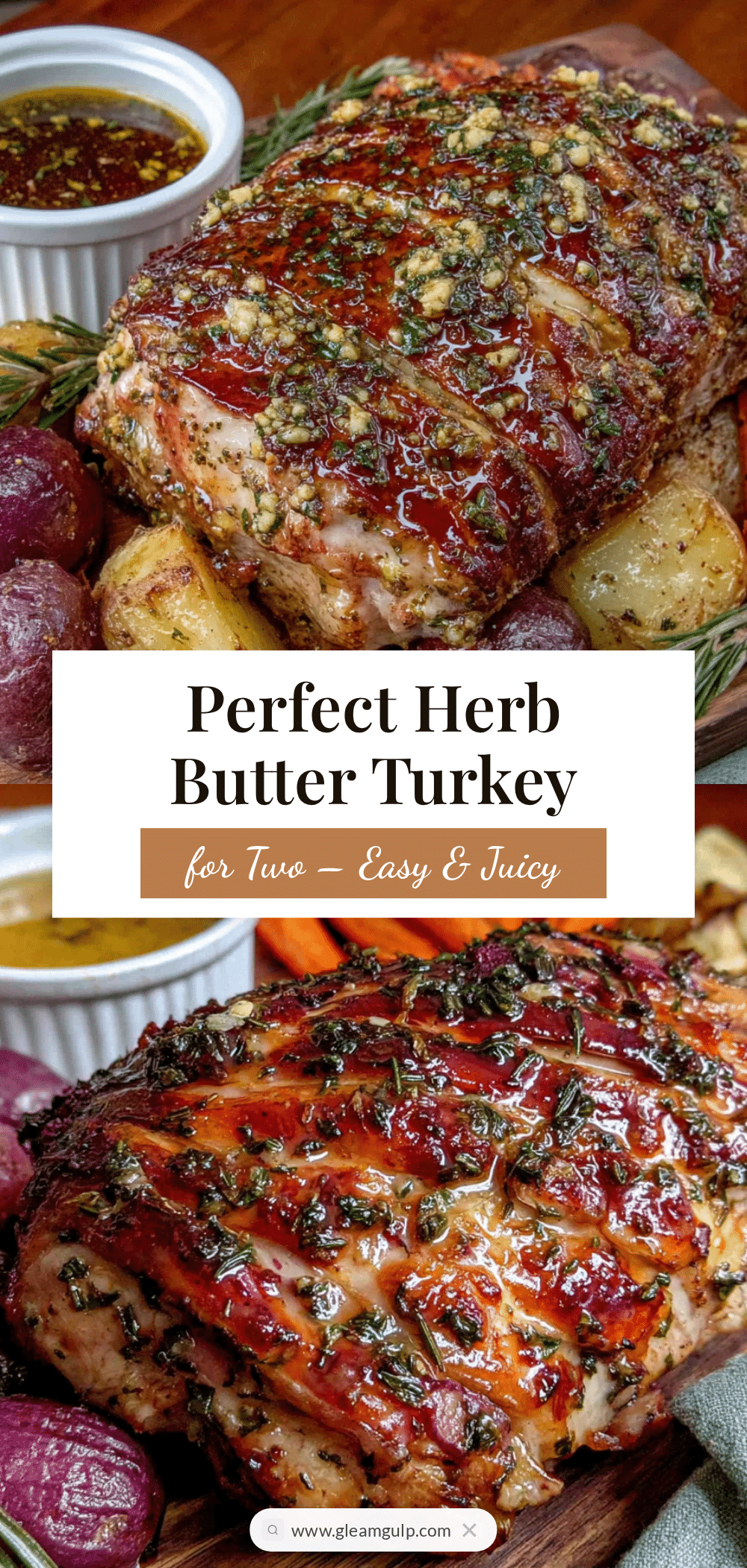
Perfect Herb Butter Roasted Turkey Breast for Two
A perfectly portioned herb butter roasted turkey breast that’s juicy, tender, and golden-crisp. Ideal for a cozy dinner for two with minimal effort and maximum flavor.
- Prep Time: 15 minutes
- Cook Time: 55 minutes
- Total Time: 1 hour 30 minutes
- Yield: 2 servings 1x
- Category: Main Course
- Cuisine: American
Ingredients
- 1 bone-in, skin-on turkey breast (2–3 pounds)
- 4 tablespoons unsalted butter, softened
- 2 tablespoons fresh rosemary, finely chopped
- 1 tablespoon fresh thyme leaves
- 1 tablespoon fresh sage, finely chopped
- 3 cloves garlic, minced
- 1 teaspoon salt
- ½ teaspoon black pepper, freshly ground
- 1 tablespoon olive oil
- ½ cup chicken broth or dry white wine
- Optional: 1 small onion, quartered, and 2 carrots, roughly chopped
Instructions
- Preheat your oven to 375°F (190°C). Position the rack in the middle of the oven. While it’s heating, take your turkey breast out of the fridge and let it sit at room temperature for 20 minutes.
- Make the herb butter. In a small bowl, combine the softened butter, chopped rosemary, thyme leaves, sage, minced garlic, salt, and pepper. Mash everything together with a fork until well mixed and fragrant.
- Pat the turkey breast completely dry with paper towels.
- Loosen the skin. Gently slide your fingers under the skin of the turkey breast, starting from the edge and working your way across to create pockets between the skin and the meat without tearing the skin.
- Apply the herb butter. Take about two-thirds of the herb butter and push it under the loosened skin, spreading it evenly across the breast meat. Use the remaining butter to spread all over the outside of the turkey breast.
- Drizzle with olive oil and season with a final sprinkle of salt and pepper.
- If using, scatter the quartered onion and chopped carrots in the bottom of your roasting pan. Pour in the chicken broth or wine.
- Place the turkey in the pan, breast side up. If you have kitchen twine, tie the legs together and tuck the wing tips under the breast.
- Roast for 50-65 minutes, until the internal temperature reaches 160°F (71°C) when measured at the thickest part of the breast, away from the bone.
- Remove the turkey from the oven. The temperature will continue rising to about 165°F during resting.
- Rest, covered loosely with foil, for 15-20 minutes.
- Carve and serve. Slice against the grain into even pieces. Spoon some of the pan juices over the slices for extra moisture and flavor.
Notes
Don’t skip drying the skin for crispy results. Let butter soften naturally. Use a good thermometer for perfect doneness. Baste if desired but not necessary. Watch skin color and tent with foil if browning too quickly. Use pan drippings for an instant sauce.
Nutrition
- Serving Size: 6 ounces
- Calories: 385
- Sodium: 520
- Fat: 22
- Saturated Fat: 12
- Carbohydrates: 2
- Protein: 42
Keywords: turkey breast, herb butter, roasted turkey, small batch, dinner for two, Thanksgiving, comfort food