Love this? Save it for later!
Share the inspiration with your friends
The first Tuesday after daylight saving time ended, I found myself standing in the hardware store parking lot, shivering in a jacket I hadn’t worn since March. I was supposed to be buying weatherstripping for the back door, but instead, I got completely sidetracked by the man loading bags of rock salt into the pickup truck next to me. He saw me eyeing his haul and laughed. “You know what really keeps you warm when the cold sets in? Not this stuff,” he said, patting the salt. “It’s a good beef stew. Low and slow, with all the root vegetables you can get your hands on.” And just like that, I forgot all about the weatherstripping. I went home with a chuck roast, a bag of carrots, and the vague idea that maybe—just maybe—I could recreate whatever he was describing.
Honestly, I didn’t even get his name. But that conversation stuck with me. Maybe it was the way he talked about the parsnips caramelizing, or the fact that he insisted on adding a splash of red wine vinegar at the very end. I spent the next three weekends testing versions of this cozy slow cooker beef stew with fall root vegetables, and let me tell you—the first attempt was a disaster. I used way too much liquid and ended up with beef soup. The second time, I forgot to sear the meat, and the flavor was flat. But by the third try, I nailed it. The kitchen smelled like a warm hug, and I knew I had to share this.
This isn’t just any stew. It’s the kind that makes you want to curl up on the couch with a thick slice of crusty bread and not move until spring. The beef gets impossibly tender, the vegetables soak up all that savory broth, and the whole thing comes together with almost no hands-on time. If you’ve been looking for a meal that feels like a reward after a long week, this is it. Let me show you how to make it.
Why You’ll Love This Recipe
I’ve tested this recipe more times than I care to admit, and every single batch has taught me something new. Here’s why I think you’ll fall for this cozy slow cooker beef stew with fall root vegetables just as hard as I did:
- Set It and Forget It: Once everything is in the slow cooker, you can walk away. No stirring, no babysitting. It’s perfect for busy days when you want dinner to be ready the minute you walk through the door.
- Simple, Everyday Ingredients: You don’t need a specialty grocery store for this one. Beef chuck, carrots, potatoes, onions, and a few pantry staples are all it takes. I bet you already have most of them.
- Perfect for Chilly Evenings: This stew was made for those nights when the wind is howling and all you want is something hearty and warming. It’s basically a bowl of comfort.
- Always Gets Rave Reviews: I’ve served this to picky eaters, to friends who claim they don’t like stew, and even to my in-laws. Empty bowls every single time. It’s a crowd-pleaser through and through.
- The Flavor Is Out of This World: The secret is in the sear and the tiny splash of vinegar at the end. It adds a brightness that balances the richness of the beef. I promise you’ve never tasted stew quite like this.
What makes this recipe different from all the others out there? It’s the technique. Most slow cooker stews skip the searing step, and the result is a flat, one-dimensional broth. But taking ten minutes to brown the beef in batches builds a foundation of flavor that you simply can’t get any other way. Plus, the blend of root vegetables—carrots, parsnips, and Yukon Gold potatoes—gives you a mix of textures that holds up beautifully even after hours of cooking. This isn’t mushy stew. It’s perfectly tender, with every vegetable still holding its shape.
This recipe is the kind that makes you close your eyes after the first bite. It’s comfort food reimagined—healthier than the old-school versions that rely on heavy cream or loads of butter, but with the same soul-soothing satisfaction. Whether you’re impressing dinner guests or just treating yourself on a quiet Tuesday night, this stew delivers every time.
What Ingredients You Will Need
This recipe uses simple, wholesome ingredients to deliver bold flavor and satisfying texture without the fuss. Most of these are pantry staples or easy to find at any grocery store, especially in the fall.
For the Beef and Searing
- 2 pounds (900 g) beef chuck roast, cut into 1½-inch cubes — I prefer chuck because it has enough marbling to stay tender after long cooking. Look for pieces with good fat distribution.
- 2 tablespoons (30 ml) olive oil, divided — Use a neutral oil with a high smoke point for searing. Avocado oil works too.
- 1 teaspoon (5 g) kosher salt, plus more to taste — I use Diamond Crystal; if you use table salt, reduce the amount by half.
- ½ teaspoon (2 g) black pepper, freshly ground
- 2 tablespoons (16 g) all-purpose flour — This helps thicken the stew slightly and gives the beef a nice crust when seared. For a gluten-free option, use cornstarch or arrowroot powder.
For the Aromatics and Vegetables
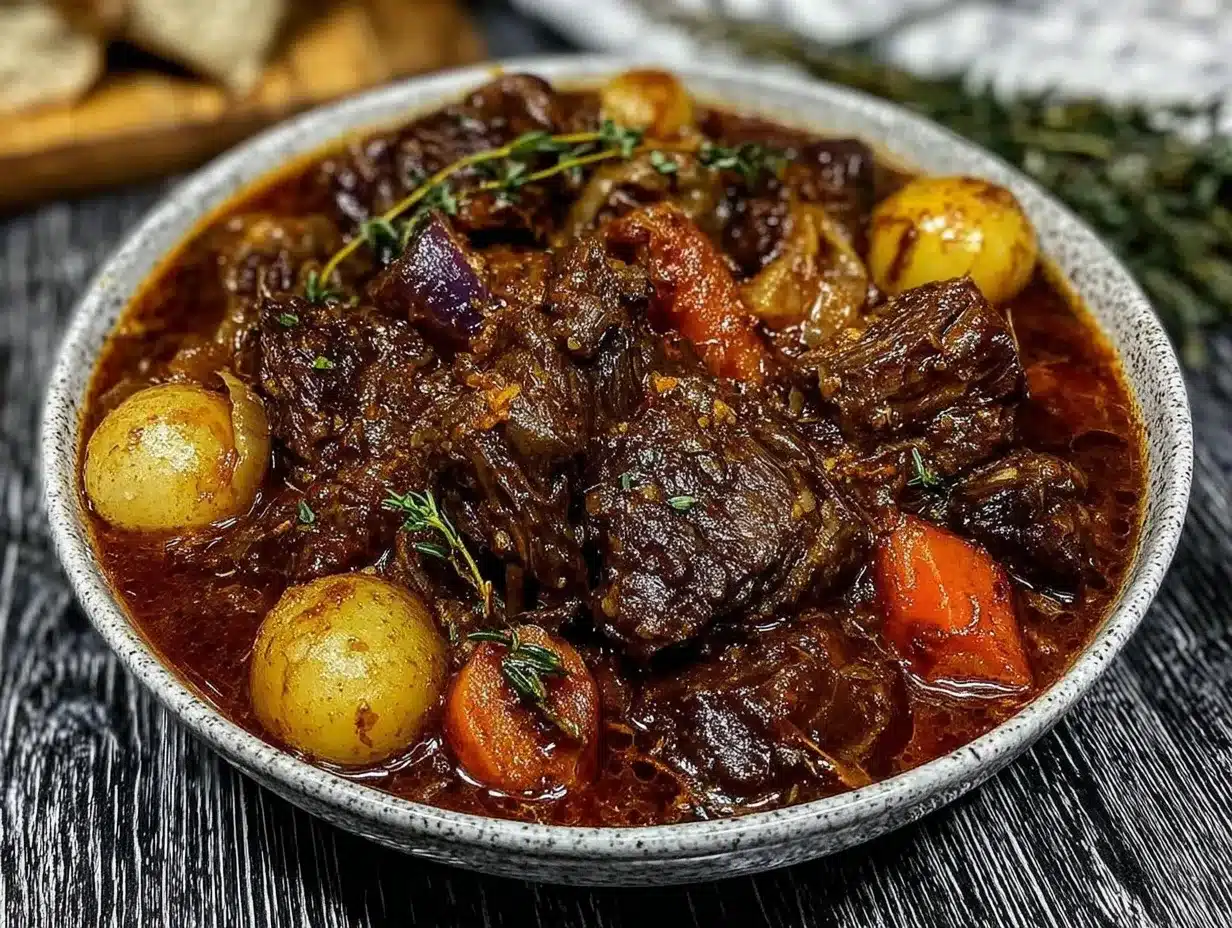
- 1 large yellow onion, diced (about 1½ cups / 200 g)
- 4 cloves garlic, minced
- 3 medium carrots, peeled and cut into 1-inch chunks (about 1½ cups / 200 g)
- 2 medium parsnips, peeled and cut into 1-inch chunks (about 1 cup / 150 g) — Parsnips add a subtle sweetness that pairs beautifully with the beef. Don’t skip them if you can find them.
- 1 pound (450 g) Yukon Gold potatoes, scrubbed and cut into 1½-inch chunks (about 3 cups) — Yukon Golds hold their shape better than Russets. Red potatoes work well too.
- 2 stalks celery, sliced (about 1 cup / 120 g)
For the Broth and Seasoning
- 3 cups (720 ml) low-sodium beef broth — I recommend Better Than Bouillon for the richest flavor. Just mix 1 teaspoon of paste per cup of hot water.
- 1 tablespoon (15 ml) Worcestershire sauce — This adds umami depth. For a vegetarian version, use soy sauce or coconut aminos.
- 1 tablespoon (15 g) tomato paste — Adds color and a subtle tanginess. I like Amora brand for its concentrated flavor.
- 2 bay leaves — Fresh or dried both work. Remember to remove them before serving.
- 1 teaspoon (2 g) dried thyme — Or 3 sprigs of fresh thyme if you have them.
- 1 teaspoon (2 g) dried rosemary — Crush it between your fingers before adding to release the oils.
- 1 tablespoon (15 ml) red wine vinegar — Added at the very end. This is the secret ingredient that wakes up all the flavors. Don’t skip it.
For Garnish (Optional but Recommended)
- 2 tablespoons (8 g) fresh parsley, chopped
- Crusty bread or dinner rolls, for serving
Equipment Needed
You don’t need a fancy kitchen to make this cozy slow cooker beef stew with fall root vegetables. Here’s what you’ll need:
- 6-quart (5.7 L) slow cooker — This size is perfect for the recipe. If yours is smaller, reduce the vegetables slightly. If it’s larger, that’s fine too—just make sure the ingredients fit without overcrowding.
- Large heavy-bottomed skillet or Dutch oven — For searing the beef. Cast iron is ideal because it holds heat evenly. I use my trusty 12-inch Lodge skillet.
- Sharp chef’s knife — A dull knife makes cutting beef and root vegetables a chore. I recommend a Victorinox Fibrox for a budget-friendly option that stays sharp.
- Cutting board — Preferably a large wooden or plastic board. I prefer wood because it’s gentler on knives.
- Wooden spoon or spatula — For scraping up the browned bits from the skillet. Those bits are pure flavor.
- Measuring cups and spoons — Accurate measurements matter, especially for the broth and seasonings.
- Mixing bowl — For tossing the beef with flour and seasonings.
- Tongs — For turning the beef while searing. They give you better control than a fork.
- Ladle — For serving the stew.
If you don’t have a slow cooker, you can make this in a Dutch oven on the stovetop or in the oven at 325°F (160°C) for about 2½ to 3 hours. Just keep an eye on the liquid level and add more broth if needed.
Preparation Method
Follow these steps carefully, and you’ll have a stew that tastes like it simmered all day in a professional kitchen. The key is patience—especially during the searing step.
Step 1: Prep the Beef (5 minutes)
Pat the beef cubes dry with paper towels. This is crucial—wet meat won’t brown properly. In a mixing bowl, toss the beef with the flour, 1 teaspoon of salt, and ½ teaspoon of black pepper until evenly coated. Set aside while you heat the oil.
Step 2: Sear the Beef in Batches (15 minutes)
Heat 1 tablespoon of olive oil in your large skillet over medium-high heat until it shimmers. Add the beef cubes in a single layer—don’t overcrowd the pan. You’ll need to do this in 2 or 3 batches. Sear each piece for 2-3 minutes per side until deeply browned. Use tongs to turn them. Transfer the seared beef to the slow cooker. Don’t worry if the pan looks dark; those browned bits are flavor gold.
Pro tip: If the beef starts steaming instead of sizzling, the pan is too crowded. Remove some pieces and let the pan heat up again.
Step 3: Sauté the Aromatics (5 minutes)
Reduce the heat to medium. Add the remaining 1 tablespoon of olive oil to the same skillet. Toss in the diced onion and cook for 3-4 minutes, stirring occasionally, until softened and translucent. Add the minced garlic and cook for 30 seconds more, until fragrant. Scrape the bottom of the pan with your wooden spoon to release all those browned bits. Transfer the onion mixture to the slow cooker.
Step 4: Deglaze the Pan (2 minutes)
Pour about ½ cup of the beef broth into the hot skillet. Use your wooden spoon to scrape up any remaining browned bits from the bottom. This is called deglazing, and it’s where a ton of flavor lives. Pour this liquid into the slow cooker.
Step 5: Layer the Vegetables (10 minutes)
Add the carrots, parsnips, potatoes, and celery to the slow cooker. Don’t stir yet—just layer them on top of the beef and onions. This helps the vegetables cook evenly without breaking down too much.
Step 6: Add the Broth and Seasonings (5 minutes)
In a separate bowl or measuring cup, whisk together the remaining beef broth, Worcestershire sauce, and tomato paste until smooth. Pour this mixture over the vegetables. Add the bay leaves, dried thyme, and dried rosemary. Give everything a gentle stir to combine, but try not to disturb the vegetables too much.
Step 7: Slow Cook (6-8 hours on Low, or 4-5 hours on High)
Cover the slow cooker with the lid. Cook on LOW for 6-8 hours or on HIGH for 4-5 hours. The stew is ready when the beef is fork-tender and the vegetables are soft but still holding their shape. I prefer the low-and-slow method because it gives the flavors more time to meld.
Visual cue: The broth should be slightly thickened and the beef should shred easily with a fork. If the vegetables are mushy, you’ve cooked it too long.
Step 8: Finish with Vinegar and Adjust Seasoning (5 minutes)
Just before serving, remove the bay leaves. Stir in the red wine vinegar. This brightens the entire dish and balances the richness. Taste the broth and add more salt and pepper if needed. I usually add another ½ teaspoon of salt at this point.
Step 9: Serve and Garnish (5 minutes)
Ladle the stew into bowls. Sprinkle with fresh parsley and serve with crusty bread for dipping. The bread is essential—you’ll want to soak up every last drop of that broth.
Personal note: The first time I made this, I forgot to add the vinegar. The stew was good, but something was missing. Now I keep a bottle of red wine vinegar right next to my slow cooker so I never forget again. It’s a small step that makes a huge difference.
Cooking Tips & Techniques
Over the years, I’ve made every mistake in the book when it comes to stew. Here are the lessons I learned the hard way, so you don’t have to.
Don’t Skip the Searing
I know it’s tempting to just dump everything into the slow cooker and walk away. I’ve done it. And every time, I’ve regretted it. Searing the beef creates a deep, savory crust through the Maillard reaction. That browning translates into layers of flavor that you simply can’t get from raw meat. It adds about 15 minutes to the prep time, but it’s the single most important step in this recipe.
Cut Vegetables to the Right Size
Root vegetables need to be cut into uniform pieces so they cook evenly. Aim for 1-inch chunks for carrots and parsnips, and 1½-inch chunks for potatoes. If you cut them too small, they’ll disintegrate. Too large, and they’ll be hard in the center. I learned this after serving a batch where the potatoes were still crunchy. Not my finest moment.
Layer Ingredients Properly
Hardier vegetables like carrots and potatoes should go on the bottom or middle of the slow cooker, closer to the heat source. Delicate ingredients like peas (if you add them) go on top. This prevents overcooking and ensures everything is perfectly tender at the same time.
Resist the Urge to Peek
Every time you lift the lid, you release heat and steam, which adds 20-30 minutes to the cooking time. Trust the process and keep the lid on until the minimum cooking time has passed. I know it’s hard—the smell is intoxicating—but patience pays off.
Adjust Thickness at the End
If your stew is too thin after cooking, mix 2 tablespoons of cornstarch with 2 tablespoons of cold water to make a slurry. Stir it into the hot stew and let it cook on HIGH for 15-20 minutes, uncovered. It will thicken beautifully. If it’s too thick, add a splash of beef broth or water.
Variations & Adaptations
This cozy slow cooker beef stew with fall root vegetables is incredibly flexible. Here are some of my favorite twists:
1. Make It Gluten-Free
Skip the flour when coating the beef. Instead, use 2 tablespoons of cornstarch or arrowroot powder. It thickens the stew just as well and keeps it gluten-free. Also, double-check your Worcestershire sauce—some brands contain gluten. Lea & Perrins is gluten-free in most countries, but always read the label.
2. Add More Vegetables
Fall is the perfect time to experiment with root vegetables. Try adding 1 cup of diced rutabaga, 1 cup of chopped turnips, or ½ cup of celery root. Sweet potatoes also work beautifully, though they’ll break down more than Yukon Golds. I once added a handful of frozen peas in the last 30 minutes of cooking, and it added a lovely pop of color and sweetness.
3. Make It Dairy-Free or Paleo
This recipe is naturally dairy-free as written. For a Paleo version, replace the potatoes with 2 cups of cubed butternut squash or cauliflower florets. Use coconut aminos instead of Worcestershire sauce, and skip the flour—just let the natural starches from the vegetables thicken the broth.
4. Swap the Protein
Beef chuck is traditional, but you can use boneless short ribs for an even richer flavor. If you’re looking for a lighter option, try boneless, skinless chicken thighs. Reduce the cooking time to 4-5 hours on LOW, and use chicken broth instead of beef broth. The result is a completely different dish, but just as comforting.
5. Add a Smoky Kick
For a deeper, smokier flavor, add 1 teaspoon of smoked paprika along with the dried herbs. I tried this on a whim one rainy Sunday, and it’s been my go-to ever since. You can also add 4 ounces of diced bacon, cooked until crispy, and sprinkle it on top before serving. Trust me on this one.
Serving & Storage Suggestions
This stew is a meal in itself, but the right accompaniments can take it to the next level.
Serving Temperature and Presentation
Serve the stew piping hot, straight from the slow cooker. Ladle it into wide, shallow bowls to show off the chunky vegetables and tender beef. Garnish with a sprinkle of fresh parsley and a crack of black pepper. A side of crusty sourdough or a warm dinner roll is non-negotiable in my house. The bread is for dipping, so make sure it’s sturdy enough to hold up to the broth.
What to Serve Alongside
- Green salad: A simple arugula salad with lemon vinaigrette cuts through the richness of the stew.
- Roasted Brussels sprouts: Toss them with olive oil and salt, roast at 400°F (200°C) for 20 minutes, and serve alongside the stew.
- Red wine: A medium-bodied red like Merlot or Côtes du Rhône pairs beautifully with the beef and root vegetables.
Storage Instructions
Leftover stew tastes even better the next day, after the flavors have had time to meld. Store it in an airtight container in the refrigerator for up to 4 days. The stew will thicken as it sits, so you may want to add a splash of broth or water when reheating.
Freezing Instructions
This stew freezes beautifully. Let it cool completely, then transfer it to freezer-safe containers or zip-top bags. Leave about an inch of headspace for expansion. Freeze for up to 3 months. To thaw, place the container in the refrigerator overnight. Reheat gently on the stovetop or in the microwave.
Reheating Tips
The best way to reheat stew is on the stovetop over medium-low heat, stirring occasionally. Add a splash of beef broth if it seems too thick. Avoid boiling, as this can make the beef tough. If using a microwave, heat in 1-minute intervals, stirring between each, until piping hot.
How Flavors Develop Over Time
I’ll be honest—this stew is at its peak on day two. The beef continues to absorb the broth, and the vegetables soften even more. The flavors become deeper and more harmonious. If you can, make it a day ahead and reheat it for dinner. Your future self will thank you.
Nutritional Information & Benefits
Here’s the approximate nutritional breakdown for one serving of this cozy slow cooker beef stew with fall root vegetables (based on 6 servings):
| Nutrient | Amount per Serving |
|---|---|
| Calories | 385 |
| Protein | 32 g |
| Fat | 14 g |
| Carbohydrates | 32 g |
| Fiber | 6 g |
| Sugar | 8 g |
| Sodium | 720 mg |
This stew is packed with nutrients. Beef chuck is an excellent source of protein, iron, and B vitamins, which support energy levels and immune function. Carrots and parsnips are rich in beta-carotene and fiber, while Yukon Gold potatoes provide potassium and vitamin C. The olive oil adds healthy monounsaturated fats.
From a dietary perspective, this recipe is naturally dairy-free and can be made gluten-free with a simple substitution. It’s also relatively low in added sugars—the sweetness comes entirely from the vegetables. If you’re watching your sodium intake, use low-sodium beef broth and go easy on the added salt. You can always add more at the table.
Honestly, this is the kind of meal that makes you feel good from the inside out. It’s hearty without being heavy, and it’s packed with real, whole foods. I love serving it after a long week when I need something that feels both nourishing and indulgent.
Conclusion
This cozy slow cooker beef stew with fall root vegetables is more than just a recipe—it’s a ritual. It’s the smell that fills your house on a chilly Sunday afternoon, the meal that brings everyone to the table without being asked, and the leftovers that make Monday lunch something to look forward to. I’ve made this stew more times than I can count, and it never gets old. Every batch is a little different, depending on what vegetables I have on hand or how much time I have to let it simmer.
I hope you’ll make this your own. Swap in your favorite root vegetables, adjust the seasonings to your taste, and don’t be afraid to experiment. Cooking should be flexible and fun, not rigid and stressful. The best meals are the ones made with a little bit of intuition and a whole lot of love.
If you try this recipe, I’d love to hear about it. Leave a comment below and let me know how it turned out—did you add any twists? What did you serve it with? Your feedback helps other readers discover new ideas, and it makes my day to hear from you. Don’t forget to pin this recipe for later and share it with someone who needs a warm hug in a bowl.
Happy cooking, and stay warm out there!
Frequently Asked Questions
Can I use a different cut of beef?
Absolutely. Beef chuck is my top choice because it becomes incredibly tender with long cooking, but you can also use bottom round, brisket, or even boneless short ribs. Just avoid lean cuts like sirloin or tenderloin—they’ll dry out and become tough. If you use a different cut, keep an eye on the cooking time and adjust as needed.
Do I have to sear the beef?
Technically, no. You can skip the searing step and just dump everything into the slow cooker. But I strongly recommend against it. Searing adds a depth of flavor that you simply can’t replicate any other way. It takes just 15 minutes, and the difference is night and day. Trust me—your taste buds will thank you.
Can I make this stew in an Instant Pot?
Yes! To make this in a pressure cooker, use the sauté function to sear the beef and cook the aromatics. Then add the remaining ingredients, secure the lid, and cook on HIGH pressure for 35 minutes. Allow a natural pressure release for 15 minutes, then quick-release the remaining pressure. The result is just as delicious, though the flavors won’t have quite as much time to meld as they do in a slow cooker.
How do I thicken the stew if it’s too thin?
If your stew is thinner than you’d like, mix 2 tablespoons of cornstarch with 2 tablespoons of cold water to make a slurry. Stir it into the hot stew and let it cook on HIGH for 15-20 minutes, uncovered, until thickened. You can also mash a few of the potato chunks against the side of the slow cooker to release their natural starches. This is a trick I learned from my grandmother, and it works like a charm.
Can I add wine to the stew?
Definitely. If you have a bottle of red wine open, replace 1 cup of the beef broth with 1 cup of dry red wine, like Merlot or Cabernet Sauvignon. Add it when you deglaze the pan, and let it cook for a minute or two to burn off the alcohol. The wine adds another layer of complexity that pairs beautifully with the beef and root vegetables. Just make sure to use a wine you’d actually drink—cooking wine is full of salt and preservatives.
Pin This Recipe!
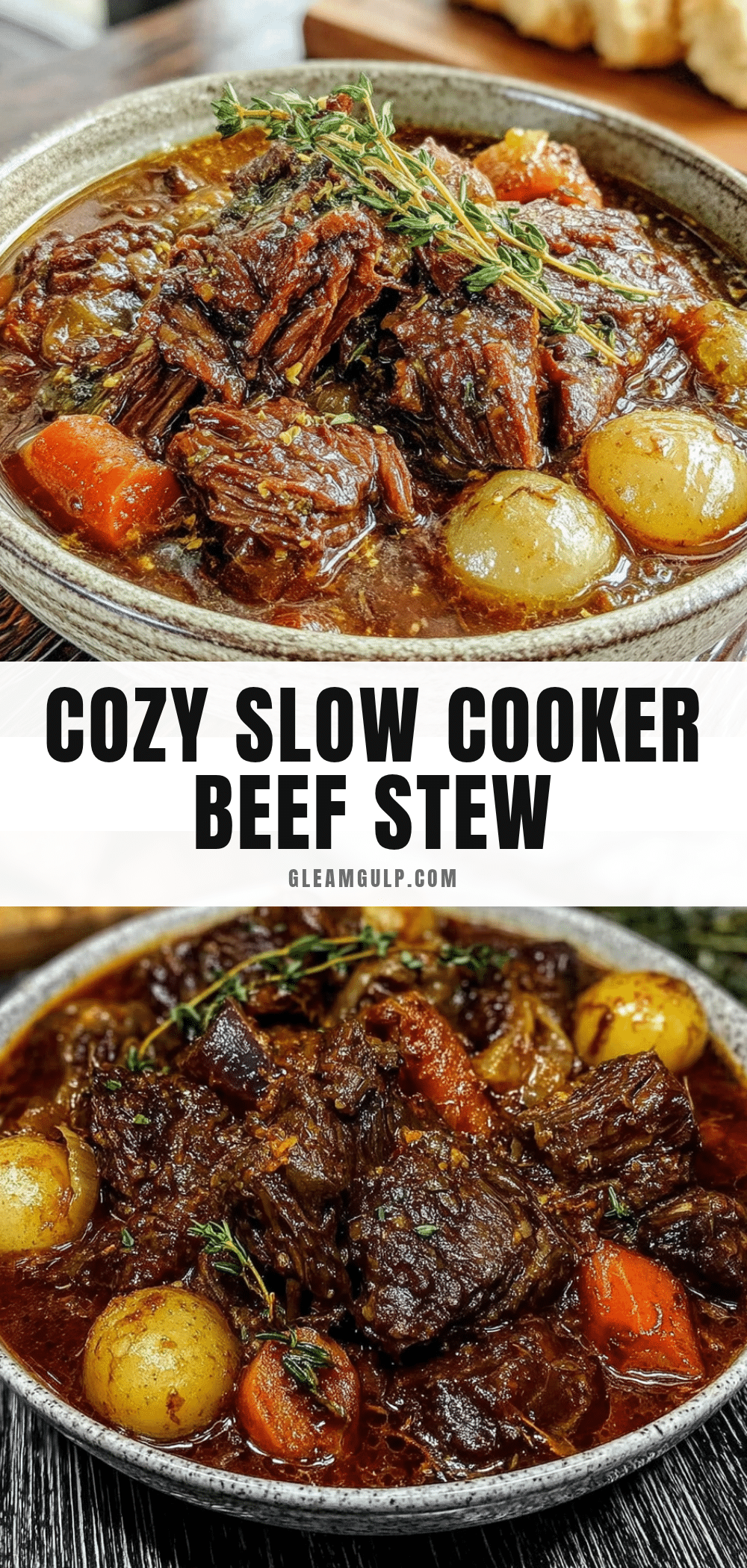
Cozy Slow Cooker Beef Stew with Fall Root Vegetables
A hearty and comforting beef stew made with tender chuck roast and fall root vegetables, slow-cooked to perfection. This recipe features a secret splash of red wine vinegar for brightness and is perfect for chilly evenings.
- Prep Time: 20 minutes
- Cook Time: 6 hours
- Total Time: 6 hours 20 minutes
- Yield: 6 servings 1x
- Category: Main Course
- Cuisine: American
Ingredients
- 2 pounds (900 g) beef chuck roast, cut into 1½-inch cubes
- 2 tablespoons (30 ml) olive oil, divided
- 1 teaspoon (5 g) kosher salt, plus more to taste
- ½ teaspoon (2 g) black pepper, freshly ground
- 2 tablespoons (16 g) all-purpose flour
- 1 large yellow onion, diced (about 1½ cups / 200 g)
- 4 cloves garlic, minced
- 3 medium carrots, peeled and cut into 1-inch chunks (about 1½ cups / 200 g)
- 2 medium parsnips, peeled and cut into 1-inch chunks (about 1 cup / 150 g)
- 1 pound (450 g) Yukon Gold potatoes, scrubbed and cut into 1½-inch chunks (about 3 cups)
- 2 stalks celery, sliced (about 1 cup / 120 g)
- 3 cups (720 ml) low-sodium beef broth
- 1 tablespoon (15 ml) Worcestershire sauce
- 1 tablespoon (15 g) tomato paste
- 2 bay leaves
- 1 teaspoon (2 g) dried thyme
- 1 teaspoon (2 g) dried rosemary
- 1 tablespoon (15 ml) red wine vinegar
- 2 tablespoons (8 g) fresh parsley, chopped (for garnish)
- Crusty bread or dinner rolls, for serving
Instructions
- Pat the beef cubes dry with paper towels. In a mixing bowl, toss the beef with the flour, 1 teaspoon of salt, and ½ teaspoon of black pepper until evenly coated.
- Heat 1 tablespoon of olive oil in a large skillet over medium-high heat until it shimmers. Add the beef cubes in a single layer (in 2 or 3 batches) and sear for 2-3 minutes per side until deeply browned. Transfer seared beef to the slow cooker.
- Reduce heat to medium. Add the remaining 1 tablespoon of olive oil to the same skillet. Cook the diced onion for 3-4 minutes until softened. Add minced garlic and cook for 30 seconds more. Scrape up browned bits and transfer to the slow cooker.
- Pour about ½ cup of beef broth into the hot skillet and scrape up any remaining browned bits. Pour this liquid into the slow cooker.
- Layer the carrots, parsnips, potatoes, and celery on top of the beef and onions in the slow cooker. Do not stir.
- In a separate bowl, whisk together the remaining beef broth, Worcestershire sauce, and tomato paste. Pour over the vegetables. Add bay leaves, dried thyme, and dried rosemary. Gently stir to combine.
- Cover and cook on LOW for 6-8 hours or on HIGH for 4-5 hours, until beef is fork-tender and vegetables are soft but holding their shape.
- Just before serving, remove bay leaves. Stir in red wine vinegar. Taste and adjust salt and pepper as needed.
- Ladle into bowls, garnish with fresh parsley, and serve with crusty bread.
Notes
Searing the beef is crucial for flavor. Do not skip it. The red wine vinegar added at the end brightens the dish. For a gluten-free version, use cornstarch instead of flour. Leftovers taste even better the next day.
Nutrition
- Serving Size: 1 serving
- Calories: 385
- Sugar: 8
- Sodium: 720
- Fat: 14
- Saturated Fat: 4
- Carbohydrates: 32
- Fiber: 6
- Protein: 32
Keywords: slow cooker beef stew, fall root vegetables, beef stew, comfort food, cozy stew, easy stew recipe