Love this? Save it for later!
Share the inspiration with your friends
I was sitting in my car waiting for an oil change—honestly, one of those Tuesday afternoons you just want to fast-forward through—when the mechanic, a guy named Dave with grease up to his elbows, started talking about bread. Not car stuff. Bread. He said his wife had been playing around with sourdough discard and pumpkin, and the result was this loaf that practically disappeared before it cooled. I wasn’t expecting baking advice from a man holding a wrench, but there I was, nodding along in the waiting area, mentally taking notes.
Dave wasn’t a food blogger or a chef. He was just someone who liked good food and didn’t want to throw away sourdough discard. That conversation stuck with me more than any polished recipe video ever has. Maybe you’ve been there—you hear about a recipe from the most random person, and something about the way they describe it makes you think, “I have to try that.”
So I went home, dug my jar of sourdough discard out of the fridge, grabbed a can of pumpkin puree, and got to work. The first loaf was good. The second was better. By the third, I knew this was something special. This easy pumpkin sourdough discard bread is now my go-to fall recipe, and honestly, I make it year-round because it’s just that good. Let me tell you, there’s something about the combination of tangy sourdough and sweet, earthy pumpkin that just works.
Why You’ll Love This Recipe
I’ve tested this recipe more times than I care to count, tweaking the flour ratio, adjusting the hydration, and playing with the baking time until everything clicked. Here’s why I keep coming back to it—and why I think you will too:
- Quick & Easy: This comes together in about 15 minutes of active prep time. No complicated folds or long waits. The discard does the work for you.
- Simple Ingredients: You probably have most of these in your pantry right now. Pumpkin puree, flour, butter, sugar—nothing weird or hard to find.
- Perfect for Fall Baking: Whether it’s a cozy weekend morning or a Thanksgiving brunch, this bread fits right in.
- Crowd-Pleaser: I’ve brought this to potlucks and watched it disappear in minutes. Kids love it. Adults love it. Everyone loves it.
- Unbelievably Delicious: The texture is moist but not dense, with a tender crumb and that subtle sourdough tang that balances the sweetness of the pumpkin perfectly.
What makes this recipe different from the hundreds of other pumpkin breads out there is the sourdough discard. It adds a depth of flavor you just can’t get from baking soda and powder alone. Plus, it uses up that discard you’ve been hoarding in the fridge—no more guilt about tossing it out.
This isn’t just another pumpkin bread recipe. It’s the one that makes you close your eyes after the first bite. It’s comfort food reimagined—simpler, faster, and with that soul-soothing satisfaction that only homemade bread can bring.
What Ingredients You Will Need
This recipe uses simple, wholesome ingredients to deliver bold flavor and satisfying texture without the fuss. Most of these are pantry staples, which makes this an easy last-minute bake when the craving hits.
- Pumpkin Puree (1 cup / 240g) – Use canned pumpkin puree, not pumpkin pie filling. I prefer Libby’s for consistent texture, but any brand works. If you’re feeling ambitious, homemade puree is lovely too—just make sure it’s well-drained.
- Sourdough Discard (1 cup / 240g) – Unfed discard straight from the fridge works perfectly. It doesn’t need to be active or bubbly. This is the star of the show, so don’t skip it.
- All-Purpose Flour (1 ½ cups / 180g) – Regular all-purpose flour gives the best texture. You can substitute whole wheat pastry flour for a nuttier flavor, but the crumb will be slightly denser.
- Granulated Sugar (½ cup / 100g) – Adds just enough sweetness. You can reduce it to ⅓ cup if you prefer a less sweet bread.
- Brown Sugar (¼ cup / 50g, packed) – This adds moisture and a hint of molasses flavor that pairs beautifully with pumpkin. Dark brown sugar gives a deeper flavor.
- Butter (¼ cup / 57g, melted) – Unsalted butter lets you control the salt level. Coconut oil works as a dairy-free alternative.
- Eggs (2 large, room temperature) – They bind everything together and add richness. For a vegan version, try flax eggs (2 tablespoons ground flaxseed mixed with 6 tablespoons water).
- Baking Soda (1 teaspoon) – This helps the bread rise since the discard isn’t very active. Make sure it’s fresh for the best results.
- Pumpkin Pie Spice (1 ½ teaspoons) – Store-bought is fine, but I like to make my own with cinnamon, nutmeg, ginger, and cloves. It’s fresher and you can adjust the ratios.
- Cinnamon (1 teaspoon) – Because you can never have too much cinnamon in pumpkin bread.
- Salt (½ teaspoon) – Don’t skip this. It balances the sweetness and enhances all the flavors.
- Vanilla Extract (1 teaspoon) – Pure vanilla extract adds warmth and depth. Imitation works in a pinch, but pure is better.
Optional Add-ins:
- Chocolate chips (½ cup) for a sweet twist
- Chopped pecans or walnuts (½ cup) for crunch
- Dried cranberries (¼ cup) for tartness
Equipment Needed
You don’t need fancy equipment for this recipe. Here’s what I use:
- 9×5-inch Loaf Pan – A standard loaf pan works best. If you use an 8×4-inch pan, you’ll need to bake it a few minutes longer. Glass or metal both work, but metal gives a nicer crust.
- Mixing Bowls – One large bowl for the wet ingredients and one medium bowl for the dry ingredients. Nothing fancy needed.
- Whisk – For mixing the dry ingredients and smoothing out the wet ingredients. A fork works in a pinch.
- Spatula – A rubber spatula is perfect for folding everything together without overmixing.
- Parchment Paper – Lining the pan makes removal so much easier. You can also grease the pan with butter and flour if you prefer.
- Cooling Rack – Letting the bread cool completely on a rack prevents a soggy bottom. If you don’t have one, you can use the oven rack (turned off, of course).
I’ve made this bread with a hand mixer when I was feeling lazy, but honestly, a whisk and a spatula do the job just fine. The less you mix, the better the texture.
Preparation Method
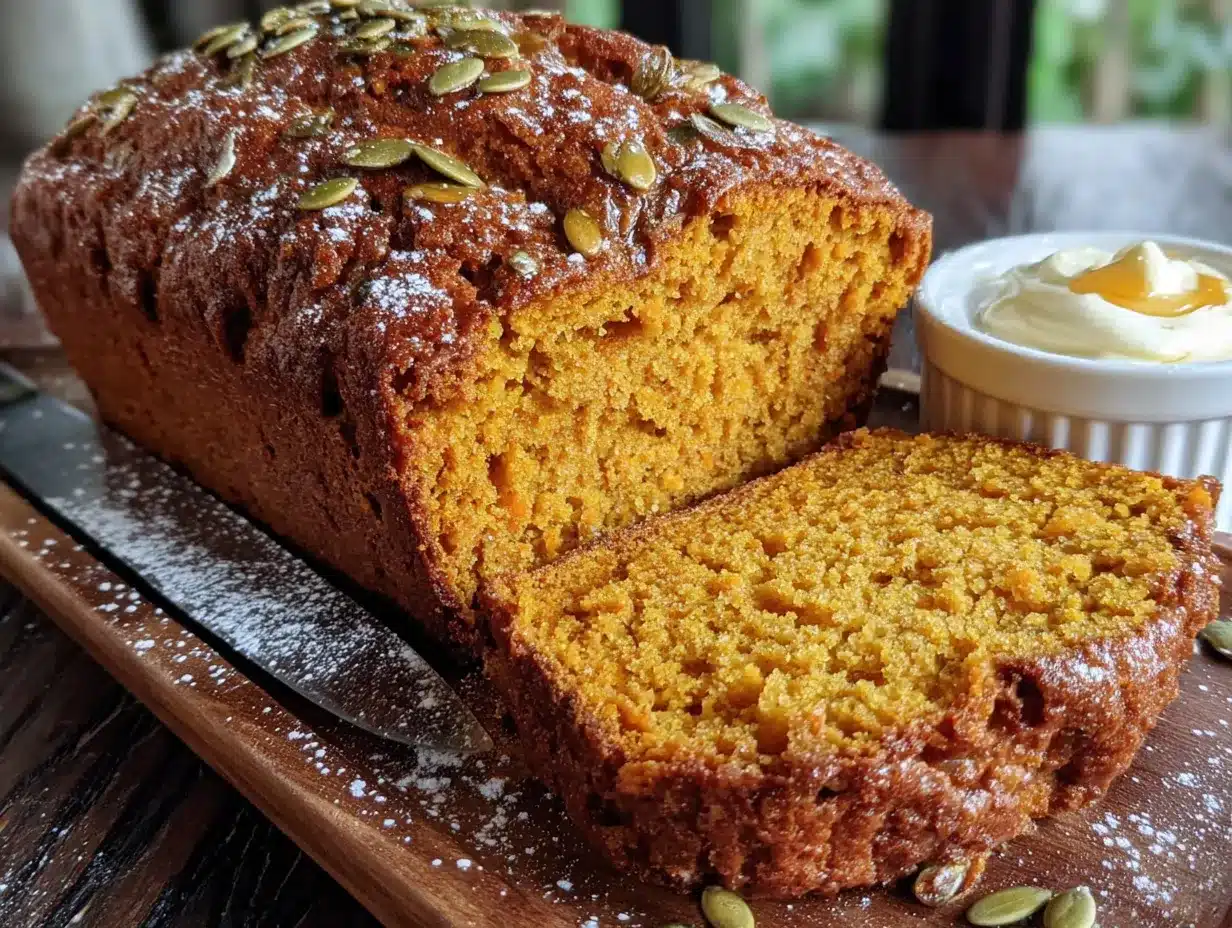
- Preheat your oven to 350°F (175°C). Position the rack in the center of the oven. Line your loaf pan with parchment paper, leaving some overhang on the long sides—this makes lifting the bread out super easy.
- Melt the butter and set it aside to cool slightly. You don’t want it hot when you add it to the eggs, or you’ll end up with scrambled eggs. Trust me on this one—I learned the hard way.
- In a medium bowl, whisk together the all-purpose flour, baking soda, pumpkin pie spice, cinnamon, and salt. Make sure everything is evenly distributed. I like to give it a few extra whisks to aerate the flour a bit.
- In a large bowl, combine the pumpkin puree, sourdough discard, granulated sugar, brown sugar, melted butter, eggs, and vanilla extract. Whisk until smooth and well combined. The mixture should be a beautiful orange color and smell amazing already.
- Pour the dry ingredients into the wet ingredients. Use a spatula to fold everything together gently. Stop as soon as you no longer see streaks of flour. A few lumps are totally fine—overmixing will make the bread tough.
- If you’re adding any mix-ins (chocolate chips, nuts, dried fruit), fold them in now. I usually reserve a handful to sprinkle on top for a prettier presentation.
- Pour the batter into the prepared loaf pan and spread it evenly. Give the pan a gentle tap on the counter to release any air bubbles. If you want, sprinkle a little extra sugar or pumpkin pie spice on top for a crunchy crust.
- Bake for 50-60 minutes, or until a toothpick inserted into the center comes out clean or with just a few moist crumbs. The top should be golden brown and spring back when lightly touched. If the top is browning too quickly (around the 40-minute mark), tent it loosely with aluminum foil.
- Let the bread cool in the pan for 10 minutes. Then use the parchment paper to lift it out and transfer it to a cooling rack. Let it cool completely before slicing—about 1-2 hours. I know it’s tempting, but warm bread tends to crumble and fall apart.
Pro tip: If you want extra moisture, brush the top of the warm bread with a little melted butter. It adds a beautiful sheen and a richer flavor.
Cooking Tips & Techniques
I’ve made this bread enough times to know exactly where things can go wrong. Here are my hard-earned tips:
Don’t overmix the batter. This is the number one mistake I see. Mix until just combined—overmixing develops the gluten and makes the bread dense and tough. A few lumps are your friend.
Use room temperature ingredients. Cold eggs and cold discard can make the batter seize up and lead to uneven baking. Take them out of the fridge about 30 minutes before you start. If you forget, place the eggs in a bowl of warm water for 5 minutes.
Check your baking soda freshness. Since we’re relying on baking soda for most of the lift (the discard isn’t very active), you need it to be fresh. To test, drop a little baking soda into vinegar—if it fizzes vigorously, you’re good.
Don’t open the oven door too early. I know you want to peek, but opening the door in the first 30 minutes can cause the bread to sink in the middle. Use the oven light and window instead.
Let it cool completely. I’ve cut into this bread too early more times than I’d like to admit. The texture is gummy and the slices don’t hold together. Patience pays off here.
One mistake I’ll never forget: I once forgot the sugar. The bread came out dense and flat, with a weirdly savory flavor that just didn’t work. I tried to save it with a honey drizzle, but honestly, it was a lost cause. Always double-check your ingredients before you start mixing.
Variations & Adaptations
This recipe is incredibly forgiving. Here are some ways to make it your own:
Gluten-Free Version: Substitute the all-purpose flour with a 1:1 gluten-free baking flour blend. I’ve had good results with King Arthur’s Measure for Measure. Add an extra tablespoon of flour if the batter seems too thin.
Vegan Version: Use melted coconut oil instead of butter and flax eggs (2 tablespoons ground flaxseed mixed with 6 tablespoons water) instead of regular eggs. Let the flax mixture sit for 5 minutes to thicken before adding it. The texture will be slightly denser but still delicious.
Spiced-Up Version: Add ¼ teaspoon of ground ginger, ¼ teaspoon of ground cloves, and a pinch of black pepper to the spice mix. The pepper adds a subtle warmth that’s really lovely.
Chocolate Pumpkin Version: Fold in ½ cup of dark chocolate chips and reduce the sugar to ⅓ cup. The bitterness of the chocolate balances the sweetness beautifully.
Savory Version: Reduce the sugar to 2 tablespoons, omit the pumpkin pie spice, and add 1 teaspoon of dried rosemary, ½ teaspoon of garlic powder, and ½ cup of shredded cheddar cheese. This makes an excellent side for soups and stews.
I tried a version with fresh pumpkin puree once—it was good, but the texture was a bit more watery. If you go that route, make sure to strain the puree through a cheesecloth or fine-mesh sieve to remove excess liquid.
Serving & Storage Suggestions
Serving: This bread is best served at room temperature or slightly warm. Slice it thick and enjoy it plain, or dress it up with a pat of butter, a drizzle of honey, or a smear of cream cheese. It’s also fantastic toasted—the edges get crispy while the inside stays soft.
Pairings: A cup of hot coffee or chai tea is the perfect companion. For a more indulgent treat, serve it with a dollop of whipped cream and a sprinkle of cinnamon. It also pairs beautifully with a bowl of hearty soup for a cozy lunch.
Storage: Store the bread in an airtight container at room temperature for up to 4 days. The moisture from the pumpkin actually helps it stay soft longer than regular quick breads. If your kitchen is very warm, you can refrigerate it, but bring it to room temperature before serving for the best texture.
Freezing: This bread freezes beautifully. Wrap the cooled loaf tightly in plastic wrap, then in aluminum foil, and freeze for up to 3 months. You can also slice it before freezing so you can grab individual slices as needed. To thaw, leave it at room temperature for about 2 hours, or pop a slice in the toaster directly from the freezer.
Reheating: For that just-baked experience, warm slices in a 300°F oven for 5-7 minutes. The microwave works in a pinch, but it can make the bread a bit rubbery.
Flavor development: Honestly, this bread tastes even better the next day. The flavors meld together overnight, and the sourdough tang becomes more pronounced. If you can resist eating it all on day one, you’re in for a treat on day two.
Nutritional Information & Benefits
Here’s the approximate nutritional breakdown per slice (based on 10 slices):
- Calories: 220
- Total Fat: 8g
- Saturated Fat: 4g
- Cholesterol: 45mg
- Sodium: 260mg
- Total Carbohydrates: 34g
- Dietary Fiber: 2g
- Sugars: 16g
- Protein: 4g
Health Highlights: Pumpkin is packed with vitamin A (great for eye health and immunity) and fiber (good for digestion). The sourdough fermentation process can make the bread easier to digest for some people, especially those with mild gluten sensitivities. The discard also adds beneficial probiotics, though most are killed during baking.
Dietary Considerations: This recipe can easily be adapted for gluten-free, dairy-free, and vegan diets (see variations above). It’s not low-carb, but it is a wonderful way to enjoy a seasonal treat with real, recognizable ingredients.
Allergens: Contains wheat, dairy, and eggs. If you have allergies, check the variations section for suitable substitutions.
I love that this bread feels indulgent but uses ingredients that actually offer some nutritional value. It’s the kind of treat you can feel good about eating for breakfast—or dessert.
Conclusion
This easy pumpkin sourdough discard bread is proof that the best recipes often come from the most unexpected places. A mechanic named Dave, a jar of discard, and a can of pumpkin—that’s all it took to create something I now make on repeat. The tangy sourdough, the sweet pumpkin, the warm spices—it all comes together in a loaf that’s simple enough for a Tuesday but special enough for a holiday table.
I hope you give this recipe a try and make it your own. Add chocolate chips if that’s your thing. Throw in some nuts. Double the spices. The beauty of this bread is that it’s forgiving and adaptable—just like good home cooking should be.
When you make it, I’d love to hear how it turns out. Drop a comment below and let me know what variations you tried, or tag me in your photos on social media. Happy baking, friends—and remember, the best recipes are the ones you share.
Frequently Asked Questions
Can I use active sourdough starter instead of discard?
Absolutely! If you use active starter, you may need to reduce the baking soda slightly since the starter will provide some leavening. Try using ¾ teaspoon of baking soda instead of 1 teaspoon. The texture will be slightly lighter and airier.
Why is my pumpkin sourdough bread dense?
Dense bread is usually caused by overmixing the batter or using old baking soda. Mix just until the flour disappears, and make sure your baking soda is fresh. Also, check that your oven is at the right temperature—an oven that’s too cool can cause the bread to sink.
Can I make this into muffins instead of a loaf?
Yes! Grease a 12-cup muffin tin or line it with paper liners. Fill each cup about ¾ full and bake at 350°F for 18-22 minutes, or until a toothpick comes out clean. This is perfect for grab-and-go breakfasts or lunchbox treats.
How do I know when the bread is done baking?
Insert a toothpick or skewer into the center of the loaf. If it comes out clean or with just a few moist crumbs, it’s done. You can also check the internal temperature—it should be around 200°F (93°C). The top should be golden brown and spring back when lightly touched.
Can I make this recipe without sourdough discard?
You can, but it won’t have the same tangy flavor and tender texture. If you don’t have discard, substitute with 1 cup of buttermilk or plain yogurt (plus 2 tablespoons of flour to maintain the consistency). The bread will still be delicious, just different. If you’re looking for another way to use your discard, you might also enjoy this crispy garlic chicken recipe that uses a tangy buttermilk marinade for a similar effect.
Pin This Recipe!
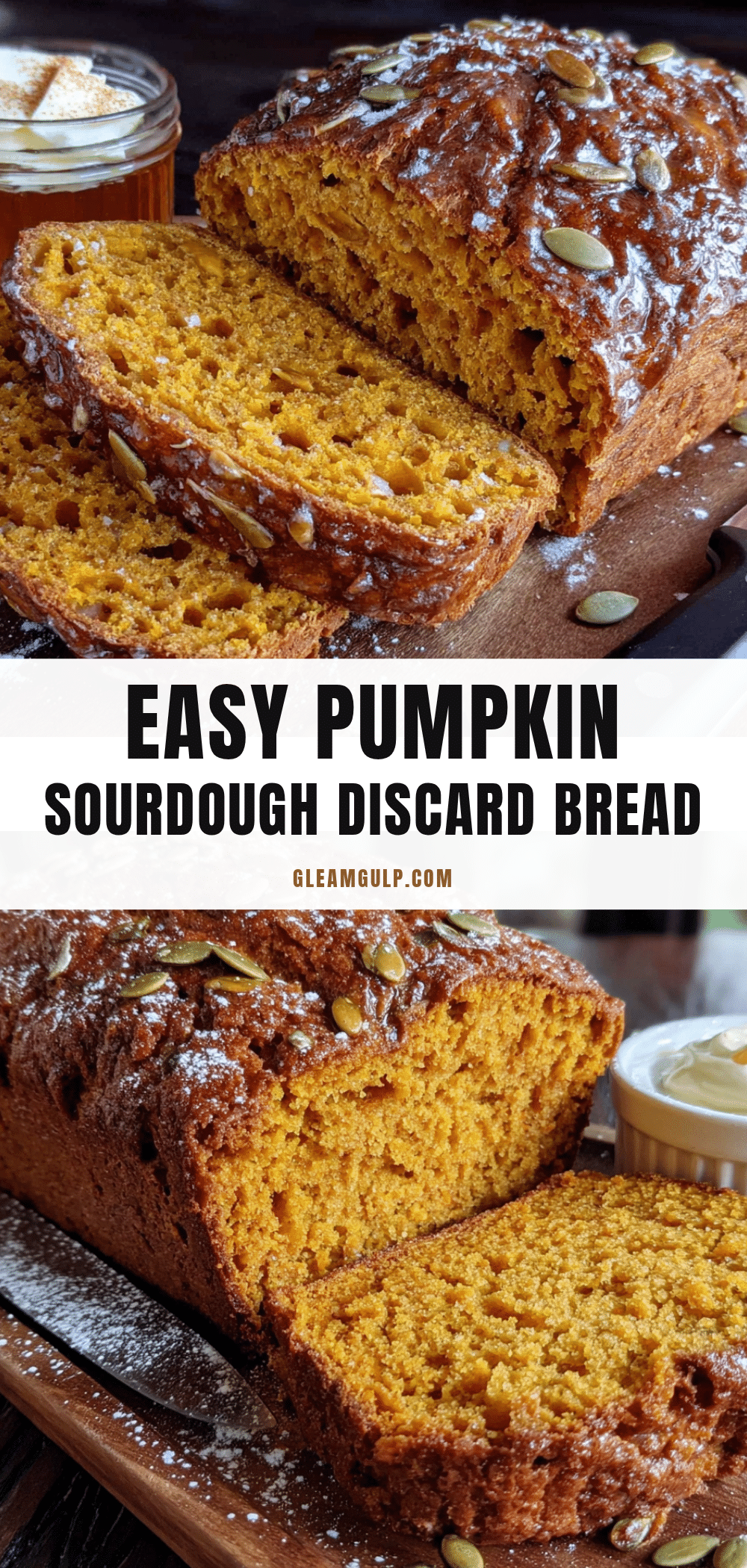
Easy Pumpkin Sourdough Discard Bread Recipe
This easy pumpkin sourdough discard bread combines tangy sourdough with sweet, earthy pumpkin for a moist, tender loaf that’s perfect for fall baking or any time of year. It’s a quick and simple recipe that uses up sourdough discard and pantry staples.
- Prep Time: 15 minutes
- Cook Time: 55 minutes
- Total Time: 1 hour 10 minutes
- Yield: 10 servings 1x
- Category: Bread
- Cuisine: American
Ingredients
- 1 cup (240g) pumpkin puree
- 1 cup (240g) sourdough discard
- 1 ½ cups (180g) all-purpose flour
- ½ cup (100g) granulated sugar
- ¼ cup (50g) packed brown sugar
- ¼ cup (57g) unsalted butter, melted
- 2 large eggs, room temperature
- 1 teaspoon baking soda
- 1 ½ teaspoons pumpkin pie spice
- 1 teaspoon cinnamon
- ½ teaspoon salt
- 1 teaspoon vanilla extract
- ½ cup chocolate chips (optional)
- ½ cup chopped pecans or walnuts (optional)
- ¼ cup dried cranberries (optional)
Instructions
- Preheat your oven to 350°F (175°C). Position the rack in the center of the oven. Line a 9×5-inch loaf pan with parchment paper, leaving some overhang on the long sides.
- Melt the butter and set it aside to cool slightly.
- In a medium bowl, whisk together the all-purpose flour, baking soda, pumpkin pie spice, cinnamon, and salt.
- In a large bowl, combine the pumpkin puree, sourdough discard, granulated sugar, brown sugar, melted butter, eggs, and vanilla extract. Whisk until smooth and well combined.
- Pour the dry ingredients into the wet ingredients. Use a spatula to fold everything together gently until just combined. Do not overmix.
- If using any mix-ins (chocolate chips, nuts, dried fruit), fold them in now. Reserve a handful to sprinkle on top if desired.
- Pour the batter into the prepared loaf pan and spread it evenly. Give the pan a gentle tap on the counter to release air bubbles.
- Bake for 50-60 minutes, or until a toothpick inserted into the center comes out clean or with just a few moist crumbs. If the top is browning too quickly, tent loosely with aluminum foil after about 40 minutes.
- Let the bread cool in the pan for 10 minutes. Then use the parchment paper to lift it out and transfer to a cooling rack. Let cool completely before slicing, about 1-2 hours.
Notes
Don’t overmix the batter. Use room temperature ingredients. Check baking soda freshness. Let cool completely before slicing. Bread tastes even better the next day. For extra moisture, brush top of warm bread with melted butter.
Nutrition
- Serving Size: 1 slice
- Calories: 220
- Sugar: 16
- Sodium: 260
- Fat: 8
- Saturated Fat: 4
- Carbohydrates: 34
- Fiber: 2
- Protein: 4
Keywords: pumpkin bread, sourdough discard, pumpkin sourdough, fall baking, easy pumpkin bread, sourdough discard recipe