Love this? Save it for later!
Share the inspiration with your friends
“You have to try this,” my coworker whispered one humid August afternoon, sliding a small container of something golden and sticky across my desk. I was skeptical at first—sticky rice for dessert? Honestly, it sounded odd. But one bite of that Delicious Thai Mango Sticky Rice with Salted Coconut Cream and I was hooked. The mango was perfectly ripe, juicy and sweet, while the coconut cream had this unexpected salty twist that made the whole thing sing. It wasn’t the fancy restaurant version with frills and fuss, just a humble homemade treat that somehow felt like a celebration in every bite.
The story behind this recipe actually started on a sleepy Tuesday when I realized the grocery store had more than just your usual fruit on display—there were these gorgeous mangoes practically glowing under the lights. I grabbed a few, thinking about recreating that coworker’s treat but with a little twist of my own: salted coconut cream. You know that feeling when you’re halfway through making something and realize you forgot a key ingredient? Yeah, that happened—no vanilla essence in sight. Still, the results surprised me. The sticky rice was tender and chewy, the mango vibrant, and the salted cream gave it an irresistible depth. Since then, this recipe has become my go-to for impressing friends with minimal effort.
Maybe you’ve been there, craving something sweet but light, tropical but comforting. This Thai mango sticky rice is exactly that—the kind of dessert that feels like a warm hug after a long day. Let me tell you, once you try it, you’ll want to keep making it too.
Why You’ll Love This Recipe
This Thai mango sticky rice recipe has been tested and tweaked until it hits that perfect harmony of flavors and textures. It’s honestly one of those desserts that feels both special and simple at the same time.
- Quick & Easy: Ready in under 45 minutes, making it perfect for busy weeknights or when unexpected guests pop in.
- Simple Ingredients: Uses pantry staples like glutinous rice and canned coconut milk, plus fresh mangoes you can find year-round in many stores.
- Perfect for Summer Gatherings: Its bright, tropical vibe is a hit at potlucks, BBQs, or casual dinners.
- Crowd-Pleaser: Kids and adults alike love the creamy sweetness balanced by that subtle salty zing.
- Unbelievably Delicious: The texture contrast of sticky rice and juicy mango, combined with salted coconut cream, makes it feel like a treat you’re savoring slowly.
What sets this recipe apart is the salted coconut cream. Most versions skip the salt or add it sparingly, but here I’ve found the sweet-salty balance that keeps you coming back for more. Plus, cooking the sticky rice the right way—soft but still with a little bite—makes all the difference. I’ve tried countless recipes, but this one feels like the perfect blend of authentic and accessible.
Making this dish is like a little mini vacation in your kitchen, and honestly, it’s comforting in a way that makes you want to close your eyes after the first bite. Whether you’re making it for yourself or to impress friends, it’s a winner.
What Ingredients You Will Need
This recipe uses simple, wholesome ingredients to deliver that bold flavor and satisfying texture without any fuss. Most are pantry staples or easy to find at your local grocery store or Asian market.
- For the Sticky Rice:
- 1 cup glutinous (sticky) rice, rinsed well (I recommend Thai brand for the best texture)
- 1 ½ cups water (for soaking and cooking)
- For the Coconut Cream:
- 1 cup canned coconut milk (full fat for richness)
- ¼ cup granulated sugar (adjust to your sweetness preference)
- ½ teaspoon fine sea salt (crucial for that salted coconut cream magic)
- 1 tablespoon tapioca starch or cornstarch (optional, for thickening)
- For Serving:
- 2 ripe mangoes, peeled and sliced (look for fragrant, golden mangoes)
- Toasted sesame seeds or mung beans (optional garnish for crunch)
If you can’t find glutinous rice, don’t substitute with regular rice—trust me, it won’t have the right sticky texture. For a dairy-free alternative, coconut milk is perfect, but be sure to shake the can well before using. And if mangoes aren’t in season, ripe papaya or even sliced peaches can work as a substitute, though the flavor will shift slightly.
Equipment Needed
- Steamer basket or a fine mesh sieve that fits over a pot (for steaming the sticky rice)
- Medium pot or saucepan (to heat the coconut cream)
- Mixing bowls (for soaking rice and mixing cream)
- Measuring cups and spoons (for accuracy)
- Wooden spatula or spoon (to gently stir the rice)
- Sharp knife and cutting board (for slicing mangoes)
If you don’t have a traditional steamer basket, you can improvise by placing the rice in a cheesecloth-lined sieve over a pot of boiling water. I’ve done this many times when camping or lacking proper equipment, and it works pretty well. Just keep an eye on the water level. Also, a rice cooker won’t quite get the right texture for sticky rice, so stick to steaming for best results.
Preparation Method
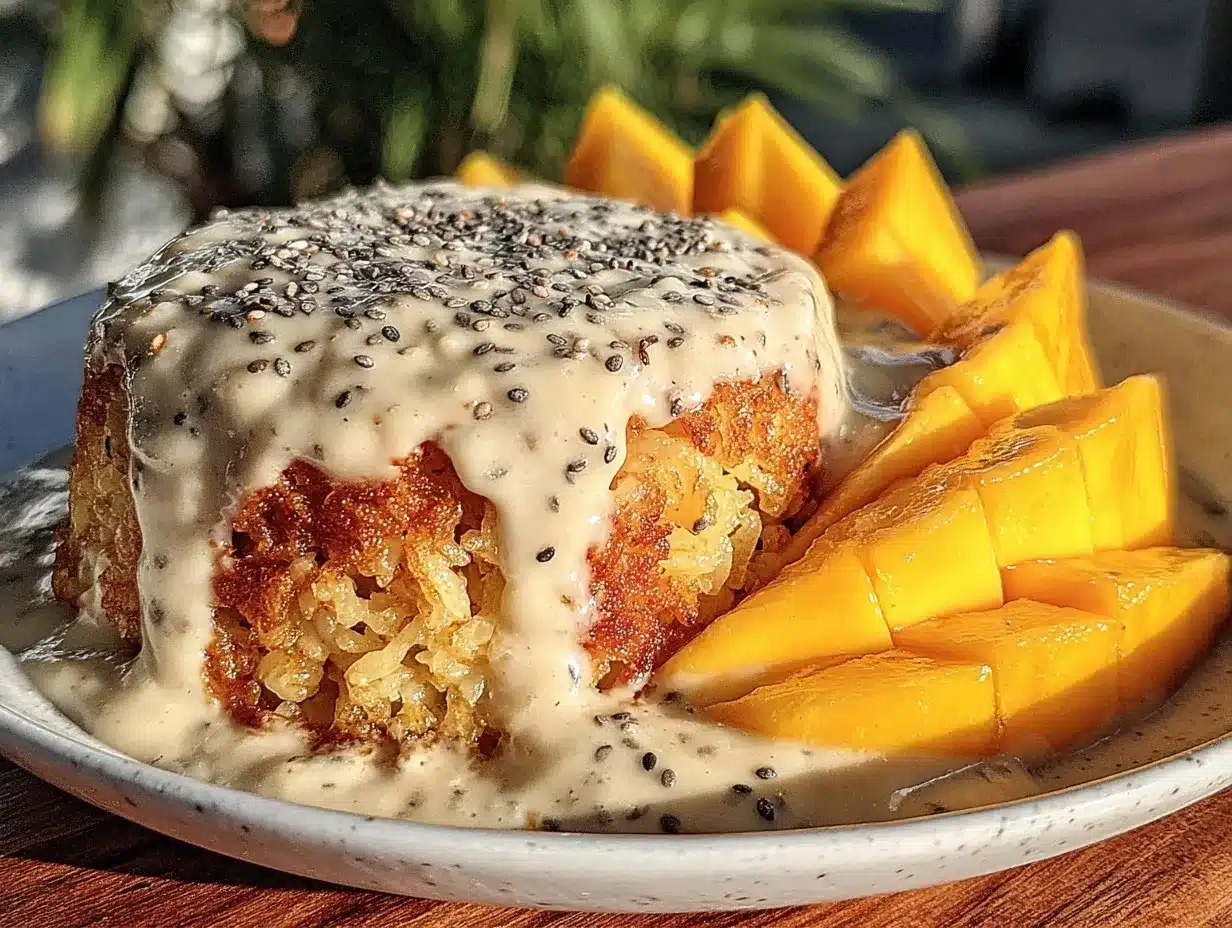
- Rinse and Soak the Rice: Rinse 1 cup of glutinous rice under cold water until the water runs clear—this removes excess starch and prevents clumping. Then soak the rice in 1 ½ cups of water for at least 4 hours or overnight. Soaking is crucial for the rice to steam properly and become tender.
- Prepare the Steamer: Fill a pot with a few inches of water and bring to a gentle boil. Place the soaked rice in a steamer basket lined with cheesecloth or a clean kitchen towel to prevent grains from falling through.
- Steam the Rice: Steam the rice over boiling water for about 20-25 minutes. Halfway through, gently fluff and turn the rice with a wooden spatula to ensure even cooking. The rice should be tender and sticky but not mushy.
- Make the Salted Coconut Cream: While the rice steams, combine 1 cup canned coconut milk, ¼ cup sugar, and ½ teaspoon sea salt in a saucepan over medium heat. Stir until sugar dissolves. If you want a thicker cream, whisk in 1 tablespoon tapioca starch diluted in 2 tablespoons water, then simmer gently until the mixture thickens slightly (about 5 minutes). Remove from heat and set aside.
- Mix Coconut Cream with Rice: When the rice is done, transfer it to a bowl and pour about ¾ of the coconut cream over it while still warm. Stir gently to coat all the grains. Cover and let it sit for 15-20 minutes to absorb the creamy sauce.
- Prepare the Mangoes: Peel and slice ripe mangoes into thin strips or bite-sized pieces. Presentation counts here—bright, neat slices make it feel special.
- Serve: Spoon the sticky rice onto plates, arrange mango slices alongside, and drizzle the remaining salted coconut cream on top. Sprinkle with toasted sesame seeds or mung beans for a little crunch if desired.
Pro tip: Don’t skip the resting step after mixing the coconut cream with the rice. It lets the flavors meld perfectly, and the rice softens to that ideal chewy texture. Also, if you notice the rice is a bit dry, sprinkle a teaspoon or two of water and fluff it gently.
Cooking Tips & Techniques
Getting sticky rice just right can feel tricky, but a few insider tips make it easier than you think. First off, soaking is non-negotiable. I learned the hard way that skipping this step results in unevenly cooked rice that’s either crunchy or mushy.
When steaming, keep the water at a steady simmer—not a rolling boil—to avoid drying out the rice. Also, stirring halfway through helps prevent clumps and promotes even cooking.
The salted coconut cream is the star here. Use full-fat coconut milk for that rich, velvety finish. The salt doesn’t overpower; it actually brings out the sweetness of the mango and balances the creaminess. If you want, adjust the sugar slightly based on how sweet your mango is.
If you find the coconut cream too thick after cooling, warm it gently again with a splash of coconut milk or water to loosen it up before serving. And please, don’t rush the resting time with the rice and cream—it’s worth it.
Finally, multitask by preparing the coconut cream and slicing mangoes while the rice steams. It saves time and keeps the process smooth. I once tried making this without prepping mangoes in advance and ended up with sticky fingers and a rushed plating—lesson learned!
Variations & Adaptations
This Thai mango sticky rice recipe is pretty flexible, so you can make it your own easily.
- Dietary Variation: For a vegan or dairy-free option, the recipe is naturally suited since it uses coconut milk, but be sure to use refined coconut sugar or another vegan sweetener if you want to avoid cane sugar.
- Seasonal Twist: Swap mangoes for other tropical fruits like ripe papaya, lychee, or even pineapple chunks in winter. Each brings a unique flavor while keeping the tropical vibe.
- Flavor Boost: Stir in a few drops of pandan essence to the coconut cream for a fragrant, herbal note that’s traditional in some Thai recipes.
- Cooking Method Adjustment: If you don’t have a steamer, you can cook the sticky rice in a heavy-bottomed pot with a tight lid, using the absorption method. It takes careful water control but works in a pinch.
- Personal Variation: I once tried adding a sprinkle of toasted coconut flakes on top for extra texture and a nutty aroma. It was a hit and added a little crunch that contrasted nicely with the creamy rice.
Serving & Storage Suggestions
Serve this dessert slightly warm or at room temperature—the sticky rice is at its best when just a bit warm, but not hot. Arrange mango slices neatly beside or on top of the rice for a pretty presentation. A drizzle of the salted coconut cream right before serving is a must.
This dish pairs wonderfully with a cup of jasmine tea or a light fruity white wine if you’re feeling fancy. For a casual setting, fresh coconut water is a refreshing match.
Leftovers can be stored in an airtight container in the refrigerator for up to 2 days. The rice tends to harden in the fridge, so reheat gently with a splash of water in the microwave or on the stovetop, stirring occasionally to bring back that sticky softness.
Flavors meld and deepen a bit overnight, making it even tastier the next day. Just add fresh mango slices before serving to keep that bright fresh taste.
Nutritional Information & Benefits
This dessert is surprisingly nourishing considering its sweetness. One serving (about 1 cup) offers roughly:
| Calories | 320 kcal |
|---|---|
| Carbohydrates | 55 g |
| Fat | 10 g (mostly from coconut milk) |
| Protein | 3 g |
| Fiber | 2 g |
The glutinous rice provides a good energy boost, while mangoes are packed with vitamin C and antioxidants. Coconut milk adds healthy medium-chain triglycerides (MCTs) which can support metabolism. Keep in mind this recipe is gluten-free and naturally dairy-free, making it suitable for various dietary needs.
As a wellness enthusiast, I appreciate that this dessert balances indulgence with real ingredients—no artificial preservatives or colors, just simple tropical goodness.
Conclusion
This Thai Mango Sticky Rice with Salted Coconut Cream is more than just a dessert; it’s a little tropical escape you can make anytime. Its simplicity belies the complex flavors and textures you’ll enjoy. I love how it brings a bit of sunshine to my kitchen, especially on days when I need a pick-me-up.
Feel free to tweak the sweetness or saltiness to suit your taste—maybe a touch more salt in the cream or a sprinkle of toasted nuts for crunch. Either way, you’re in for a treat that’s as comforting as it is delicious.
Let me know how your version turns out or if you’ve added your own twist! I’m always excited to hear about your kitchen adventures and share tips. Happy cooking and savor every bite!
FAQs
What is glutinous rice, and can I substitute it with regular rice?
Glutinous rice, also called sticky rice, has a unique sticky texture when cooked, essential for this recipe. Regular rice won’t give the same chewy, sticky result, so it’s best not to substitute.
How do I know when the sticky rice is cooked properly?
The rice should be tender and sticky but not mushy. When you press a grain between your fingers, it should hold together without being hard inside. Steaming times vary slightly, so check for tenderness after 20 minutes.
Can I prepare this dessert in advance?
Yes! You can cook the sticky rice and prepare the coconut cream ahead of time. Store separately in the fridge and assemble just before serving for the best texture.
What kind of mangoes work best for this recipe?
Look for ripe, fragrant mangoes that are golden yellow with a bit of give when pressed. Ataulfo or Kent mangoes are great options for their sweetness and creamy texture.
Is the salted coconut cream necessary?
The salted coconut cream adds a wonderful depth and balances the sweetness of the mango and rice. You can omit the salt, but I highly recommend trying it with salt for that authentic taste.
Pin This Recipe!
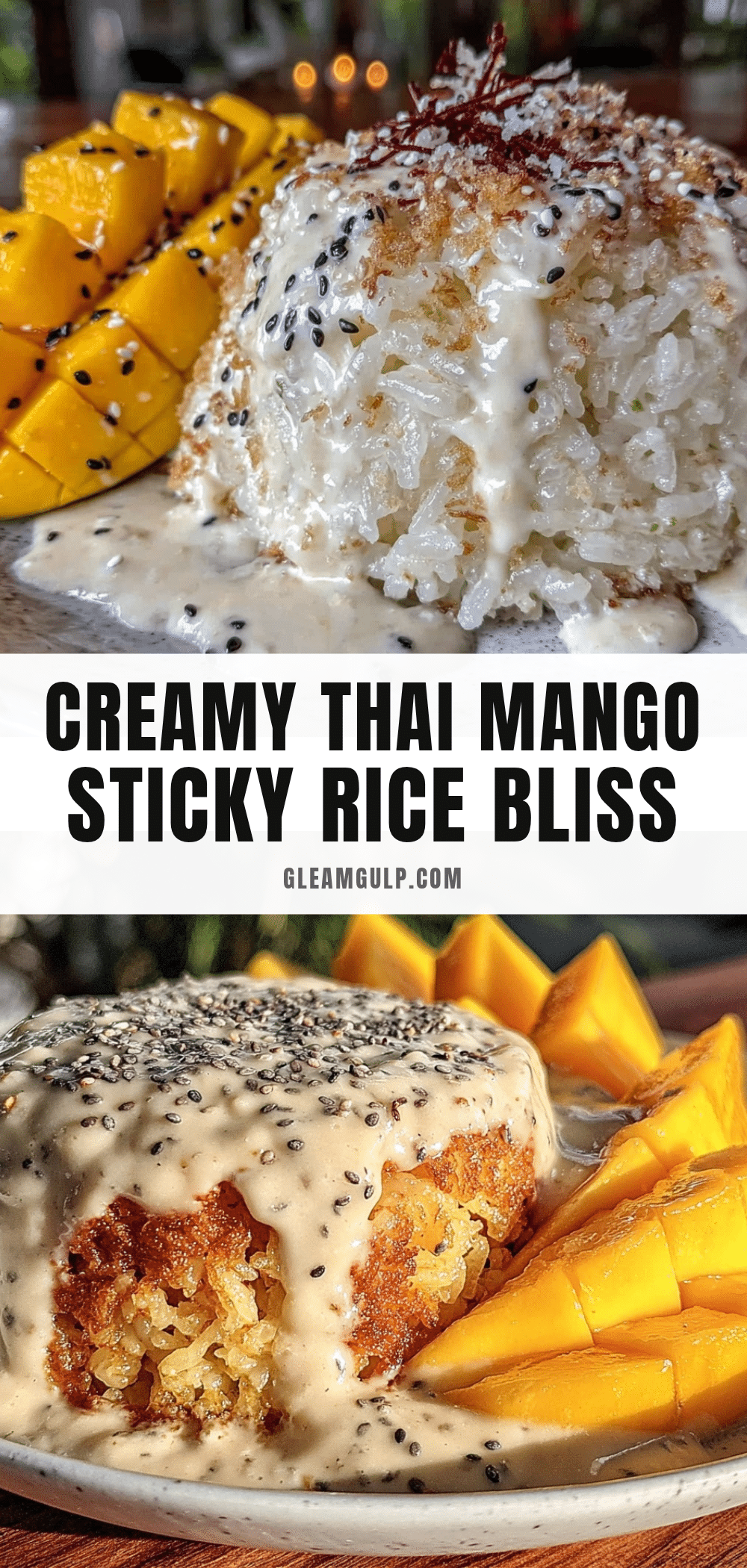
Thai Mango Sticky Rice with Salted Coconut Cream
A simple and delicious homemade Thai dessert featuring tender sticky rice, ripe mangoes, and a rich salted coconut cream that balances sweet and salty flavors perfectly.
- Prep Time: 4 hours 15 minutes
- Cook Time: 25 minutes
- Total Time: 4 hours 40 minutes
- Yield: 4 servings 1x
- Category: Dessert
- Cuisine: Thai
Ingredients
- 1 cup glutinous (sticky) rice, rinsed well
- 1 ½ cups water (for soaking and cooking)
- 1 cup canned coconut milk (full fat)
- ¼ cup granulated sugar
- ½ teaspoon fine sea salt
- 1 tablespoon tapioca starch or cornstarch (optional)
- 2 ripe mangoes, peeled and sliced
- Toasted sesame seeds or mung beans (optional garnish)
Instructions
- Rinse 1 cup of glutinous rice under cold water until the water runs clear. Soak the rice in 1 ½ cups of water for at least 4 hours or overnight.
- Fill a pot with a few inches of water and bring to a gentle boil. Place the soaked rice in a steamer basket lined with cheesecloth or a clean kitchen towel.
- Steam the rice over boiling water for about 20-25 minutes, fluffing and turning halfway through to ensure even cooking. The rice should be tender and sticky but not mushy.
- While the rice steams, combine 1 cup canned coconut milk, ¼ cup sugar, and ½ teaspoon sea salt in a saucepan over medium heat. Stir until sugar dissolves.
- If thicker cream is desired, whisk in 1 tablespoon tapioca starch diluted in 2 tablespoons water and simmer gently until slightly thickened (about 5 minutes). Remove from heat.
- Transfer the steamed rice to a bowl and pour about ¾ of the coconut cream over it while still warm. Stir gently to coat all grains. Cover and let sit for 15-20 minutes to absorb the sauce.
- Peel and slice ripe mangoes into thin strips or bite-sized pieces.
- Serve the sticky rice on plates, arrange mango slices alongside, drizzle remaining salted coconut cream on top, and sprinkle with toasted sesame seeds or mung beans if desired.
Notes
Soaking the rice for at least 4 hours or overnight is crucial for proper texture. Use full-fat coconut milk for richness. Resting the rice with coconut cream allows flavors to meld and rice to soften. If coconut cream thickens too much after cooling, warm gently with a splash of coconut milk or water before serving. Do not substitute glutinous rice with regular rice as it will not have the correct sticky texture.
Nutrition
- Serving Size: About 1 cup per serv
- Calories: 320
- Fat: 10
- Carbohydrates: 55
- Fiber: 2
- Protein: 3
Keywords: Thai mango sticky rice, salted coconut cream, Thai dessert, sticky rice recipe, mango dessert, tropical dessert, easy Thai recipe